HOME | BOOSTER | CEMETERIES | EDUCATION
| GHOST TOWNS
| HEADSTONE
MINOTTO
| PICTURES
| ROADS
| JACK SWILLING
| TEN DAY TRAMPS
American Pioneer & Cemetery Research Project
Presentation

T H E H I S T O R Y
O F
C U L L I N G’ S W E L L
By
Carlos L. Hernandez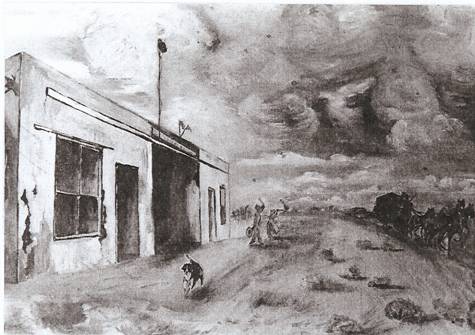
Copyright © 2000 by
Carlos L. Hernandez
All rights reserved
Reproduction by the Arizona Pioneer & Cemetery Research Project for the internet was authorized, sanctioned
and approved by Mary Hernandez, wife of the late Carlos L. Hernandez as well as
the approval of the Carlos Hernandez family.
A Special Thanks to
My Son
THOMAS A. HERNANDEZ
For His Help in
Researching the Drew and Culling Families
CONTENTS
Chapter Page
PROLOGUE
I
JOSEPH SAMUEL DREW 1
II CHARLES
C. CULLING 6
III
MARIA VALENZUELA 15
IV
LIFE AT CULLING’S WELL 20
V
A MOST DIFFICULT TIME 40
VI
BUSINESSMAN AND
PROSPECTOR 44
VII
JOSEPH DREW AND MARIA
CULLING 49
VIII
RETURN TO CULLING’S WELL 65
IX
THE LIGHTHOUSE IN THE
DESERT 112
X CONCLUSION 124
EPILOGUE
134
BIBLIOGRAPHY 135
Cover
Photo: Culling's Well from a
painting by Pauline With.
L I S T
0 F I L L U S T RAT ION S
Plate I, following Page 1
Plate I Joseph S. Drew
- Keeper of The
Lighthouse in the Desert.
Plates II through X, following Page
5
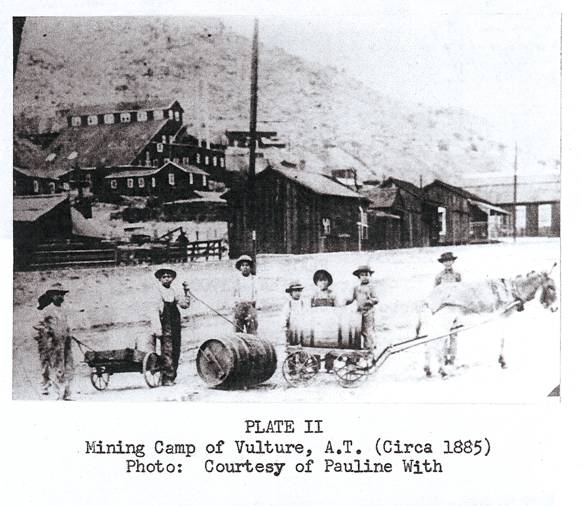
PLATE II
Mining Camp of Vulture, Arizona Territory (Circa 1885).
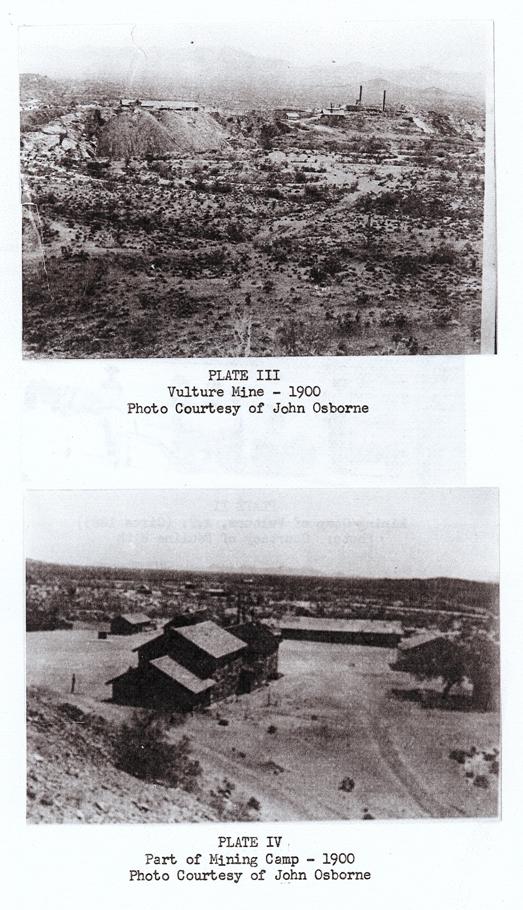
PLATE III Vulture Mine (1900).
PLATE IV
Part of Mining Camp (1900).
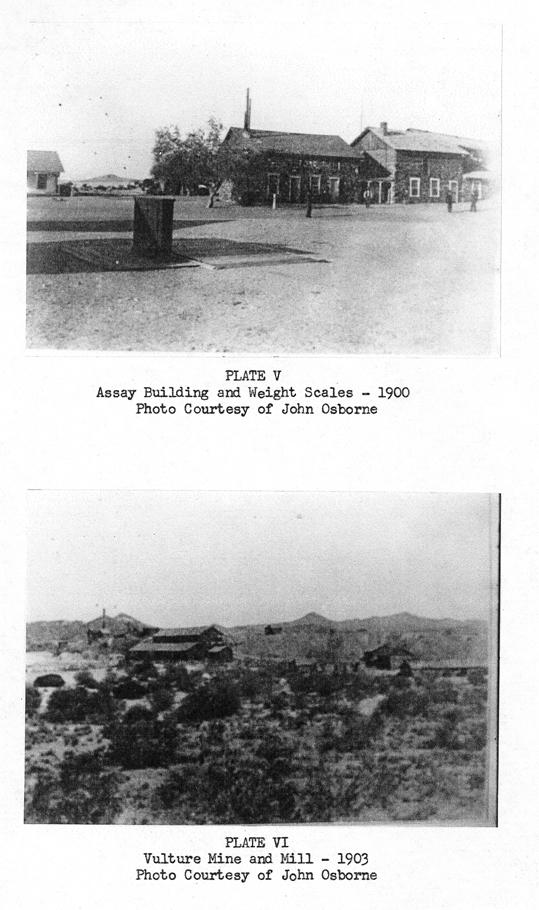
PLATE V
Assay Building
and Weight Scales (1900).
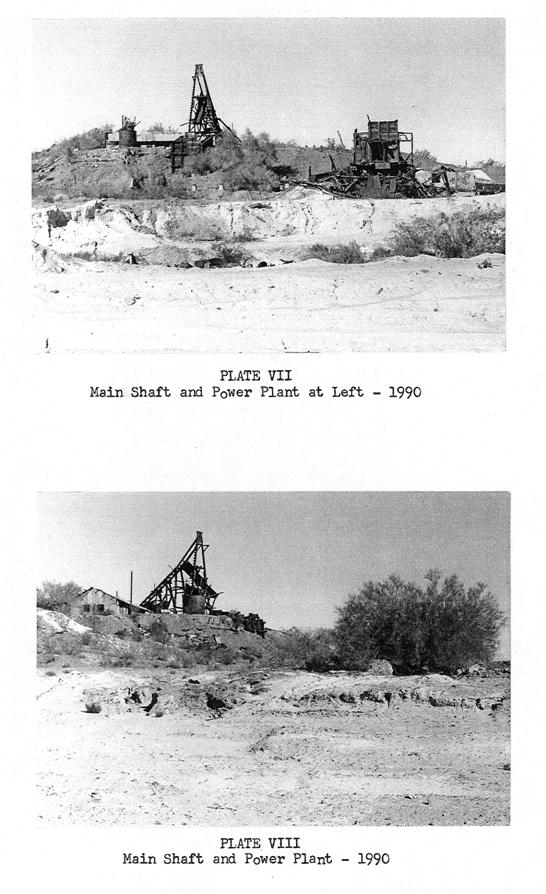
PLATE VI Vulture Mine and Mill (1903).
PLATE VII Main Shaft and Power Plant at Left
(1990).
PLATE VIII
Main Shaft and Power Plant (1990).
PLATE IX
Main Shaft (1990).
PLATE X
Ball Mill (1990).
Plates XI through
XII, following Page 8
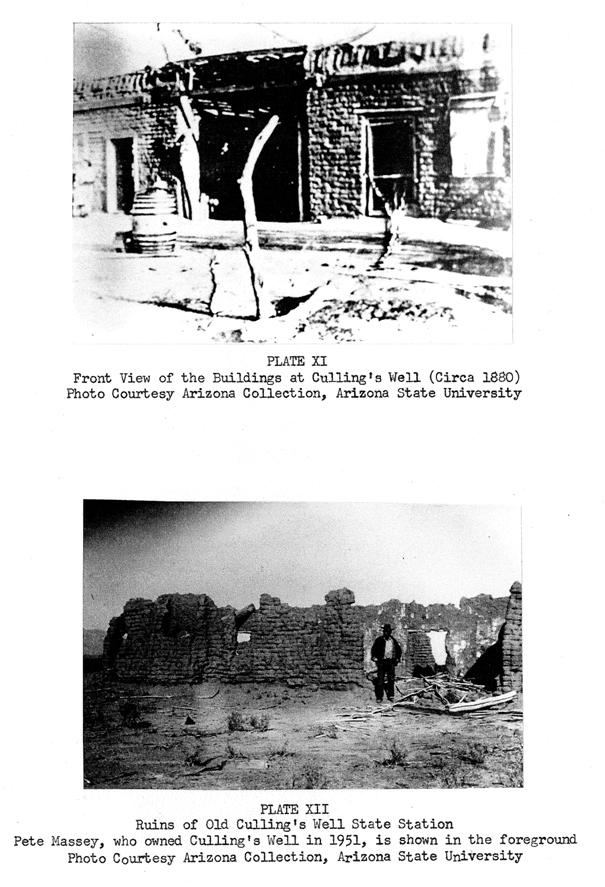
PLATE XI Front View of the Buildings at Culling's Well (Circa 1880).
PLATE XII Ruins
of Old Culling's Well Stage Station (Pete Messey, who owned Culling’s Well
in 1951, is shown in the foreground).
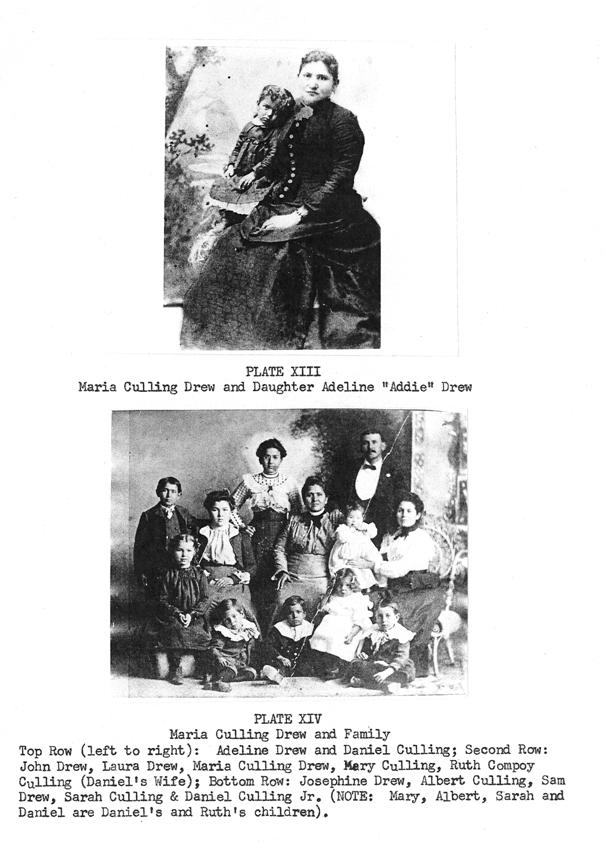
Plates XIII through XIV, following Page 19.
PLATE XIII Maria Valenzuela Culling Drew and
Daughter Melina “Addie” Drew.
PLATE XIV
Maria Culling Drew and Children.
PROLOGUE
Dozens of articles have been
written about Culling’s Well and of the Lighthouse in
the Desert.
Some of these articles have been
fairly accurate but some are too far-fetched and were not based on the true
story of this historic site.
I have based this publication on
facts as recorded by the daughter of Joseph S. Drew and Maria Culling Drew, Adelina “Addie” (Drew) Loza, and
on other historical documents.
My wife, Mary Laura (Drew)
Hernandez, is the granddaughter of Joseph S. Drew and Maria Valanzuela
Culling Drew.
Numerous members of the Drew and
Culling families still survive and this book is dedicated to these families.
Carlos L. Hernandez
August 13, 1990
THE HISTORY OF CULLING'S WELL
CHAPTER I
Joseph Samuel Drew
“He swung a lighted lantern from a
tall pole mounted on his well frame. The light was visible for many miles along
the trail, and for years it guided the weary travelers to water and safety.
Thus came into being the paradox of a lighthouse on a sea of sage and sand.”
This is the true story of Joseph S.
Drew, the founder and keeper of the Lighthouse in the Desert at Culling’s Well.
Joseph was born in Brooklyn, New
York, on September 14, 1845, to John S. Drew and
Sarah Pope. Both John and Sarah were born and married in London, England.
They came to the United States
in 1832 and resided in New York and various
places in the East until they moved to Burlingame,
Kansas on May 18, 1855.
The history of the Drew family is
chronicled in C.R. Green's “Early Days in Kansas,” Vol. II, and is well-documented.
John Drew was one of the oldest
"pioneers of Osage County,
Kansas. He was a well-known
figure there until his death in the city of Burlingame,
Kansas, on
October, 1897, at the age of 98 years and 6 months. Sarah Pope died at Burlingame on July 31,
1874.
John and Sarah’s family consisted
of George, Sarah, William Y., Josiah R., Elizabeth, Naomi, Charles P. and
Joseph S. (the youngest).
George and Sarah were born in England. Sarah
died there. The rest of the children were born in the United States.
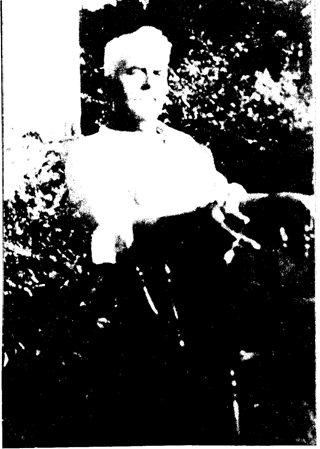
PLATE I
Joseph S. Drew
Keeper of The Lighthouse in the Desert
- 2 -
George served as a Lieutenant in Co. I, 11th Kansas Cavalry and was wounded on December 7,
1862. After the Civil War he was appointed a clerk in the War Department at Washington, D.C.
and served in this position until his death.
William Y. also served as a
Lieutenant in the Civil War in 1861 in Co. D, 2nd Kansas Infantry. After the
War he served as county clerk until his retirement.
Josiah R. filled the Office of
Deputy Treasurer for many years and also served two terms as County Treasurer
in Lyndon, Kansas. He served in three organizations
during the War of the Rebellion, from 1861 to 1866: The 2nd Kansas Infantry,
as a Private; Co. I, 11th Kansas
Cavalry, as a Sergeant; and 2nd and 1st Lieutenant of the 18th U.S.
Colored Troops.
Elizabeth
was born in Boston.
She married Nathan Densmore who died on the first
anniversary of their marriage. Their only child, a daughter, was seven weeks
old when Nathan died, and she only lived to be six months old. This was a very
tragic life for Elizabeth, who remarried eight years later to W.P. Deming.
Naomi, John’s youngest daughter,
also met a tragic death at the age of seventeen. She drowned while on her way
to a Fourth of July celebration.
Charles P., fourth son in the John
S. Drew family, did service in Co. I, 11th
Kansas Cavalry, as· a Corporal, was wounded in the engagement at Prairie Grove,
December 7, 1862, and remained in service throughout the war. He later was
Captain of the militia company in Burlingame.
He was appointed Adjutant General in the Kansas State Militia, and, as of
October, 1915, was residing at Topeka,
Kansas.
Joseph, the youngest of John Drew’s
family, whose story is being written here, struck out for himself in early
life.
Approaching maturity at the close
of the Civil War in 1865, Joseph engaged
- 3 -
in mercantile pursuits in various Kansas towns, latterly at Fort Dodge,
whence he came to Arizona.
Joseph was a medical student in his
youth but the California Gold Rush, which lasted from 1849 to 1860, lured him
to the American \vest.
Joseph's first stop upon arriving
in Arizona was Prescott. He had the appointment of sutler (a follower of an Army camp who peddled provisions
to the soldiers) to the Sixth Cavalry while enroute
from Kansas.
By the time Joseph Drew arrived in Prescott, the city had
already been the site of the capital from 1864 to 1867. Almost immediately, Prescott had saloons,
stores, government offices and a $5,000 theater. The Ninth Legislature moved
the capital back to Prescott from Tucson in 1877. The
capital was moved to Phoenix
in 1889.
The return of the capital to Prescott contributed
substantially to the growth of the community.
Although Joe Drew’s first stop upon
arrival in the .Arizona Territory was at Prescott, he and a gentleman by the name of Ruggles decided to pool their resources, formed a
partnership, and decided that the place to make a fortune would be at Vulture,
where they did become very successful.
Vulture was fourteen miles
southwest of Wickenburg and was one of the largest communities in the Arizona Territory and nearly became its capital.
In 1863 Henry Wickenburg discovered
the Vulture Mine, one of the richest in Arizona’s
territorial history. There are various stories concerning how Wickenburg
stumbled across the mine. One is that he shot a vulture and on picking it up
noticed gold nuggets lying on the ground. The second says that his burro ran
away and in anger Wickenburg threw rocks at it until he noticed that one of the
rocks contained gold. Another reports that Henry
Wickenburg noticed a number of buzzards hovering over this peak at the time he
made his
- 4 -
discovery.
After the mine was in operation for
several years, a community grew at the millsite known
as Vulture City. There were forty-six dwellings and
nearly two hundred inhabitants in 1870.
After the cottonwood trees and
mesquite had been cut to feed the mill, it was moved down the Hassayampa to Seymour.
In 1879 the newly-formed Central Arizona Mining Company built twelve miles of
six-inch pipeline and erected an eighty-stamp mill at the mine. Soon Vulture City shifted from the Hassayampa to the new milling operation at the Vulture. The
town grew to support three hundred residents in the mid-1880's.
Although Vulture City
grew rich am lusty, it was reportedly an extremely dull camp. Stage robberies
provided some entertainment.
The Prescott Weekly Arizona Miner, dated
October 22, 1875 had this to say about Joseph Drew's initial venture at
Vulture: “Another store – C.W.N. Ruggles and Jos.
Drew have arrived here with a stock of general merchandise from Kansas, and
having leased a lot from A.L. Moeller are building a store house between Asher
and Co's new store, corner of Montezuma and Goodwin Streets, and Frederick and Heenan's tin shop. The building will be 24 x 50 feet and
front on Montezuma street, three doors north of
the Miner Office. Ruggles and Drew had the
appointment of sutlers to the Sixth Cavalry while enroute to Kansas
here and now propose to settle into a regular trade.” Joseph Drew was thirty
years old at the time.
These two entrepreneurs sold
everything from mules (Weekly; Arizona Miner, December 3, 1875), to groceries (Weekly
Arizona Miner, March 3, 1876), to Gentleman's hats (Weekly Arizona Miner,
April 14, 1876).
On May 19, 1876 Joseph decided that
being a storekeeper was not exciting, and prosperous enough for his tastes, so
he closed out his stock of groceries
- 5 -
and liquors to devote himself to
mining and prospecting (Weekly Arizona Miner,
May 19, 1876).
Joseph joined forces with R. Pittibone, Frank Shultz and Len Sivyer,
and together they went in search of riches and fame.
The Weekly Arizona Miner had
this to report on June 30, 1876: “Drew, Pettibone, Sivyer, Keys and Shultz and Co. have made another discovery
on Cherry Creek this time and are sinking on it. Len Sivyer
was in town day before yesterday and took out a bellows and other blacksmith's
tools, some grub, etc., and. say may have a good
prospect, but are not prepared to say how good just yet until they prospect a
little further.”
Joe Drew was well on his way to
becoming a successful miner and he had no way of knowing that what was
happening at Culling's Well, some thirty-eight miles west
of Wickenburg at the time, would change his life completely.
- 6 -
CHAPTER II
Charles C. Culling
Charles C. Culling was born in London, England
about IB25 and was a saloon keeper before leaving that country.
After the notoriety of California t s gold
fields swept 'round the world, adventurers of all kinds -- from every walk of
life, turned their faces west obsessed with one thought: sudden wealth. For
many of them, the long, arduous trek in California
ended in death; for others it meant only disappointment and disillusion. Many
had thrown caution to the wind -- had burned all bridges behind them. When
they found no gold, they were lost -- life held no purpose for them. Some tried
ranching. Some went to work on the clipper ships. And some moved into the
unexplored wilderness that was the Arizona
Territory. One such was
Charles C. Culling.
When Charles Culling arrived at
Arizona City (now Yuma) in 1864, and upon boarding a sturdy little steamboat,
piloted by Captain Isaac Polhamus, on the Colorado
River for La Paz, his mind took him back to his home in London; to the many
years he had spent at sea in that country, and he wondered if he would ever see
Great Britain again.
After a short stay at La Paz, he settled in Vulture City
and was one of the first employees of Henry Wickenburg at the famous Vulture
Mine. He then prospected the Weaver country in company with William H. (Bill) Kirkland, notable Arizona
pioneer.
Excerpts from the Special
Territorial Census of 1864, taken in Arizona, shows Charles C. Culling at 40
years of age, single, length of residence 9 months, occupation - miner. On
April 4, 1864 Culling signed a petition to have the capital located in the
Walker-Weaving Mining La Paz District. This, of course, never materialized. (Weekly Arizona Miner,
April 4, 1864).
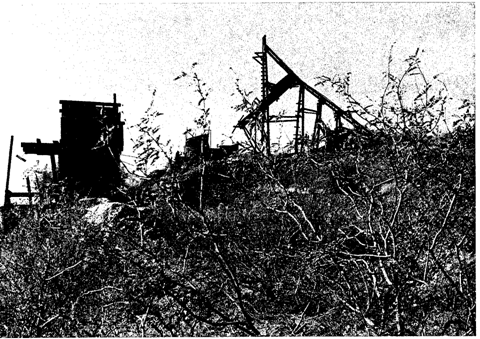
PLATE IX
Main Shaft - 1990
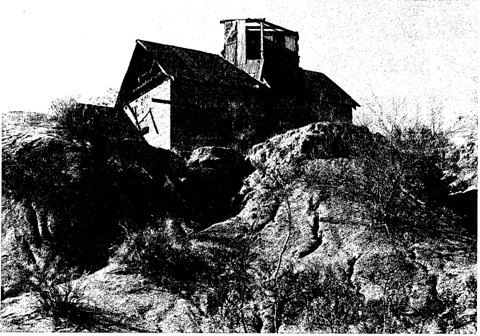
PLATE X
Ball Mill - 1990
- 7 -
La Paz, located seven miles north of
present-day Ehrenberg, was a very rich and extensive gold-mining district. It had
its beginning when Captain Pauline Weaver, noted Arizona
frontiersman, discovered gold near the Colorado River
in 1862.
The first surge of people flooding
into the area had little to eat besides mesquite beans and fish, but it did not
matter. Gold was the answer to all problems. In the evenings miners and
gamblers would spread their blankets on the dusty street and play cards for the
heavy nuggets.
La Paz grew by leaps and bounds. A year later
the town, thronging with Mexicans, Indians and white men, numbered about
fifteen hundred citizens. It became an important landing and freighting point
on the Colorado River, and was the county seat of Yuma until 1871. La Paz
was previously considered as a possible capital for Arizona Territory.
Gradually the Colorado River
changed its course, leaving La Paz
abandoned as a steamboat landing. Placer gold began to give out, and people
scurried away to the more promising settlement of Ehrenberg down-river.
Charles Culling was a visionary and
he was aware that the California
and Arizona Stage Company ran two stages daily, one to the east and one to the
west, from Ehrenberg to Wickenburg and Prescott, and he also knew that this
same route was used extensively by freight teams.
It was at a site where the road
forked, the right hand branch going forty-five miles eastward to Wickenburg,
and the other more northerly via Camp Date Creek, forty-five miles, and thence
to Prescott, a
total of 105 miles.
In the latter part of 1865, Charles
Culling decided to establish a stagecoach station at the location where these
roads intersected, but before doing this he had to locate water in the
immediate vicinity.
Here, in this desolate location, in
what is known as McMullen
Valley, the
- 8 -
headwaters of the Centennial Wash, between the Harquahala Mountains to the south and the Harcuver Mountains to the north, Charles Culling set up a
tent and with the help of a Mexican by the name of Jesus Altamarino,
and other workers, they dug a well, some four miles from what was to become Culling's Well, to 200 feet, but they failed to find water.
Undaunted, and with a fierce determination, Charles refused to give up and then
moved to the Culling's Well site where at 240 feet
his tenacity paid off when a good flow of water, sweet and soft, was struck. He
continued down another 25 feet to insure a plentiful supply.
Thus was established Culling’s Well, an oasis in the middle of a lonely and
dangerous road frequented often by hostile Apache Indians eager to loot,
plunder and kill any unwary traveler.
Charles rounded up some men and
erected a large adobe building for protection against the Indians. In time he
was to add additional rooms to accommodate his family and occasional weary
travelers who stopped by for room and board.
The well furnished a fine and
unfailing supply of water. The water was cool and was drawn up from the
darksome depths of the well in a great bucket made from a wooden barrel. The
revolving drum above the mouth of the well was operated by a blindfolded mule
that knew - to an inch - just how many rounds were required to be made before
the dripping, clanking bucket would reach the top and
automatically empty itself into a trough. At other tanks and troughs - a short
distance from the station - always stood cattle and horses purchased by Culling
from time to time, and. which were turned loose on the range, but came there to
drink of the life-giving water.
In addition to the daily stage each
way (at first they had been weekly), many freight teams stopped at Culling's Well. Here animals were
watered at twenty-five cents per animal, or fifty cents per barrel. Culling was
shrewd enough to obtain a contract with the stagecoach line to have all their
stock
- 9 -
watered at the well. His business
soon became very profitable, to say the least.
The Butterfield Overland Mail
promoted adequate service across Arizona.
The stages that passed daily were six-horse affairs.
The movie-style Concord stage was used on the eastern and
western ends of Butterfield's run, but for crossing the deserts and mountains
the firm used a light-weight “Celerity Wagon” specially designed for the route.
It had upholstered seats which could be folded down to make beds.
Stagecoaches of that era had an
oval-shaped body resting on straps slung between the front and rear axles. This
type of suspension enabled the body of the coach to roll rather than jerk or
bounce when the wheels hit obstructions. Nine to twelve people could be seated
inside depending on the model and additional passengers rode on the top.
Mules, instead of horses, were used on the “Celerity Wagons”. These mules were
more adaptable to rough mountain and desert travel.
In her book, "Ghosts of Adobe
Walls, It Neil Murbarger writes: "It is not now
known, or will it ever be known, how many lives were lost in the course of
sixty odd years of staging in Arizona Territory. Indians, bandits, accidents,
heat and cold and thirst, each took its toll of the hard life of staging -- a
life that of times demanded the last ounce of courage from horses and mules,
drivers and swampers, station tenders, and
passengers.”
Charles purchased small amounts of
food at the Goldwater's store in La
Paz in 1867 and 1868. He also obtained stocks of food
for the station from the government, which he distributed to the Indians. He
hired a Chinese cook to prepare the food.
By now Culling's Well was becoming well-known.
The Weekly Arizona Miner
published this item on December 17, 1870: “Mr.
- 10 -
Calvin White of the firm of Allen & White, arrived home
on the night of the 13th from San Bernardino, California and had this to say
regarding Stations and Station-Keepers along the route: 'He is not very lavish
in his praise of a majority of the station-keepers along the route, and the
manner in which they keep their stations, but speaks in high terms of Charles
Culling, keeper of the station at Culling's Well,
who, he says, has a nice, clean place, and takes pleasure in treating travelers
well. Wish the others would copy after Charley. He know
it would be to their profit to do so.' “
The Arizona Miner of March 14, 1868 published a notice to all
teamsters and. travelers showing the "Safest and Best Route from the
Colorado River to the Interior of Arizona,” which included Culling's
Well, had this to say about the route: "Abundance of water for men and
animals at all times. There is plenty of feed on this route. The Indians are
peaceable on the route.”
Approximately a year later the
Indians were not as “peaceable,” for on February 26, 1869, the stage traveling
from La Paz to Wickenburg, carrying the mail and two passengers, and driven by
Bill Tingley, was attacked by Indians who had hidden
beside the road at Granite Wash (between the present towns of Hope and Salome).
As the stage approached, the Indians began shooting at the stage, which scared
the horses driving them right into another band of Indians concealed in the
high grass nearby. Driver Tingley, however, managed
to swing the team around and continued on towards Wickenburg while passengers
held the Indians at bay. During the fight both Tingley
and passengers were wounded but the horses finally outran the Indians and they
made it safely to Culling's Well.
The Apache Indian problem had its
beginning in the southwest in early 1861 when Lieutenant Colonel Pitcairn Marrison detached Second Lieutenant George N. Bascom and approximately sixty men to recover a white boy
and. some cattle that
- 11 -
had supposedly been stolen by the Chiricahuas earlier. Although Cochise, the Chiricahua chieftain, came into Bascom's
camp voluntarily, accompanied by several of his relatives and friends, Bascom had them surrounded and demanded the return of the
boy and the cattle declaring that Cochise and his party would be held hostages
until both were brought in. Cochise protested his innocence to no avail.
Sensing that the Lieutenant meant what he had said, Cochise drew his knife,
slit an opening in the side of the tent and escaped unharmed. One warrior
followed his chief through the hole in the tent but was killed. The other six,
mostly relatives of Cochise, were seized as hostages. This tragic and needless
episode became known as the “Bascom Affair.”
The "Bascom
Affair” so enraged Cochise that he launched a long and terrible war, intending
no less than the total extermination of all Americans in Arizona.
With the New Mexico Territory
stripped of troops due to the Civil War, the odds lay with the Chiricahuas. In two months they slashed their way through
dozens of white settlements in the Arizona
country and took 150 lives.
Most of the early governors
identified the hostile Apache as the chief obstacle to civilization in
frontier Arizona.
Governor Goodwin,
who had been appointed as governor to the Territory by Lincoln
on August 18, 1863 although the Territory
of Arizona was not
formally established until December 29, 1863 at Navajo Springs, requested.
that a sufficient number of federal troops be sent to
round up those Indians who persisted in plundering and desolating the
Territory.
In 1865, because of the Indian
depredations in the Territory, the district of Arizona, a part of the
Department of California, was placed under the command of Brigadier General
John S. Mason, who came east from California
with 2,800 men to re-garrison the old posts and to establish new ones. But
little was accomplished
-12-
by these troops as the Apaches
continued to raid at will, Then on April 15, 1870 the district was detached
from California
and made a separate department.
Under the command of Brigadier
General George Stoneman, a new policy was initiated
based on the theory that the Indians would respond to kindness, religious
instruction, and training in agrarian methods.
Stoneman
made treaties and established reservations with those Indians who would accept
them, and by feeding the Indians when they agreed to these terms.
The “Carnp
Grant Massacre” of April 30, 1871, in which a citizen army from Tucson,
composed of approximately fifty enraged Americans and almost one hundred Papago Indians, attacked a reservation for the Aravaipa Apaches near Camp Grant and killed one hundred and
eight of the Indians and carried off twenty-nine children into captivity, only
enraged the Apaches that much more.
Lieutenant Colonel George Crook
arrived in the Territory on June 4, 1871 and took command of the Department
from Stoneman. His job was to undertake a field
campaign to force the renegades to reservations. Cochise and the Chiricahua Apaches signed a treaty in which they were given
a reservation in southeastern Arizona.
He honored this treaty until his death on June 8, 1874.
After Cochise's
death, his oldest son, Taza, became the head of the Chiricahuas. Due to his lack of strong leadership the
tribe split with some of the tribe remaining in the reservation and the rest of
malcontents fleeing to the mountains determined to continue their open warfare
in 1876 under the leadership of a rising war leader, Geronimo.
Charles Culling, in the meantime,
continued to distribute government food, mostly flour and staples, and was
generally not bothered by the Apaches until January 18, 1871.
On January 23, 1871 a letter was
written to the Editor, Arizona Miner,
from Camp McDowell, Arizona Territory, which reads as follows: “I suppose are
- 13 -
this reaches you, you will have
heard of still another outrage at Culling's Well on
the La Paz
road. About daylight Wednesday morning, the 18th, the Indians ran nineteen head
of horses and mules belonging to Mr. Culling, and seven head of oxen from the
train of M. Cavaness. As soon as the loss was
discovered Messrs. Culling and Cavaness started in
pursuit, following them into the White Tanks. Finding the party was too large
for them to cope with, and the trail leading in the direction of the Verde,
they started at once for this post, and arrived here Saturday morning about 8
O'clock. As every available horse was out with Major Veil, after the stock of
W. B. Helling & Co., Colonel Sanford was
compelled to mount fifteen men part of them Infantry, on mules of the Q.M.
Dept. Lieutenant J. M. Ross was placed in command and started in immediate
pursuit taking a straight course to the Verde. About eight miles from the post,
the trail was struck crossing the river. Following it for nine miles they
suddenly came on the Indians, who were encamped, cooking and eating an ox. The
troops charged them, but the country being exceedingly rough and almost
impassable for horses, the Indians succeeded in getting off, though leaving in
their precipitate flight, every single thing they possessed. Nine horses, three
mules, and three oxen were recaptured, besides bows, arrows, knives, blankets,
etc.
As Lieutenant Rose’s animals were
completely used up and his party too small to enter far into the dangerous
country, he was compelled to return to the post, arriving here safely the same
night, with all the recaptured stock.”
(The article goes on to rake the
government over the coals for not mounting the Infantry, so they could be twice
as effective against the Apaches, etc.)”
Another raid by the Indians
occurred at Culling's Well
sometime in February 1871. During this raid a party of Indians shot one horse,
which they could not drive, and drove off another horse and six head of cattle.
The raiders were
- 14 -
pursued and the cattle recaptured.
In this vicinity the Indians had confined themselves to stealing corn, etc.
(Weekly Arizona Miner, February 11, 1871).
This was followed by yet another
raid, which was reported to the Weekly Arizona Miner on February 18, 1871 by
the driver of Grant's Stage.
On November 4, 1871 occurred what
became known as “The Wickenburg Massacre.” This happened when a stagecoach
bound for California,
with seven men and a woman aboard, was attacked on the Ehrenberg road, nine
miles west of Wickenburg. Six of the men, including a well-known scientist, and
a New York Tribune correspondent named Fred W. Loring,
were killed by Apaches. The two wounded survivors, William Kruger and a Miss
Nellie Sheppard probably were able to escape because the attackers began an
orgy on the “firewater” they found in the lucrative loot.
- 15 -
CHAPTER III
Maria Valenzuela
Things had quieted down at Culling's Well and construction was progressing on the
station when Charles Culling, now age 46, met Maria Valenzuela, who was to
become his wife and to share his life at Culling’s
Well for the years to come.
Maria Imperial Valenzuela was born
in Sonora, Mexico, on February 1857.
Her mother, Martina Imperial, had married Marcial Valenzuela in Mexico but Marcial
died when Maria was still a baby. Martina left Mexico
with Maria in tow and came to the United States when Maria was just
three years old. She came with her two brothers, who were cattlemen, and
settled in the lush region of what is now Imperial
Valley, California.
The Valley was named after the Imperial family.
Martina was described by her
granddaughter, Adelina (Drew) Loza, as “small, independent, and industrious and
refused to depend on her relatives for substenance.”
There was very little work to be
had by women in those days, so Martina decided to go to the gold rush camp of La Paz to try to set up a
boarding house. She was an excellent cook and the miners were in sore need of
good food.
As mentioned previously, gold was
discovered in La Paz
in 1862 and was a boom town of 1,500 inhabitants when Martina and her child,
Maria, made the trip there.
Building materials in the mining
camps were almost nonexistent. Most individuals lived in tents, so Martina put
up one large tent with suitable tables in the center, which would serve as a
dinning place, and to one side she set up a small kitchen. Another tent she
kept for herself and Maria. When she opened for business, she was literally
swamped with customers. There were just too many and she could not possibly
cook for them all. Nevertheless, she took in as many
- 16 -
as she was able to and in this way,
even though the work was hard, she made a good living and felt happy and
secure.
Things went well for Martina. She
became quite independent by having her own little business, and a good income.
Indeed, she never lacked customers in all the years she maintained her boarding
house. Whenever possible, she would purchase a cow, thus supplying the miners
with fresh milk and cream for their steaming hot cups of coffee. Her day
started around 4 a.m. with a cold bath summer or winter. In a large trunk she
kept her clothes and undergarments folded neatly and carefully. Dressing
quickly, with her hair parted in the middle, and drawn tightly in a bun, she
would head for her kitchen and another day of hard work.
Martina prepared three meals a day
for the miners: Hot biscuits, delicious roasts, and a favorite that was enjoyed
by all -- baked ribs with almond chili. This latter dish permeated the whole
area with a mouth-watering aroma. If the miners wished to take a lunch with
them, she would prepare one tortilla rolled up with a filling of
chili-eon-carne, another with refried beans, and another with chopped green
chili, onions and tomatoes, seasoned with garlic, salt and pepper. These would
stay hot and fresh until they were consumed and represented a hearty and
well-balanced meal to the hard-working gold miner. This menu certainly beat
the steady diet of mesquite beans and fish that these workers had been used to
prior to Martina's arrival at La Paz.
It was here at La Paz in late 1865 that a gentleman by the
name of Charles C. Culling made his appearance at Martina's boarding house. He
introduced himself as an Indian Agent authorized by the government to set up a
station and briefly described the proposed side between Wickenburg and
Ehrenberg. He asked if Martina would board him for a few days until the well
was dug at the station. She agreed as Mr. Culling appeared to be a very kind
individual. The well completed,
- 17 -
Charles returned to Culling's Well
to oversee the management of the station. Maria was now eight years old.
The boom lasted about two years at La Paz and after the Colorado River changed its course,
and La Paz was
abandoned as a steamboat landing, Martina pulled up stakes and, like most of
the inhabitants, moved to Ehrenberg. Here she lived, busy and content, doing
what she loved most -- cooking. It was now 1869 and Maria was twelve years old.
It was here also at Ehrenberg that
Martina, after years of austere living and tedious hours spent at her work,
that she decided to remarry, for she wanted security and companionship for
herself and Maria. Unfortunately, her marriage to Jesus Osuna
turned out to be more of a tragedy than a blessing for Jesus was a miserable,
abusive wretch who demanded to be catered to and expected both Martina and
Maria to wait on him hand and foot. To him both Martina and Maria were nothing
but servants and treated them as such.
He took Martina’s hard-earned money
to spend on liquor, and who knows what else, for he never did any work. Most of the time he stayed drunk and had a violent temper.
Maria, for nights at a time, would lay shivering in fright as Jesus inflicted abuse upon her
mother, not knowing when he would burst into her room shouting and raving at her
also. Maria lived in constant fear of him and when she would see him coming,
especially if he was intoxicated, she would run over to a neighbor's house to
get out of sight.
Things got so bad at home, putting
up with her abusive stepfather, that Maria even
thought of leaving home, although the thought of leaving her mother was almost
unbearable.
Charles Culling never lost touch
with Martina and as the years went by, and with the station making daily
progress, he returned to Ehrenberg in 187l
- 18 -
but by now, fully aware of the
miserable life Maria, now age 14, had been experiencing, he decided to discuss
Marla's situation with Martina.
Jesus Osuna,
Maria’s stepfather, had absolutely no respect for Charles or Charles' presence
there so it was obvious to Charles that Maria was under a terrible strain and
it pained him deeply to see her thus.
Charles was not unattractive, was
46 years old, and he had endeared himself to Martina and to Maria by his
kindness and thoughtfulness during the time he had boarded with them. Charles
told Martina that he had been seriously thinking of Maria and that perhaps he
could offer this young girl a happier life than the one she was facing now.
Martina told Charles, with tears in her eyes, of all their suffering am unhappiness,
and said that she had just about decided to send Maria away to live with some
relatives. Charles then asked Martina's permission to marry Maria and he went
on to assure her that he would make a good home for her and to take care of her
always. Martina hesitated because of Maria’s age, who was still playing with
dolls, but she knew deep in her heart that Charles meant all he had said and
she also knew that Maria would only suffer more there with her stepfather. In
the end she told Charles that she would talk this matter over with Maria, being
careful not to press her, but letting her make the final critical decision.
In the meantime Charles returned to
the station to await Maria’s decision. The more Maria thought of marriage to
Charles, the more it seemed to her a blessing, an answer to all of her
problems. She was not in love with him but admired and respected him very much
and this was akin to love. She even felt a gladness in
her aching young heart at getting away from her abusive stepfather, she came to
a decision.
When Charles returned, rather
apprehensively, to Ehrenberg in December of 1871, Maria told him the news he
had been so anxious to hear. Yes, she would
- 19 -
marry him and this pleased and made
Charles very happy.
Charles Culling and Maria
Valenzuela were married with Martina's blessing. This item appeared in the Weekly Arizona Miner, December
23, 1871: “Married at Wickenburg, December 17, 1871, by W.K. Ferris, J.P., Mr.
Charles Culling and Miss Maria Valenzuela, both of Yavapai County. The ceremony was celebrated with
wine, chickens and other good things."
Later, because Maria was Catholic, they were married by a
priest.
- 20 -
CHAPTER IV
Life at Culling's Well
You have heard of men who fought and
died for gold and silver. You know of those pioneers who struggled to raise
cattle on the frontier. You have seen a motley assortment of men and women --
all seeking, fighting, dreaming.
There was a man who found what he
sought not in a vein of gold or a herd of cattle but in a stream of crystal
clear water. This man was Charles Culling.
Yes, Charles had found two
treasures: The crystal clear water in McMullen Valley's
Centennial Wash and he had found. Maria Valenzuela -- now his bride.
At first the desert was very lonely
and quiet and Maria was the only girl at the station. Also, she was young and
full of fears, especially of the Indians, who attacked isolated settlements
like theirs without warning. Charles reassured her by telling her that the Indians
had already heard of these stations which supplied them with food and for this
reason he doubted they would be harmed. As it turned out, Charles was quite
right. Food was very precious to the Indian and he would not do anything to
jeopardize this gift of the white men, although he regarded the intent with
deep suspicion. That the Indians were close by, however, was apparent in the
loss of stock in 1871.
Charles tried hard to win Maria's
confidence and, since he was a wise and kind person, he realized that she was
young, not yet over the trials of the past few years, and not ready for .the
responsibilities of marriage. He knew also that she missed her mother very much
and promised her to take her to Ehrenberg to see her mother soon. In the
meantime he bought her a gentle pony and a new saddle. Maria was delighted with
her pony and spent much time exploring this wide and lonely countryside. There
was not much for her to do at the station since Charles already had a cook and other workers to do the chores.
- 21 -
Maria was a good rider and enjoyed
this newly found freedom immensely. Charles cautioned her not to wander too
close to the mountains since they were occupied by large bands of renegade
Apaches.
A few of the Indians had already
ventured down to the station and Charles had distributed some food. This action
seemed to please the Indians for they were always hard-pressed for food. They
eked out a bare supply of food from the desert and had very little meat.
The station had been constructed in
1868. Using what Indian and Mexican labor he could muster. The large dwelling
finally erected resembled a fort.
It consisted, at first, of four
rooms with a wide hall running down the center. The stage station walls were of
unusual thickness, consisting of adobe bricks made at the site. Pine poles were
placed across the roof, and a layer of brush was piled on next. After that came
a heavy layer of dirt, well-packed down. It is said that this roof never
leaked. The walls were all whitewashed with lime. Later some storage rooms were
added to the central building. Adjacent to it was a small corral enclosed with
an adobe wall about five feet high, with only one gate entrance.
Charles had stocked a large supply
of food and goods, such as roadside stores handled in those days, and he also
stacked a goodly amount of liquor. The station also served as a mail drop.
The Indians were coming down from
their dwellings in larger numbers, as Charles had anticipated, but never making
a hostile move. Usually they would linger at a distance to watch the station's
activities.
Maria, riding side-saddle on her
pony, had become a familiar sight to the Indians and they never harmed her in
any way as she took her daily rides through the desert. The fact that they did
not harm her will seem quite remarkable to anyone when you consider that these
same Indians were ambushing the stages and killing the settlers.
-22-
The Apaches were a handsome people - standing straight and
tall and with regular, bold features. The women, as a mark of beauty, had their
chins tatooed in straight lines, running from the
lower lip to the bottom of the chin. The women of the tribe did most of the
work in addition to some basket-weaving and pottery-making.
The Indians began to come every day
to the station for food and they were extremely curious about the station and
everything in it. They gathered in the doorways or stood at the windows looking
at the furniture, the wood stove, and especially at Maria as she went about her
duties. Occasionally Charles would show them how to prepare some of the food
and they seemed willing to learn.
David S. Chamberlain (1848-1933)
was a relatively well-known Arizonan. He lived in Tombstone for a short time and while there,
developed some of that city's first wells. Later he became a millionaire in the
manufacture of patent medicine. In his early years he did a great deal of
prospecting in the Arizona
Territory. His views of Culling's Well in 1871 appeared in
the Arizona Republican, dated
April 20, 1932, and titled “Journey to Arizona
in 1871.”
"Our last stop was Cullen's
(sic) Wells, which was also a stage station. The regular stages ran weekly, but
another weekly mail was carried between times by a buckboard, without carrying
passengers. We arrived at Cullen's (sic) Wells early in the morning. Cullen
(sic) had a small corral, enclosed with an adobe wall about five feet high,
with only one gate entrance. We got our animals inside the corral, and
proceeded to get breakfast. I remember buying half a dozen eggs from Charles Cullen
(sic). A lot of Indians from the Date Creek Agency were there. I fancy there
must have been at least 150. They wanted to get into the corral and were
begging for something to eat. I ordered them to vamos
but they seemed very persistent so I took my six-shooter and told them to
'pronto
- 23 -
vamos.’
My partner was very much alarmed, thinking that I was starting a fight and that
we would both be killed but we got them out and kept them out. It was very hot
and dusty and we had little rest, as only one of us slept at a time, the other
sitting with a Henry rifle over his knee. Frequently, some of the Indians would
peak over the wall but none of them entered in.”
David Chamberlain and his partner,
for the matter, were rather lucky in their dealings with these Indians. Later
that same year was when the “Wickenburg Massacre” took place less than
forty-five miles from Culling's
Well.
The stage station grew during the
following months. Freight wagons brought new doors and windows and some
furniture from San Francisco.
New additions were made to the already existing structures, and Culling
increased his herds of cattle and horses, and added flocks of chickens.
However, all was not fun and
profit. Another Indian raid took place in 1872.
This item appeared in the Weekly Arizona Miiner
on March 9, 1872: “F. Hawthorn, who came up this week from Culling's
station, informs us that he, himself, lost four mules; S.O. Miller, of this
place, two mules; and William Yerkes, one horse. And coming back next day, the
same party of thieves took a horse out of the herd while Ed Lamley
was doing his best to drive them away. Hawthorne, Charles Culling and some
Apache-Yuma Indians followed the trail of the thieves but did not catch up with
them."
Another disaster befell Charles and
14aria on July 1872.
This time a band of Apache Indians
raided the station and stole some more stock. Maria did not witness this
attack. During 1872 a series of raids on the station netted the Indians 132
head of stock; they partly destroyed one corral; burned 200 tons of native hay.
On several occasions, Charles and
his hired hands would give chase but, except
- 24 -
on one occasion when Charles and
the cowboys retook the stolen stock, the Indians usually got away leaving not a
single trace.
This was not all because on
September 14, 1872 the “Weekly Arizona
Miner” published this article: "On the night of September 4,
Apache-Mohave Indians stole eighteen head of animals from. Culling’s
station, and five more from a. station further on the
road, towards Ehrenberg.
This we learn from a note from A.O.
Noyes, who, with his family, had got that far on his way to California.”
It was around this time that one
sunny day the stagecoach arrived as usual at the station. By now Maria had
become quite bored with life at the station and she decided she would learn to
cook. She had been very annoyed for some time with the Chinese cook, who
considered the kitchen his personal domain and resented Maria’s presence there.
He let it be known that the kitchen was off-limits to everyone, including the
boss's wife, and would definitely not tolerate anyone fussing around and
getting in his way. This didn't deter the stubborn Maria,
for she was determined she would learn to cook regardless of the consequences.
The way she went about this was to peek in through the open door when the
Chinese cook had his back turned and watch him prepare the meals. In this way,
she at least learned the basics of cooking and made up her mind that as soon as
she became proficient she would give this arrogant cook his “walking papers.”
The stagecoach stopped and Maria,
who by now felt that she was capable of preparing the meals, prepared the hot
meals for the passengers while the drivers watered the horses at the well.
On this particular day, a friend of
Charles alit from the stagecoach much to Charles' surprise and joy. His name
was Christian Berry.
Christian Berry, a native of Charleston, South
Carolina, had enlisted as a Private in Company H, 7th
Regiment California Volunteer Infantry on November 6, 1864
- 25 -
and mustered on December 9. He saw
service in California and Forts Yuma
and Mason, Arizona Territory before being discharged at
Drum Barracks on March 1, 1866.
“Berry,” as he was called by everyone, worked
at the Vulture Mine, Wickenburg, after his discharge. The 1870 Census taken on
August 20, 1870 shows him at Vulture at the time. Although it is not certain if
Charles knew him from there or not.
By occupation, this five-foot,
seven-inch, fair-complected and blue-eyed and blonde
Southerner was a miner.
Upon arrival at Culling's
Well, Christian Berry’s intention was to visit with Charles for a while before
continuing on his way to look for a job.
Somehow Charles persuaded him to
remain at the station as an employee.
During the evening meal he had
noticed the short temper of the Chinese cook, which was rather obvious. He told
Charles that he had been a cook in the Army and offered to take over the
kitchen duties as part of his job there. Charles and Maria were delighted and told
him that the job was his. The excellent, but sullen Chinese cook quit in a fit
of temper, which saved Maria the trouble of firing him.
Berry turned out to be clean and efficient
and an excellent cook. He taught Maria the finer points of meal preparation.
His favorite meal was barbecue. He would dig a pit in the ground, surround the
interior of the pit with pre-heated rocks, then he
would place a couple of large choice cuts of beef in the pit. The pit was then
covered and the beef allowed to cook the entire night.
In the morning the beef was extracted and it was so tender that it could be
sliced with a fork. He also prepared corned beef and taught Maria how to make
butter and cheese since milk was plentiful. There were always large rounds of
cheese and butter on the table and large pitchers of molasses to pour over Berry's golden, flaky
biscuits.
- 26 -
Berry also helped with the heavy chores
around the station and with the stock. In fact, Berry had found his place in life at Culling's Well and became the
major domo, or jack-of-all-trades, of the establishment.
On October 12, 1872 Charles Culling
was appointed Precinct Inspector for Precinct Deep Wash at Culling's
Well for the general elections scheduled for November.
What this job entailed is not known but obviously Mr. Culling was well known in
the Territory by this time.
Although Culling Station was rather
isolated from other white establishments, there were always travelers passing
through to keep Maria from becoming too bored or lonely.
On one occasion, she even invited a
friend of hers, Mary, from Wickenburg to come and visit with her at the
station.
Winter passed quickly and in early
spring, Mary finally arrived at Culling's Well to the delight of Maria.
This was a particularly beautiful
time of the year in this desert country. The early morning air was always cool
and refreshing and the world seemed permeated with the faint scents of mesquite
and creosote blossoms. The washes would be carpeted with wild flowers creating
a riot of color from marigolds, poppies, lilies and blue lupine. The sounds of
birds were everywhere, as if welcoming the joy of spring, and it was into these
surroundings that Maria and Mary rode their ponies almost daily.
One particular day as these two
tomboys were riding fairly close to the mountains, which were extremely
dangerous due to the Indians lurking nearby, they happened upon a large nest in
a Palo Verde tree. The tree being rather shady was an open invitation for them
to sit under its green branches to rest from their ride. As they sat under this
tree, both kept wondering what kind of bird would build such a large nest.
- 27 -
Perhaps an eagle had built it but Maria had never seen an
eagle in this area. Curiosity got the best of Maria and scrambling up the tree
she peered into this nest only to be confronted by a rather large lizard which
hissed at her. The lizard, nearly two-feet in length with a stout body and
covered with black, orange and yellow scales, resembling beads, was a Gila
Monster -- a venomous lizard that is capable of inflicting sometimes fatal
wounds. This startled the brave Maria, who jumped down from the Palo Verde with
the Gila Monster following close behind. What this
creature was doing up the tree is uncertain but Maria learned a very important
lesson, beware of the desert. Maria and Mary needed no urging to sprint for
their ponies and gallop back to the station.
Upon arrival at the station they
could see a number of Indians gathered as usual around the doors and windows,
talking and gesturing amongst themselves and pointing at different things,
which were all foreign to them. They had never seen a wood stove nor dishes or
other furniture. They had no idea how the white man prepared his food, how this
food tasted, or even what they ate. In time, Charles would hand out to the
Indians different dishes that had been prepared as they could sample them. The
rest would gather around eagerly to watch. First the sample dish was smelled
then cautiously eaten. It always amused Charles to watch this ritual and to see
the surprised, almost comical, expressions that came over their faces. They
seemed to relish every dish, so Charles gradually began to give them a little
more variety of food and often showed them how to prepare it.
Maria began to venture out on her
daily rides with more confidence. The Indians seemed friendlier somehow,
perhaps it was the way Charles treated them. At any rate there was little
hostility in their attitude toward Maria and Charles as compared to what it had
been earlier. Charles felt that perhaps they had finally reached some sort of
understanding with the Apaches.
- 28 -
One day an old squaw, who gave her
name as “Chacha,” appeared at the ranch and told
Charles that if he would go with her to a certain mountain, she would show him
where a large gold mine was. She indicated this in sign language as she spoke
only a few words of English. Charles was quite familiar with the Apache sign
language and was able to communicate with her. Charles was rather skeptical
about the squaw’s information and he feared that perhaps this woman was trying
to lead him into a trap. After all, some of the renegade Apaches were still on
the warpath although those visiting the station seemed friendly enough. While
these thoughts were running through Charles’ mind, the old squaw stood by
quietly waiting for a sign from Charles. In the end Charles decided to go with
her but asked one of the cowboys working at the station to accompany them. When
the squaw understood what Charles wanted to do, she shook her head decisively
and indicated that either Charles went alone with her or the deal was off and
she firmly refused to budge. The lure of gold was too strong to resist so
Charles agreed to go with her but, as an added precaution, he slipped a six-shooter
into his pack before they departed.
The range of mountains where "Chacha” told Charles where the gold was to be found was
some seven miles from the station and were known as the Harquahalas.
Harquahala
means “running water” or Ah-ha-qua-hale – “water there is, high up” to the
Mohave Indians. An earlier name for the mountain was Penhatchapet
(1865), probably because on their south slope was a spring called Pen-Hatehai-Pet water. By 1869 this same spring was being
called Hocquahala Springs and the name was gradually
used to include the mountains themselves. The attempts of white men to wrap
their tongues around this word has resulted in various spellings, among them Huacahella Mountains and Har-que-halle Mountains. They are, name and all, the
most massive in Central-Western Arizona.
- 29 -
"Chacha”
led Charles towards these mysterious mountains until they arrived at a sort of
divide and then she stopped close to a spring of cool water. She dismounted and
sat down on a large flat rock. Charles, thinking that she was tired and
thirsty, started to sit down also in the shade of a mesquite tree. She would
have none of this and insisted that Charles keep on looking for the gold. She
was very superstitious about revealing locations of gold or treasures of any
kind to a white man. She believed that if she did show him the exact location
of the gold, she would be denied entrance into the "happy hunting grounds”
in the hereafter. On the other hand, if this white man found the gold by
himself, she would not be guilty of this offense.
Charles, by this time, was in a
frenzy of excitement thinking that he was within sight of this fabulous gold
mine, so putting aside tiredness and heat, he wandered around the area, poking
here and. there, lifting rocks and digging into sand and dirt with his pick
until exhausting himself completely.
Finding nothing, and with the
evening shadows creeping up gradually, he decided to spend the night near the
spring and return to the search the following morning.
Early the next morning, just as the
first rays of the sun made their appearance, Charles began the search again,
almost frantically, but to no avail. All day he toiled with the “gold fever”
deeply burning into his already tired body. This effort produced absolutely no
trace of any gold or gold ore and, in anger, decided to end this useless search
for the legendary treasure. Picking up his gear, he disgustedly took one more
look at these taunting mountains and started back to the station as the
deepening shadows blanketed the Harquahalas
concealing their earthly treasures, perhaps forever.
The squaw, a smile upon her rugged
features, shrugged, mounted her horse and followed silently.
- 30 -
Ironically, in 1869, just three years
before Charles Culling went searching for the allusive gold mine, it was
reported that a Pima Indian had made a big strike in the Harqhahila
(sic) Mountains but the San Francisco
Chronicle asserted many years later that an Army officer first struck gold
there, only to be driven off by Apaches. The same newspaper stated that five
prospectors had managed to slip into the area while the Apaches were on the
rampage a take $36,000 in surface gold before clearing out several days later.
In fact, as early as the 1860's,
reports had filtered out that gold had been discovered in the Harquahalas by three Frenchmen who had come to Yuma and had deposited
eight thousand dollars in gold at George Hooper's mercantile establishment.
Although attempts were made to follow these miners back to the source of the
gold mine, neither the Frenchmen nor the mine were found. It was assumed that
the Apaches had killed the Frenchmen before they revealed the location of the
bonanza.
Charles, of course, had no way of
knowing this at the time.
The Lost Squaw Mine was discovered
in Spanish times. The conquerors of Mexico
found the mine in the Adonde (now Copper Mountains)
Range near Baker's Tank, and took out several million dollars in gold. For some
reason known only to them, they abandoned the mine after some years.
There are several contradictory
versions regarding the Lost Squaw Mine.
Indians knew where the mine was
located but kept it a secret. One generation after another described its
location to their young men, with the admonition that to disclose its site to
an outsider meant death. Squaws were never told the location of the mine
because they talk too much. One young Indian woman did learn about the mine in
spite of the effort to keep the information from females.
Another version places the Lost
Squaw Mine in an area somewhere south of
- 31 -
Cullen's (sic) Well. The Prescott Courier was the original
source of this tale.
According to the Courier, “back in 1872, when
General George Crook was chastising the warring Apaches, a sick squaw appealed
to Charles Cullens (sic) to allow her to remain the area rather than be removed
to a reservation. Cullens (sic) granted her request.
While talking to the old squaw, Cullens (sic) noticed that she had ear rings of gold. He
asked where she got them and she replied that the gold came from a mine far to
the west in the desert. When Charles asked if she would take him to the mine,
she agreed to take him part of the way because of his kindness. After the woman
took him some distance and gave him directions, Cullens
(sic) went on alone. Before he was able to find the mine his water ran out and
he had to give up the search. Cullens (sic) died
without having found the mine.”
The legend of the Lost Squaw Mine
was to pop up again in the late 1880’s and early 1890's.
The year was 1873. Maria was now
sixteen and a half years old and was expecting her first child. Since the
station was so isolated, it was decided that Maria would stay with her mother,
Martina, at Ehrenberg while the baby was delivered, and for a short time after,
or until she felt well enough to return to Culling's
Well.
Charles left the ranch in Berry's very capable
hands and he and Maria set out for Ehrenberg. Daniel L. Culling was born on
August 18, 1873. Charles was overjoyed over his birth. He hastened back to the
station to make preparation for the new baby. He ordered a crib, garments, and
other essentials that Maria would need for the newborn and he and Berry anxiously awaited
their return.
Maria was soon back
on her feet, feeling strong and healthy. Her mother's excellent care and
equally good food put a bloom in Maria's face, and the baby was doing well. In due time she came home to the station and took up her house-hold
duties.
- 32 -
Now that she had an infant to care for, the time flew by
with busy days for them all. Berry
loved the baby too and aided with his care and welfare whenever Maria needed
him.
One day, not long after her return
from Ehrenberg, Maria was working in the kitchen when a squaw silently entered
unannounced. By now Maria was familiar with these Indians and had even picked
up some of the Apache language. The squaw had a little boy with her. He
appeared to be about nine years of age and seemed quite shy. She approached
Maria and taking the youngster’s hand gave him to Maria telling her that the
boy was being offered to her to have as her son. This was rather unexpected and
Maria was, to say the least, astonished beyond disbelief. She stood there,
practically in shock, looking from the squaw to the lad and could not believe
what was transpiring. Her first impulse was to refuse,
for she had her hands full with her own Daniel and the work to be done at the
station was tedious enough without having to worry about a nine-year old child.
Maria was hesitant and did not respond immediately but the squaw kept insisting
that she take the Indian boy as her own. Maria's heart melted as she gazed at
the little boy, who was obviously frightened. The squaw was looking hard at her
with narrowed eyes. Perhaps this would be an insult of the worse kind to
refuse, she thought. Perhaps it would prove dangerous to the people at the
station. She nodded her head in agreement and the squaw left abruptly without even a thanks for Maria's compassion. The Indian boy was
left sitting there looking very forlorn and lost.
Under Maria's tender care and love,
the boy responded and gradually overcame his shyness. The household named him
“Apache John.”
“Apache John” was obedient and
quick to learn. After he had been at the station several months he arose in the
middle of one night and ran across the desert, and back to his home in the
mountains, without losing his way in the darkness.
- 33 -
Maria and Charles were worried since “Apache John” was no where
to be found and they couldn't imagine what had become of him. Charles and some
of his men searched high and low for the boy without success. Soon a small band
of Apaches came to the station and explained to Charles that “Apache John” had
returned to the tribe. This, Maria thought to herself, is the end of
"Apache John’s” stay with them. However, a few days later the same squaw
appeared again at the station with “Apache John" in tow insisting that
Maria keep him there. Apparently “Apache John" was the son of an Apache
chief but he seemed relieved to be back with Charles and Maria.. This same episode was repeated several times over as it
was obvious that “Apache John” had mixed emotions regarding the Cullings and his own tribe. After Maria accepted the young
boy's peculiar behavior and all went well.
The Apaches were at it again when
they pulled another raid on Culling's Well in 1874. This time they got away with twenty milk cows
and one bull. It was suspected that during these raids, Yuma, Mohave and Hualapie
Apaches were involved. This was based on eyewitnesses.
That same year, while Charles was
camped at Black Tanks, about twenty-five miles northwest of the station, the
Apaches stole three horses and thirteen of his mules.
In May, 1875, when Daniel was only
two years old, Mrs. Martha Summerhayes, one of Arizona's earliest and
most interesting historians, stopped off at Culling’s
Well. She was the young wife of Second Lieutenant John
Wyers Summerhayes, of the
8th U.S. Infantry, who was on duty in the Territory from 1874 to 1878.
Mrs. Summerhayes
was on her way from Fort Whipple, Prescott, to
Ehrenberg on the Colorado
when she reported: “The third day brought us to Cullen’s (sic)
- 34 -
Ranch, at the edge of the desert.
Mrs. Cullen (sic) was a Mexican woman and had a little boy named Daniel; she
cooked us a delicious supper of steamed chicken, fried eggs, and good bread,
and then she put our boy to bed in Daniel's crib. I felt so grateful to her;
with a return of physical comfort. I began to think that life, after all, might
be worth the living.”
1876 was a year filled with joy and
tragedy for Charles and Maria.
Their joy was the birth of their
second son, Charles, who made his grand entry into this world on March 1876.
Again, the birth of another son filled Charles with extreme happiness.
Two months after the birth of
Charles disaster struck. The Weekly
Arizona Miner of May 5, 1876 summed up the entire tragedy in just
seventeen words: “Cullen's (sic) station below Wickenburg was almost entirely
destroyed by fire, including clothing and household effect.”
Culling launched into an immediate
rebuilding program; a year passed before the station was restored to its
previous condition. In his work the Englishman was greatly aided by Christian
Berry.
The Arizona Sentinel had this to report in its March 10, 1877
edition: “Charlie Cullen's (sic) new house at Cullen’s (sic) Wells is rising
like a Phoenix from the ashes of his old one and he is in a fair way to make
good the losses he sustained by fire."
Apparently Charles was in a hurry
to complete the station because in the same paper, the following item appeared:
IMMIGRATION -- Captain Mellon tells us that he was told at Ehrenberg that at
least 150 families were on the road between Indian Wells and Ehrenberg on their
way into Arizona.
Plenty room for more.
The Wickenburg road is fairly lined
with travelers on foot, horseback and in vehicles of every description drawn
from one to sixteen animals. Station keepers are doing well and getting rich.
We might be doing the same if “Griff” would do
- 35 -
more and talk less about the road
from here to the railroad terminus.”
Not that Charles was becoming rich,
but he was doing quite well financially. Not long after the birth of “Charlie,”
as he was called, the stage came to the station as usual one particular day and
to everyone’s surprise out stepped Maria’s mother, Maria was very excited and
happy to see her as it had been a while since she had seen her mother. Martina
was on her way to the Vulture, Mine, which was now one of the biggest mining
camps in the Territory, and she, Martina, intended to open a boardinghouse
there. Her purpose of being here at the station was to spend a few days with
her daughter, her son-in-law, and her young grandchildren. Martina had four
other children now with Ramona, about six years old, being the eldest. So
mother and daughter talked and laughed and had a pleasant visit during the
short time Martina was there.
One afternoon they witnessed a very strange phenomena, something very few people have
ever witnessed.
It was one of those clear and
bright afternoons, so typical of the desert. Maria and Martina were seated in
the hallway, which acted as a breezeway. Even on hot days, this breezeway was
cool and pleasant. The children were taking their afternoon nap, their siesta,
when suddenly Maria and Martina heard a low-roaring noise. They both scrambled
outside to determine what was creating this peculiar noise. Coming directly
toward the station, from the southeast, they saw, to their astonishment and
horror, what appeared to be a huge ball of fire. It was quite low and moving
extremely fast. This object had a long tail of smoke and passed directly
overhead, so close that the children awoke crying and frightened out of their
wits. They stood there, side by side, in shock, as the mysterious heavenly
object disappeared over the mountains. This meteor was also witnessed by Berry and some of the
ranch hands. This experience not only left Maria and Martina awed and
frightened but they wandered what this omen meant for all of them.
- 36 -
Things returned to normal again at
the station after Martina departed for Vulture Mine. Maria and Berry were doing all the
cooking for the hired help and the stage passengers. Besides, now Maria had
three more mouths to feed: Daniel, Charles and “Apache John.”
Christian Berry had become so
attached to the station that he often told Maria that he would never live
anywhere else. Maria and Charles could not have gotten along without him as he did
most everything around the station. Once, in the course of a conversation with Berry, the subject of
why he had never married arose. He explained that he had experienced a great
disappointment when as a youth he had fallen in love with a beautiful girl and
even became engaged. All their plans had been made, the wedding date set, and
she had already purchased her wedding gown. Such was not to be, for the day
before the wedding was to take place, this lovely girl died suddenly.
Disappointed, Christian Berry made a vow never to marry. He had found his place
here at Culling's Well and here he would remain, with
Charles' permission, until the day he died.
With his business in good hands,
Charles took frequent business/pleasure trips to Ehrenberg, Wickenburg and
Prescott. The Prescott Arizona Miner
often wrote of Charles Culling respectfully. On August 12, 1877 this item
graced. page 3, column 3, of this newspaper: “Charles
Culling of Culling's Station on Ehrenberg road, known
to nearly every man, woman and child in this section, is in town. A more
accommodating man does not exist.”
And the April 26, 1878 edition of
the Weekly Arizona Miner
praised Mr. Culling for saving two children from death: “BUIlD
A FOOT BRIDGE -- Yesterday, as Mr. Chas. Culling
happened to be passing Granite Creek, he espied two small
- 37 -
children rolling down the stream,
crying for help. They were passing the creek on a plank that served as a
temporary bridge when they lost their balance, or became frightened, and fell
in. The current, which is quite swift, carried them away, and had it not been
for the timely aid given by Mr. Culling, the smaller of the two would certainly
have been drowned.”
This was followed by an item in the
Arizona Enterprise of April
27, 1878: “Charley Culling of Culling’s Well, on the road to Ehrenberg, is in town looking younger
than when we first knew him. He says the road is now well stocked with freight
teams, all bound for Prescott.”
The following month, on May 3,
1878, the Weekly Arizona Miner
further praised the station keeper: “Chas. Culling, a kind hearted gentleman
and owner of a good station on the Ehrenberg
Road, has been doing our town for the past few
days; however, having completed the business which brought him here, he took
his departure yesterday for his home. Mr. C. has probably given food and
shelter to more destitute persons during the last ten years, then any other man
in the Territory.”
Daniel, age 5, Charles, age 2, and
“Apache John” had become good companions. Maria was making plans to improve the
living quarters of the station in order for all of them to live a more
comfortable life. Not only that but with another child on the way, she was in a
hurry to get things going.
Just when it seemed that things
were finally going well for the family, Charles suddenly, and unexpectedly,
came down with a very high fever and it was evident that he was, in fact, very
seriously ill. No one at the station knew what to do for him, or even imagined
what was the cause of the illness. Maria and Christian
decided to take him to Wickenburg to see a doctor, but before anything could be
accomplished, Charles became progressively worse. Help was summoned via the
next stage but before help arrived Charles was dead and Maria was
- 38 -
stunned by the sudden turn of
events and. her grief was obvious. Charles was fifty-four years of age when he
died on August 4, 1878.
There was not a newspaper in all
the Territory of Arizona at that time which did not carry
an obituary eulogizing him.
The Arizona Enterprise of August 7, 1878 offered this obituary:
“A brief note from Mr. C. Berry, dated August 4th, informs us of the death, on
that day, of Charles Culling at his station, on the Ehrenberg road. Mr. Culling
was long and favorably known to travelers and residents in the Territory. He
was an old settler here and has lived at the place that bears his name, for
several years. He was a native of England, and. was about 50 years old. Was a good, whole souled, jovial man, and. his hearty welcome and pleasant
countenance will be missed by his old friends along the route. No notice of the
burial was received.”
This was followed by the following
in the Weekly Arizona Miner of
August 9, 1878: “We have received the sad news of the death of Chas. Culling,
the friend of all. Mr. Cullling was stricken with
paralysis on the 2nd last, and on the 4th just 48 hours after his spirit had
left the body, and passed to that sphere of which but little is known. Mr.
Culling was one of Arizona's
oldest and best citizens. He settled where he died, about 12 years ago, and has
ever since continued to reside at Culling’s Station,
where the weary were welcomed and found rest, the hungry whether accompanied by
plenty of the needful or otherwise, food. There is not a person who ever knew
Charley Culling but what will mourn his loss. He was Englishman by birth, and
at the time of his death, about 54 years of age.”
Finally, the Arizona Sentinel published this brief obituary on August 10,
1878: "Charles Cullen (sic) died a few days ago, at his station, of
paralysis.“
Upon Charles Culling's
death, some soldiers came to the station immediately
- 39 -
and buried him right there at Culling's Well, a short distance from his beloved station.
His grave was surrounded with a small, white picket fence and a large wooden
cross to mark his final resting place.
Charles C. Culling’s
desire to see his sons grow to manhood; his wish to once again return to
England, the country of his birth; his dream of perhaps sailing on the high
seas; his desire to locate the legendary Old Squaw gold mine, were never
fulfilled, but he left a legacy which was hard to duplicate in the years to
come.
- 40 -
CHAPTER V
A Most Difficult Time
Marla was devastated after the
death of Charles. She realized she could not manage the station without Charles
around and so she made preparations to take her children and temporarily move
to Yuma where
some of her relatives resided and until she could sort things out. “Apache
John” was sent back to his own tribe in the mountains. Since he had practically
become a member of the Culling's family, his
departure was a tearful one. Charles had not left any funds to speak of,
although the station and stock were rightfully hers.
Maria appeared in the Probate Court of Yuma County
(Docket No. 75) on February 8, 1879 regarding the estate of her deceased
husband. At that time the value of his property was stated as: Real Estate -
$2,000, Personal Property - $1,000.
Sometime between the date Charles passed
away, August 4, 1878, and Maria’s appearance at Probate Court, on February 5,
1879, a third son, Albert, was born. Charles would have been as proud as a
peacock if he had lived to see the latest addition to his growing family but it
was never meant to be.
Maria thought that by moving to Yuma she could find work
of some kind there.
Christian Berry offered to stay on and look after the
station and the stock. He convinced her that he would take care of everything
until she made up her mind whether to remain in Yuma or return to Culling’s
Well at a later date. Maria felt that the station was
in very capable hands under Berry's supervision and she eventually packed hers
and the boys personal belongings and left the station with a heavy heart, not
certain if she would ever return to this place of so many pleasant memories
where she so happily lived with her husband for nearly seven years.
- 41 -
The Weekly Arizona Miner of September 13, 1878 and the Arizona Sentinel, Yuma, of September 21, 1878 reported that “Culling’s Station was now in charge of Peter Doll, a noble
hearted fellow and one of the oldest residents of Yuma County.”
Peter Doll was formerly Justice of
the Peace at Ehrenberg. Christian Berry remained on as chief cook and bottle
washer and top hand at the Well.
Maria was lucky to have such good
relatives in Yuma.
They were well-established members of the Imperial family. Her cousin, Bridgida, took Maria and the boys in and treated them just
as if they were her own family. Maria was only twenty-two years of age when
widowed. Bridgida had several children of her own but
still was able to help Maria all she could, finding little sewing jobs and
other light work that Maria could do and Maria felt that she could never repay
her cousin for all her kindness.
Maria had been seriously
considering entering a Catholic convent -- She had always followed a strong
spiritual life -- and she felt drawn to the monastic life. On the other hand,
joining a holy order meant being separated from her beloved sons and this she
could not possibly do. She thought long and hard about all possible options
left for her, which were very few, and decided to make a trip to Culling’s Well.
A year had passed since she had
departed the station in grief and during her stay in Yuma, she was able to accumulate a small amount of cash. She was
an excellent seamstress and, since all garments were done at home on a
treadle-type Singer sewing machine, which had been patented in 1851 by Isaac Merrit Singer. She had done quite a bit of sewing for
others and this had been her sale source of income. Moreover, she knew that if
the stock was not rounded up soon, the Apaches would readily help themselves to
them and she also felt that Christian Berry did not have that much help at the
station. All things considered,
- 42 -
she packed her bags, left the
children with Bridgida, and took the stage to the
station.
Christian was glad to see Maria
when she got off the stage. The station had not changed any since she had last
seen it one year ago and Maria could not help but reflect on all the happy
years she had spent there with Charles, the employees, and her family. Berry was in good health
and happy to be there. Maria and Berry talked over her problems and Berry
informed Maria that not much stock remained and he was certain that they were
being stolen by the Indians as he had seen them roaming around on their ponies
near the station. Although Berry
had not been harmed by the Apaches, he had noticed that less and less of the
stock came to the station for water. Maria then decided to return to Yuma, hire a cowboy to
round up what stock remained, and sell these before they all disappeared.
Maria did return to Yuma with a heavy heart
and very discouraged by what she had observed while at the station. Her visit
to Culling’s Well left her
rather depressed and only reminded her of the burdens she must now bear since
Charles died.
The good news, upon returning to
her cousin Bridgida's home, was the impending
marriage of Beatrice, Brigida's younger sister, in
the very near future. The news brought Maria out of her depression and gloom
and she got into the spirit of things by helping with the wedding preparations.
On the day of the wedding, Beatrice
suddenly developed feelings of doubt regarding her marriage and nearly left the
groom standing at the altar, but between Brigida and
Maria they convinced her that she was doing the right thing and that Beatrice
was only experiencing a slight case of the jitters.
The wedding was performed without a
hitch and Beatrice and. her husband did have a very happy and fulfilling
marriage with both being blessed with a number of children as time went by.
- 43 -
Maria, when alone, reflected on the
events of this happy, and at times confusing, marriage and she could not help
but feel a twinge of envy as she felt remorse for her being left without a
husband and now left facing a dark and lonely foreseeable future. If she had
only looked deeper into the future, perhaps she could have detected a “beacon
of light in the desert" beckoning to her a ray of life-saving light coming
from a “lighthouse” somewhere in the wide expanse of the desert.
Maria returned to the station in
due time with her hired help. Between them they were able to round up a few
head of cattle which would be sold eventually in order to bring in what little
money the stock would sell for. Heaven knows that every cent was needed at the
time in order to make ends meet. One consolation was that Culling's
Well was in good order, thanks to Berry's
and Mr. Doll's capable management.
-44-
CHAPTER VI
Businessman & Prospector
While Charles Culling was busy
restoring Culling’s Station after the disastrous fire of May 1876, Joseph S.
Drew was still busy with his prospecting and mining ventures after giving up
the merchant business for the time being.
The Weekly Arizona Miner, July 21, 1876 mentioned this: “Len Sevyer was in from the Black Hills the other day and says
the mine which he, Joe Drew, H. Pettibone, Keys and
Frank Shultz are opening looks better and better as they sink on it, but they
are not ready yet to give any figures, as they want to be certain of what they
have got, before they make any blow about it.”
Joe and company continued their
search for wealth in the Black Hills, sinking
shaft here and searching un-relentlessly. By September 1, 1876, they had sunk a
shaft twenty feet deep and located a promising ore vein.
On October 6, 1876 the Weekly Arizona Miner reported
that Joe Drew was having his house on Montezuma
Street fixed up in order to rent it since he was
still developing and working the mine near the Black Hills, beyond Agua Fria.
Although Joe Drew and his partners
had located a new silver and gold mine on the eastern
slope of Peck District by June 15, 1877, Joe had, in the meantime, decided to
build an office and storehouse at Vulture in order to return to the general
merchandise business.
The newspapers had nothing further
to report on Joe Drew’s mining adventures, or even if he had made any money
from the mining business, for a year.
On June 21, 1878, less than two
months before the death of Charles Culling at Culling's
Well, this notice appeared in the Weekly
Arizona Miner: "FOR SHERIFF
-- To the voters of Yavapai County: I hereby announce myself as a candidate
for the office of Sheriff at the coming November election, and if elected,
- 45 -
shall use all honorable measures to
discharge the duties of the office with fidelity and care. Prescott, A.T., June 17, 1878. Joseph Drew.”
November, 1878, found Joseph Drew
campaigning in northeastern Arizona and this
was noted in the November 8, 1878 edition of the Weekly Arizona Miner: “A
letter from Joe Drew, written at St.
John's, Little Colorado, October 30, says the Mormons
still speak highly of Woolsey and will no doubt give him a good vote. They also
promised Drew a strong vote for Sheriff and he thought he should do well at all
the camps he visited. This is the latest news we have had from that country and
it will probably be some days before anything definite is heard from the
election. Joe was on his way to Springerville when he
wrote.”
The person by the name of Woolsey,
whom Joe Drew was referring to in his letter to the Arizona Miner, was Colonel King S. Woolsey, a well known Alabama born pioneer who came to Arizona in 1860.
Woolsey had joined the Confederacy
but was prevented from active duty by illness.
In 1860 he established a ranch at Ague Caliente about eighty
miles east of Yuma on the Gila
River. In early 1864 he had established a ranch on the Agua Fria
east of Prescott
where he made a living selling hay to the Army.
In 1864, after raids by the Apaches
had become too frequent, Woolsey organized three armed expeditions, composed
entirely of civilians, and. set out from the Upper Agua Fria Valley, marching
across the Verde River, up the gorge of the Salt, attacking and destroying
Indian camps and fields in what is now Gila County. During one of these
expeditions, and while at council with the Apaches, he signaled the Americans
to open fire, killing many Apaches and teaching the others to distrust
Americans. This incident was labeled the “Massacre at Bloody Tanks.“
- 46 -
In following years Woolsey became a
large landowner in the Salt River Valley and owner of a flour mill in downtown Phoenix. He was only 47
years old when he died suddenly on his ranch near the city. He had served in
the territorial legislature, performed brilliantly as a guide and military
leader, earned a small fortune in ranching and mining, and at the time of his
death was probably the most influential private citizen in Arizona.
King Woolsey was not elected to the
legislature in 1879 and Joseph Drew, although not elected Sheriff, was
appointed Deputy Sheriff.
John Charles Fremont became
Governor of Arizona Territory in 1878 and the capital was now located in Prescott. Governor
Fremont in his first official message to the lawmakers during the Tenth
Legislative Assembly in January 1879 stated that "the development of
potential resources in Arizona
depended upon the Improvement of transportation and recommended the expenditure
of half a million dollars for the construction of good roads.” Fremont was not really interested
in what the legislature did. He was more interested in his personal mining
promotions and ventures.
These actions by Governor Fremont
may or may not have had any influence on the construction of a road from
Gillett to the Tip-Top Mine, which had been discovered in 1875.
On May 30, 1879 the Weekly Arizona
Miner had this to say on the subject: “Jos. Drew is in from the mountains hale
and hearty as a prize fighter. He informs us that the Gillett and Tiger Road
business is at a standstill waiting for an opportunity to sell the bonds, which
are objected to by dealers, for the reason that they are signed by the Acting
Governor, instead of the Governor in person, which seems to us to be a
frivolous excuse, but the man with money will have it their own way and the
Commissioners will be obliged to wait until Gov. Fremont returns and signs them
before they can command the sinues (sic) of war to
- 47 -
proceed with the battle against the
rocks.” This was in reference to the condition of the road and to the fact that
Governor Fremont was spending more time away from the Territory than at his
office.
Joseph Drew had been appointed one
of the Commissioners to build what was then known as the “Gillett and Bradshaw Wagon Road.”
On October 17, 1879 Joseph reported
to Weekly Arizona Miner: “I arrived here from the Vulture Mine a few
days ago and in connection with the other two Commissioners have commenced
building the Territorial road in earnest. Would have commenced sooner but
thought it better to wait until cooler weather set in. We shall endeavor to
build a good substantial road just as far as the money appropriated will build
it.”
This was followed by another report
to the Phoenix Herald on
October 30, 1879: "We have now 40 men at work on the road. Wages $40 per month and board.”
The Weekly Arizona Miner had these good words to say about
Joseph Drew on October 31, 1879: “Joseph Drew, in whom we have unbounded
confidence, is in town from the scene of operations on the Gillett and Bradshaw
road. He is the superintendent of construction by appointment, and he has made
up his mind to build a good road as far as he goes or until the money
appropriated is expended, notwithstanding reports of parties to the contrary. A
good road is certainly essential as a future appropriation can fill up any gap
left unfinished, which will give to the county a property always valuable,
merely skimming over the top of the surface washes away, with the first rains
and. there nothing left to show for the money expended, therefore it is wise to
do good work as far as the means will allow.”
The Gillett-Bradshaw Wagon Road was completed
by December, 1879 and obviously Superintendent Joseph Drew had done a superb
job because a Dr. Day, who traveled from Prescott
to Tip-Top, had these comments to the Weekly
Arizona Miner on December
- 48 -
12, 1879: “All the Prescottites
were found doing a prosperous business. W.C. Dawes, Johnny Behan, Rod Cate, John Taylor, Joe Drew, Ben Belcher, and the Sillsbee Bros., and all the boys up and down the gulch
were happy. Joe Drew has built a splendid road up the mountain. It is the best
grade and construction the doctor has ever traveled over in the county.”
- 49 -
CHAPTER VII
Joseph Drew and Maria Culling
Maria was still pondering as to
what to do with the station as the year 1880 came and went. She was still making
an occasional trip to Culling’s Well from Yuma, where she and the
boys were still living with her cousin Bridgida, and
somehow making a meager living as a seamstress. The boys were growing rapidly
and she knew that a miracle would have to happen if she were to provide
sufficiently for Daniel, Charles and Albert. She also realized that she was
still young enough to remarry and hoped that another kind and gentle man, like
her beloved Charles, would come along astride a white charger and carry her away
from all these cares and worries, to live happily ever after.
These were mere dreams and
fantasies as she and Berry
sat in the hallway of the station one afternoon talking about nothing in particular.
Her thoughts were broken up when she heard a buggy, drawn by two very spirited
horses, drive up and stop at the front of the station. She watched with some
interest as two men alighted from the buggy and saw them approach to where she
and Berry
were sitting. She also noted that both men were neatly dressed, more like
businessmen, am upon reaching Maria and Berry
greeted them very cordially.
One of the gentlemen, for he must
indeed be a gentleman with such refined manners, was tall, well-built, with
thick, dark, wavy hair. He looked at Maria and Berry with brown penetrating eyes as if
trying to read their very thoughts. He introduced himself as Joe Drew and his
companion as Ross. The introductions over, Joe asked Maria if he and Ross could
indulge in a meal there and perhaps obtain lodging for the night. He further
explained that they were on their way to La Paz
on business from Vulture
City. They, he added,
would be at La Paz
for several days before making the return trip to Vulture. Maria explained
that,
- 50 -
although she was the station’s
owner, she no longer resided there but that she would leave it up to Berry to decide one way
or the other. Berry, who was not as young as he used to be, grumbled
unenthusiastically but agreed to prepare a meal for these two hungry men and to
put them up for the night.
During the meal, and afterwards as
they were all sitting around the table talking, Joe seemed genuinely interested
in Maria and inquired about her life, the station and other minor things. Maria
told him about her marriage to Charles and of his death; about her children;
about the situation regarding the station. She also mentioned that she had been
imposing on her relatives for too long a time now and would have to be on her
own soon. She, of course, had not intended to burden this stranger with her
tale of woe and certainly didn’t want him to think that she was crying on his
shoulder. She also said that she had great faith in God and felt that things
would work out for herself and her children. Joe knew what hardships Maria had
endured and he felt sorry for this strong-willed, attractive, black-haired
young lady. He suggested that he might be able to help her in some way, perhaps
help her find suitable employment of some kind.
Joe and Ross stayed overnight and
early the next morning after breakfast they left on their trip to La Paz, but
before departing he asked Maria, rather hestingly
(sic), if she would be at the station upon their return some days later. Maria
answered in the affirmative.
By this time, Joe Drew had gone
back into the general merchandise business. He also ran a boarding house and
owned a hotel. The Phoenix Daily
Herald mentioned the hotel in their September 23, 1882 edition: “The
supper was prepared by Mr. Drew’s hotel, and they tell me it was the best
supper ever prepared in the city, and you know when he goes in to do a thing he
does it.” Joe also owned a lumber yard and a livery stable.
- 51 -
By now Joseph Drew became Tip-Top’s
mining camp leading merchant and prospered exceedingly.
A consistent Republican in his
political convictions, he was universally liked by all who knew him.
He was appointed to the Executive
Republican Central Committee, Phoenix,
Arizona Territory, on October 9,
1882 (Phoenix Daily Herald,
October 11, 1882).
Joe did return to Culling’s Well some days later, as
he had told Maria he would, and Maria was at the station when he arrived in the
same buggy and with the same two lively horses. Joe seemed very glad to see
Maria again and during his stay at La
Paz had been thinking about this pretty young lady
that somehow had come into his life. Maria had a wonderful personality, was
warm, sincere, friendly and had a great sense of
humor. Joe carried all of these outstanding traits of Maria’s in his mind.
Maria was a slim and graceful young woman with long, black, heavy hair, which
she wore drawn back into a bun at the nape of her neck and a cluster of shiny,
black ringlets curled over a rather high forehead. Her skirts were wide and
full, in the style of the era, with a glimpse of an immaculate white, ruffled
petticoat noticeable when she held her skirts, so as not to brush the stove or
the table. Her hands, as she held her skirt, were beautiful with long,
tapering fingers, and her-eyes were a deep brown. All of these things Joe
noticed as she greeted him warmly and as she went about her business.
Maria and Berry
had been expecting Joe and Ross and Berry
had prepared a meal and, again, arranged for them to spend the night at the
station. They spent a quiet evening in pleasant conversation and the following
morning, as Joe and Ross made their preparations to leave, Joe invited Maria to
Vulture for a visit. It seemed that a gala was scheduled for sometime in the
future and Joe wanted Maria to attend these festivities, which were being
conducted in honor of the mine superintendent and his wife, who were arriving
from the east. Besides, Joe
- 52 -
knew that Martina, Maria’s mother,
was now residing at Vulture and felt that this was an opportune time for Maria
to spend some time with her mother and away from the cares and worries that
continually plagued her.
Maria made no commitments, although
the thought of seeing her mother again was in itself an incentive for making
the trip. Christian Berry highly encouraged her to go, for Maria might be able
to find employment in Vulture and eventually send for her young sons, who were
still in Yuma
with Bridgida. In the meantime she had the hired hand
round up the rest of the stock and asked him to take them to Yuma and to sell them.
Time seemed to drag by for Maria
for by now she had made up her mind to make the trip to Vulture to see her
mother but eventually she hopped on the stage on her way to Vulture.
Martina was overjoyed upon seeing
her daughter and wept from sheer joy as she was very emotional and thought the
world of Maria. Martina seemed to have aged considerably since Maria had last
seen her. She was working harder than ever as she had a number of children to
raise and feed. Her useless and abusive husband had been shot to death in May,
1880 by a man named Martinez at Norton’s Landing, which was really no great
loss to her or to the children, but she was carrying a heavy load on her
shoulders, am worrying about Maria and her grandchildren only added to the
burden. Nevertheless, all was forgotten as she greeted her daughter, asking
questions and just gabbing away like mothers and daughters have a tendency to
do.
Ramona, Maria’s half-sister, was
old enough to help with her brothers and sisters, and was affection ally known
as “little mother” by them. She did much to alleviate Martina’s load. A very
obedient and devoted child, she could not do enough for Maria, for she loved
Maria as only young children can love and Ramona enjoyed waiting on her older
sister, fetching this and that so that Maria might be more comfortable.
- 53 -
After a good night’s rest, Maria
awoke refreshed and happy the morning after her arrival. The morning was pleasant
and cool with the sweet smell of the mesquite filling the air, while a myriad
of wildflowers was visible everywhere. The early morning hours in the
southwest deserts are more enchanting, with jackrabbits and cottontails
scurrying about, while linnets and other songbirds carry on their cheerful
singing. It was a gorgeous spring morning and Maria was happier than she had
been in ages. Forgotten were the cares and worries of the station. Now she was
alive and she felt like she had been reborn again.
Maria told her mother about Joseph
Drew and his visits to Culling’s Station. Martina
knew who Joseph Drew was since he was such a prominent figure there.
Maria still hadn’t made up her mind
about attending the ball, which was to take place shortly but she decided to
pay Joe a visit at his mercantile store anyway.
When she walked into the store, she
was wearing a rather plain, dove-gray dress with a full skirt and her bonnet
was tied with a pale pink ribbon. Joe was talking to some customers but upon seeing
Maria enter, he excused himself and strode quickly over to her. Taking her
hands in his he told her how glad he was to see her again and asked if he could
call on her that evening as he had so many things to discuss with her.
That evening as they were strolling
down one of the small paths that lead through town, conversing quietly, Joe
again asked Maria if she would attend the ball with him. Maria hesitated and
told him that she was still undecided, although what she failed to tell him
was that she had left her best clothes in Yuma
and certainly couldn’t see herself wearing something less appropriate to
- 54 -
such a function. She wanted to go
in a bad sort of’ way, however, and there was no way that she and Martina could
be capable of making a dress in such a short period of time. There just was no
way in the world that she could make it to the grand ball and she felt
depressed. Her indecision didn’t deter Joe one single bit and he told Maria
that he would drop by her mother’s home the following evening, the day of the
ball, whether she had decided to go or not and with this they parted.
Martina had a very good friend and
neighbor who just happened to drop in at Martina’s home for a visit the
following morning. Maria and Martina were discussing the problem regarding the
lack of an appropriate gown for Maria. Maria was unaware that, like the
Cinderella of fairy tales, she was about to acquire a “Fairy Godmother.” Upon
learning that Maria could not attend the social function due to the missing
gown, the neighbor surprised her by saying that not only would Maria get a gown
fit for a princess, but that she would attend the ball with “Prince” Joseph
Drew. She then escorted Maria to her home where she showed her the gown. Maria
could not believe her eyes and her good fortune.
The gown her “Fairy Godmother” was
showing her was lovely. It was a pale lavender organza with tiny sprays of
purple flowers. The bodice was tight-fitting with a rather low neckline, which
was framed by two graceful ruffles on which a deep purple bow was centered at
the neck. From this bow, a small row of tiny purple buttons ended at a basque of sheer purple satin. The sleeves were long but in
a wide circle just above the wrist from which ruffled and heavy cream-colored
lace peeked forth. The skirt was very wide and full and encircled with a
cascade of tiny ruffles starting at the waist and flowing down the length of
the skirt. Dainty purple bows were scattered here and there on the skirt.
The dress fit as if it had been
made especially for Maria and when she looked into the mirror, she could hardly
recognize herself. Impressively, she
- 55 -
twirled around, the skirt billowing
around her. She could not believe that this was actually happening to her. Her
face glowed with happiness and excitement. When Maria asked her “Fairy
Godmother” where this beautiful gown had come from, she answered that she had
made it for herself for this ball but due to circumstances beyond her control
she would be unable to attend the affair. Maria could not thank this kind and
generous lady enough as she prepared for the festivities.
The evening was cool, with soft
breezes playing amid the branches of the golden-blossomed Palo Verde trees, and
the air seemed fraught with excitement as Joe arrived at her mother’s house, as
he said he would. He didn’t know that Maria had decided to go to the ball with
him after all and he had resigned himself to spending the evening with Maria
at Martina’s. He was pleasantly surprised, when she answered his knock on the
door, seeing her standing there in all her loveliness. The lavender and deep
Purple of the dress complimented the honey-tone of her skin and, glossy black
hair. He thought she was undoubtedly the loveliest person he had ever seen.
The moment Maria felt the beautiful
gown slip over her shoulders, the day had taken on a
dream-like quality. She was on cloud nine and she didn’t care if the entire
world knew about it.
She would not have been surprised
at all if this handsome gentleman, Joseph Drew, had galloped up to the house,
clad in shining armor, and mounted on a white prancing steed instead of in a
horse-drawn buggy.
The ball was a huge success, with
prominent people laughing and beautiful skirts billowing as the women twirled
to the soft, slow music coming from the orchestra.
Maria, surprisingly enough, was the
belle of the ball. She danced with all the gentlemen and somehow the
superintendent of the mine always managed to dance with her time and time
again, which somehow embarrassed Maria not knowing how his
- 56 -
young wife was taking all the
attention her husband was showering on Maria. Maria did not have anything to
worry about because the superintendent’s wife was a very sweet and
understanding lady and seemed to be enjoying herself thoroughly. Joe, on the
other hand, felt cheated, so every chance he got he cut in, in order to dance
with the enchanting Maria and thus they danced away this entrancing evening
until they seemed as if nobody else existed on the dance floor. The dance
eventually came to an end and as they said goodnight outside Martina’s home,
both Maria and Joe knew that things would never be the same again for they had
fallen deeply in love.
It was truly a night to remember
for Maria and she knew that fairy tales will come true if you are patient and
never lose faith. That night, as she knelt down for her evening prayers, she
gave thanks to God for making all of this possible; for giving her Charles and
the children; for her mother and cousin; for her “Fairy Godmother;” It for a
most beautiful evening with Joseph Drew.
The following day Maria’s thoughts
were more realistic and she felt a longing to see her sons since they had
never been separated for any length of time. She decided to return to Yuma at
the earliest opportunity ani continue on with her
life, but before the day was over, Joe came to Martina’ s home and asked Maria
to take a stroll with him, as he had a very important question to ask her.
Maria’s heart beat a bit faster for
she suspected what that question would be. Yes, Joe asked her to marry him and
she eagerly accepted. They arranged for Marla to return to Yuma for the boys and in the meantime Joe
could make all necessary arrangements for the wedding and. find a suitable place
for all of them to live.
Maria was reluctant to tell her
mother of Joe’s proposal and his plans for the future. Martina did not really
know Joseph Drew well enough to form an opinion of him although she was aware
of the fact that he was a successful businessman. She didn’t want her daughter
to experience a let-down due to the short time that Maria and Joe had known
each other.
57
Maria returned to Yuma
without saying a word to her mother but departed with a light heart and excited
over the turn of events that seemed to have materialized practically
overnight.
Her cousin, Bridgida,
was elated upon hearing Maria’s story of her visit to Vulture, of the ball, and
of her engagement to Joe Drew. Daniel, Charles and Albert were overjoyed upon
seeing their mother and in no time they were busy putting their things together
in preparation for their trip to Vulture and to a new life.
When Maria eventually made her
return trip to Vulture, she had her three sons with her and went directly to
her mother’s home. Martina greeted her and her grandsons warmly and thought
nothing of Maria’s arrival since she assumed that Maria’s move to Vulture was
to find a job and to eventually settle down there permanently.
Joe had been busy while Maria was
in Yuma and in
time was able to prepare a suitable apartment above his store for his future
bride and her three sons to live in.
Joseph S. Drew and the widow Maria
Valenzuela Culling were pronounced man and wife at Vulture, Arizona Territory,
by Father J. Bloise on October 15, 1882. Joseph was
37 years of age and Maria was a young 26 years old when both said, “I Do.”
Maria had been a widow for four years and her sons were growing up to be fine
young men.
Martina did not know about Maria’s
and Joe’s marriage until the following day. Martina was understandingly very
surprised and somehow hurt but, seeing how happy her daughter and. her
son-in-law were, all was forgiven. She hugged them and gave them her blessing,
which was what Maria was hoping for. Martina now felt great confidence in Joe
and all her fears were dispelled. Yes, she
- 58 -
knew that Maria had made the
perfect choice in Joseph Drew.
Joe had decorated the apartment in
such a way that it looked attractive and. cozy to Maria. He had brought some
furniture while on a trip to Phoenix and the
“Icing on the cake” was the beautiful, thick, plush carpet covering the floor,
for these carpets were indeed rare in the 1880’s in Arizona. They were very happy there and the
boys were thrilled with their new home and immediately accepted Joe as their
own father.
Maria’s life was now complete. She
felt comfortable and completely at ease.
Daniel and Charles were now enrolled in the local school and
she had only Albert to look after. Her half-sister, Ramona, loved to visit
Maria and to help her with the housework and with little Albert. She and Maria
were always chatting and laughing as they spruced up here, dusted there, and as
they polished the furniture.
Ramona, being a very devout Roman
Catholic, had prepared a small altar in one corner of her small room at her
home where she always recited her prayers. She had secured a small sandalwood
box lid from somewhere and on this lid she had carefully pasted a series of
holy pictures of the Blessed Virgin, the Infant Jesus, and of the Sacred
Heart. The lid was propped up against the wall and on either side she had small
vases where she kept fresh flowers. Ramona had started this practice when she
was still a child. Years later Adelina (Drew) Loza, while going through her mother’s (Maria) old trunk,
found this sandalwood box lid with these holy pictures still intact.
Joe put in long hours at the store
and usually did not return home until midnight, but he never forgot to bring
home some beer and a tasty snack for Maria, as he knew that she would be up
waiting for him. He also knew that Maria enjoyed these snacks.
Joe was doing well at the store and
this was evident by an article that
- 59 -
appeared. in
the local paper on October 21, 1882, which mentioned that “Drew’s store is
crowded with customers doing business there.”
He was also very involved in the
Republican Party and was appointed. Inspector for the
Vulture Precinct during the polls in October 1882.
It seemed that everything was going
well for the Drews, but lurking somewhere in the
background was the grim reaper just waiting to create havoc amongst the
residents of the mining camp of Vulture. Quickly, and without warning, an
epidemic of Diptheria engulfed the town in 1882. In
the 1880’s this contagious disease was nearly always fatal and no one knew how
to treat this bacteria-caused disease except to try to get the fever down and
keep the throat from closing.
Also, absolute bed rest was necessary
for recovery. Even then it was a slow and painful death and due to its
contagious nature, there were few families in Vulture who were spared from this
sickness, and eventually even Maria came down with Diptheria.
Joseph was frantic. He sent Daniel
and Charles to their grandmother so that, with the help of Ramona, he could
manage little Albert.
The mining camp had an aura of
death as groups of somber-clad residents could be seen walking through town and
following the coffins of their dear ones in mourning.
Joe stayed with Maria as much as
possible and Ramona, who had been spared from this disease, was there every
morning to do her part, even though she also had to care for her ailing
siblings at home.
Maria, before losing consciousness,
lay in bed with a raging fever and every day during this ordeal young Albert
would peak into her room from the doorway and ask his mother if she was better.
Ramona would then place a cool, damp cloth to her burning forehead and this
soothing affect would send Maria into a deep coma and she remembered no more.
- 60 -
One day followed another with
little progress being noted until one bright morning Maria opened her eyes
dazedly and she realized that the fever had disappeared and thanked God for
sparing her life from this critical illness. Joe had been sitting by her side,
as he often did, and when Maria opened her eyes he, too, offered a silent
prayer of thanks.
Maria, not
seeing her children nor Ramona around, wanted to know where they were and
became rather apprehensive as to their whereabouts. Joe told her that the older
boys were with Martina but said nothing about Ramona. The weeks passed by and
when Maria had regained her strength, and had recovered sufficiently, she was
told the devastating news regarding her family. First, young Albert had died, then God took Ramona. This was followed by the deaths of
Martina’s two younger children. Only Val, Martina’s other
son, survived the epidemic. Fortunately, neither
Martina, Joseph, Daniel nor Charles contracted the dreaded disease.
Maria had by now completely
recovered from her illness but the losses of her loved ones were just too much
for her to endure and she suffered a relapse. Her mother was there to console
Maria and to be by her side and this helped both of them to pull together and
to survive from these tragic happenings. Maria was soon back on her feet but
still unable to reconcile herself to the fact that her dear little sister, whom
she loved so much, and her precious baby were gone. Everything in the house
reminded her of Albert: The little garments, a toy. And she cried her heart out
in uncontrollable grief. Sometimes, when she was in her room resting, she could
imagine Albert at the doorway peeking in and asking her if she was better. She
became extremely nervous, lost her appetite, and had difficulty sleeping at
night, which concerned and disturbed Joe greatly.
One night she had a strange dream.
In this dream she was being escorted, by persons unknown to her, to a small
window. When she opened the window and looked in, she knew
- 61 -
that this had to be paradise
because she felt an indescribable joy and the beauty was awesome. There, before
her, to her utter delight, was a golden crib and in this crib, fast asleep, was
her baby Albert. Tiny cherubs fluttered about the crib. Albert looked very
happy and content and, although she wanted to, she could not make herself to
take the baby away from this beautiful place. She knew that she could never
have him back. When she awoke the following morning she felt relieved and
resigned, and soon was her old self again to the relief of her husband.
The town gradually recovered from
this fearful sickness and it was evident that it had nearly been wiped out as
death had taken a terrible toll of Vulture.
Joseph went back to work at the
store and it seemed that things were getting back to normal and the future
seemed bright.
Maria and Joseph were the proud
parents of their first child, a girl, in 1883. They were very happy and the
ordeal of the previous year seemed lessened by the arrival of this blessed
event, whom they christened Martha. Their happiness was short-lived, for death
was not finished with this family yet—it was only lurking in the shadows
nearby. When Martha was about six months old, an illness claimed her young
life. This was another bitter blow to the Drew’s but they carried on somehow.
Many years later, when Maria’s
daughter, Adelina, was going through her mother’s old
trunk she came upon a small pocketbook made of a white shell in the shape of an
egg. She carefully opened. it and there on the delicately pink lining she
found a strand of soft brown hair tied together with a little blue ribbon. It
was a curl of hair from her sister Martha.
In 1884 another child, a boy this time, was born but died shortly thereafter and both Maria
and Joseph were devastated by this final, crushing blow. Joe was terribly
discouraged so he decided, after consulting with Maria, to sell
- 62 -
his businesses at Vulture and move
to Phoenix. He
felt that medical facilities were more readily available there, besides,
Daniel’s and Charles’ schooling had to be considered.
The day finally arrived and in 1884
the Drew family packed their belongings and made the move away from the town
where they had suffered so many heartaches. They would leave the past, their
three children, and Maria’s kin buried deep in Vulture with high hopes to a
better future.
Prior to their move to Phoenix, Joseph had
purchased six acres of land there. It was here, near a canal and facing Van Buren street,
that Joe built a small adobe house where they would reside. The rest of the
acreage was to be utilized for growing vegetables, which in due time grew in
abundance. The vegetables were sold to markets and to individual customers in
town and provided the family with a nice cash crop. Maria and Joe wanted to
save as much money as possible in order to restock Culling’s
Well, which was still Maria’s legal property, and to start raising cattle
there.
Joseph Drew ran for Sheriff in Maricopa County on the Republican ticket on
November 1, 1884. Although he lost the election to H.N. Broadway by 126 votes,
he, nevertheless, was considered a force to be reckoned with. In those days to
be Sheriff was greater than to be king.
When Joe built his house in Phoenix, he first
constructed a basement. Here he placed a wood stove, a large table and chairs
where they ate their meals, and above this basement were added the bedrooms.
The wood stove kept the room warm and cozy and a stairway led to the bedrooms.
The basement was constructed in such a way that windows were placed just above
the ground level. These windows supplied natural light and ventilation.
In October 1885, a daughter, Adelina “Addie”, was born to Maria and Joseph Drew in the
newly constructed adobe house on Van
Buren Street.
- 63 -
Joe, by now was a familiar face in Phoenix and that same
year he established a livery stable at Central and Washington Streets. This new
venture added cash to their savings.
Phoenix was first settled in 1868. At first
the little community that sprung into existence was called Pumpkinville
as a result of crops of barley and pumpkin being grown in the area. But by 1870
the three hundred settlers there thought the name too undignified. A mass
meeting was called at which Darrel Duppa., an English
exile, suggested the town be called Phoenix after the legendary bird that lived
five hundred years, was consumed by fire, then was born anew from its own
ashes. Duppa thought the name appropriate, for the
town was growing from the ashes of the ancient Hohokam
Indian civilization. The residents liked Duppa’s
suggestion and adopted it.
By 1873 the first building actually
built as a school in Phoenix
was constructed on what is now Central
Avenue between Monroe and Van Buren streets. By
1883 a larger building was needed and this structure was demolished.
The original Phoenix townsite
was located in an unheard desert in an unpopulated and largely unexplored
section of the country. Railroads were several decades away from entering the
Territory, and the nearest body of water suitable for commerce and travel was
roughly a thousand miles away. Water within the state seemed always to be
either too scarce or too abundant, the latter when mountain streams thawed and
sent cascades of water into the Valley. The early settlers strove to provide
merely the necessities for their families. It would be half a century before
the amenities could be available. It was not a wild west
town. The drama of early Phoenix
was not in frequent gunfights and stage robberies as much as in the
perseverance of a people determined to survive.
Phoenix
may not have been a “wild west” town but in 1882 President Chester A. Arthur
warned Arizona
that he would place it under martial law unless it
- 64 -
showed respect for law and order.
As if to confirm the lack of respect for law and order in Arizona, in 1883 the Twelfth Legislature met
and declared that “carrying deadly weapons in villages, towns or cities was
illegal.”
And so it was that Adelina Drew arrived in Phoenix, Arizona
Territory - a town that was to grow to immense proportions as she grew up. She
was a healthy child and both Maria and Joseph spoiled her, as did Daniel, age
12, and Charles, age 9. She was given the nickname “baby” by the fami1y and,
being a fairly good child, Joseph never scolded her even though sometimes she
deserved it. The boys were a great help to their father and, when not attending
school, they were busy working in the vegetable gardens.
The surrender of the Apache war
leader Geronimo to Lieutenant Charles B. Gatewood of
the U.S. Army at Skeleton Canyon, south of present highway U.S. 80 (between
Douglas, Arizona and Rodeo, New Mexico) on September 4, 1886 finally brought an
end to a struggle that had begun in the 1860’s, and. peace once again reigned
in the Territory.
- 65 -
CHAPTER VIII
Return to Culling's Well
Joe and Maria continued to operate Culling’s Well. Eventually Mr. Doll left but the faithful
Christian Berry carried on.
Joe, with the help of Berry had begun to stock
the station with cattle and the stock thrived as the abundant rains created
lush grazing areas near the station.
On occasion Maria and the family
would stay in Phoenix
all year, with the exception of the summer months. During the entire summer she
and the children would spend that time at the Wel1. The children would enjoy
their long school vacation very much. Joe would remain at the station all year
long, with frequent trips to visit the family in Phoenix.
In Phoenix, Daniel was always helping Maria
about the house and, as “Addie” recalls in her memoirs, “He took charge of me
as soon as I became a. little older. He would wash my face, comb my hair every
morning, and tie ribbons on my braids. I wore pigtails and high-button shoes.
However, all these buttons proved too big a problem for me, so I would just
step into my shoes and forget about it am the tops
would flop down around my feet when I walked. This used to annoy Daniel, so
when he heard me flopping around, he would take the button hook and go to work.
What a time he had with those high-but ton shoes in those days.”
This article appeared in the Phoenix Daily Herald on February
14, 1887:
"Joseph Drew is having built the derrick for sinking the
artesian well on the courthouse plaza. He looks for the well machinery any day
now, it having been shipped in sufficient length of time to be at Maricopa.”
What happened is that Joe was given
a contract by the county to sink a well in the hope of developing artesian
water. He had undertaken this monumental
- 66 -
task between trips to and from Culling’s Well.
On March 5, 1887, the Phoenix Herald reported, referrirng to Joseph Drew's
endeavors: “Artesian Prophets guess
the courthouse plaza well must sink all the way from 400 to 2,000 feet before
water will be reached. The margin of safety is perfectly satisfactory. Water
not found at 2,000 feet probably was beyond.”
According to Melina, in her
memoirs, she states that the reason her father, Joseph, undertook this project
was that the city of Phoenix had offered ten thousand dollars to anyone who
could locate an artesian well close enough to the city to be of practical use.
Apparently Joseph Drew was fairly accurate in his knowledge of water tables and
the decision to drill at the courthouse plaza was his. The city fathers were
rather skeptical about Joe's findings but decided to let him go ahead and prove
his point.
Joe had to have machinery for this
job so he decided to go to Chicago,
where this equipment was available, and purchase what he needed.
Upon his return to Phoenix, Joseph brought
Maria a beautiful pearl and gold rosary and a gold thimble, For Adelina he brought a small jack-in-the-box toy and a
delicate pink silk bonnet.
The beautiful rosary that Joe gave
to Maria met an untimely death. It so happened that on Sunday, while attending
Mass at St, Mary’s Catholic Church, which had been established in 1881, “Addie”
dropped the precious rosary down a, knothole in the floor of the church and the
rosary was now history. It may have been fun for “Addie” but it was a great
loss to Maria. No, she wasn’t punished. for this
mischief.
Problems were experienced by Joe
while drilling. First, the engine had to be modified to increase its speed
according to the Phoenix Herald
of March 11, 1887. Next, the drill struck solid rock and it broke. The Phoenix Herald, dated May 27,
1887 had this to report on the progress of the artesian well:
- 67 -
“Joe Drew, who is sinking the artesian well in the plaza, has
discovered a new way of overcoming the obstacles which have been holding him
back for the past three weeks. At the foot of his boring rod was a large
boulder which as the drill kept striking it on the edge, would revolve instead
of breaking. Last night he grew tired of that nonsense and dropped a capped and
primed giant powder cartridge down the pipe. The explosion could hardly be
heard on the surface but the obstruction is removed and today the drill is
making depth again and from the course sand and gravel, which the sand pump
brings to the surface, he thinks that the bed is not far off.”
Joe was running out of money and
new equipment was needed to complete the job. The county then decided to pursue
the enterprise no farther. The project was abandoned. Ironically, some thirty
years later the artesian well broke through the crust of rock and the water
gushed up and flowed allover the courthouse grounds. This well was eventually
capped and continued to produce the allusive water for years to come, but Joseph
Drew never lived long enough to see the fruits of his labor, for it was
believed that Joe's drilling efforts
was the cause of the well gushing
forth. Incidentally, Joe did not collect anything for his untiring efforts as
a written contract was never found in his possessions.
There was much to be done at Culling’s Well and Joe had put off the trip long enough
while he was drilling for the legendary artesian well, so he gathered Daniel
and Charles and left Phoenix for the station, leaving Maria and Adelina behind.
Besides the cattle, Joe also had
purchased some horses and upon arrival at the station, they immediately started
repairing the stock corrals and construct new watering troughs, plus doing a
variety of other chores to keep the place from falling apart. Christian Berry
was glad to have Joe and the boys around
- 68 -
since it hadn't been easy managing
the station by himself since Mr. Doll had left. In no time they had a. nice
batch of calves and the welcomed rain created some good grazing areas. The
stock thrived and grew fat and things were finally looking great at the
station.
With the development of train
transportation in 1882-1883, extensive stage travel almost ceased to exist in
the Arizona Territory, but there still were some stages and a little freighting
going on, so Culling's Well survived, but more
attention was now being given to the cattle and other stock, and crops at this
location, than ever before. The Parker branch of the Santa Fe Railroad ran down
the entire length of the Centennial Wash.
There were a number of interesting
characters stopping at the station even during those days. One of them was
“Hi-Jolly.”
This child of a Greek mother and an
Arab father was born somewhere in Syria about 1828.
In 1855 Secretary of War Jefferson
Davis (later to become President of the Confederate States of America)
convinced the U.S. Congress to appropriate $30,000 for an Army experiment to
see if the use of camels as beasts of burden in the Southwest was practical.
Naval Lieutenant Edward Fitzgerald Beale, a veteran of the Mexican War,
undertook the task of surveying a good wagon route across northern New Mexico Territory, along the thirty-fifth
parallel.
Under Beale's direction,
thirty-three Bactrian camels reached Indianola,
Texas in 1856. The following year
another forty-four camels arrived, and all were located at Camp
Verde, Texas (sixty miles
northwest of San Antonio).
Accompanying the camels from the Middle East were two drivers. Their names seemed unpronounceable
to Americans and were soon corrupted into ”Greek
George” and “Hi-Jolly.” The amiable Syrian’s real name was Hadj
Ali (Beautiful Pilgrim) and known to everyone as "Hi-Jolly.”
“Hi-Jolly" proved useful to Beale from the
- 69 -
time they left Camp Verde
on June 25, 1857 until the end of the experiment.
Each camel carried six to eight
hundred pounds and traveled twenty-five to thirty miles a day. The survey party
finally reached the Colorado River in January,
1858. Beale was convinced that camels were the answer to the Army
transportation problem but with the opening shots of the Civil War in 1861, the
Congress refused to appropriate any additional money for the Camel Military
Corps and it was disbanded and the beasts sold at public auction. Some were
bought to pack ore in Arizona, others to pack
salt in Nevada.
A few escaped to run wild in the desert where they were shot on sight by
prospectors and hunters,
who regarded them as pests and
nuisances.
“Hi-Jolly” remained a civilian
employee of the Army off and on for years. He became a naturalized citizen in
1880, taking the name Philip Tedro. He married in Tucson and sired two
daughters, but tossed off the role of family man in 1889, returning to the
unsettled desert to prospect for minerals and keep company with any stray
camels that might be passing by.
It was while making one of his
frequent trips that “Hi-Jolly” dropped in at Culling's
Well for a visit. Joe, Daniel and Charles were busy at
the station at the time. “Hi-Jolly” presented Daniel with a small camel. Daniel
kept it for a while until it got too big and began creating disturbances at the
station. Then Daniel took the camel to an area considerably south of the
station where he knew several of these camels were roaming a bout. Here Daniel's
camel was turned loose to join the wild herd.
Old “Hi-Jolly” died in 1903 and
lies buried on the desert he loved. A pyramidal stone marker was built over his
grave in Quartzite, a marker containing the remains of the last surviving
camel from Lieutenant Beale's unusual experiment.
Adelina
recalls their early home in Phoenix
and several significant events
- 70 -
that occurred there, which are
worth mentioning.
"I was about three and a half
years old and I can still remember that cozy little house and the warmth of the
kitchen. A few events come clearly to my mind. However, I recall this event
because it frightened me so.
One morning I was seated in a
little red high chair of mine. Charles was also at the table and we were
waiting for mother to serve our breakfast. Joe and Dan had gone into town on
some errand. Suddenly we were all startled by the sound of loud and heavy
footsteps coming down the cellar stairs and there, looming up in front of us,
was a man, wild-eyed and staring. He had something that resembled a white
sheet, a gown of some kind, wrapped lightly around him and tied over his
forehead in a big knot to keep this garment from falling off. My mother knew
immediately that he must have escaped from the Assylum,
which was built in 1885, and was only a short distance from our house. She kept
her head and. calmly asked him to come in. She then offered him some coffee. He
nodded his head and. mumbled something unintelligible while staring wildly
about. My mother sat him down with his back to the stove, handing him the cup
of coffee. While she was doing this, she was trying to signal Charles with her
hands to go for help. Charles understood and casually left the table and walked
slowly up the stairs. This wild man’s bulging eyes never left Charles but did
not suspect this boy of going after the authorities and said nothing.
The moment Charles was out of the
front door, he took off like a deer in the direction of the Assylum.
He had not gone far when he espied some Assylum
attendants heading in the direction of Charles’ house in a wagon pulled by a
team of horses. He shouted at the attendants telling them that the escapee was
in his house. They whipped up the horses and when they came galloping around,
and by the windows, the demented man saw them and, throwing up his hands, he
leaped up the stairs and was gone. Before the startled attendants could react,
- 71 -
the man jumped into the canal,
which was nearby. He eluded them for a time by remaining submerged but when he
came up for air they captured him and promptly returned him. to
the Assylum.”
Another incident that happened when
Adelina was still a child and remained very vivid in
her mind was the snake incident. She tells it this way: "Mom and dad used
to go swimming in the evenings in the canal during the hot, stifling summer
months.
One evening they took me with them.
Mother spread a little blanket on the ground and cautioned me to lie down and
not to wander off lest I fell into the canal. After much squirming about, I
finally made myself comfortable on my back and was intently looking at the
pretty clouds in the sky. Suddenly I felt something cool and smooth crawling
over my stomach. I was terrified and screamed my lungs out. Mom and dad came
running but I was so frightened that I was speechless and could only point at
some bushes where a snake was crawling into. Father saw it and hurried over to
kill it but by that time the reptile had disappeared. As it turned out, the
hideous thing was only a harmless bullsnake. I never
forgot this incident and to this very day the sight of a snake, bullsnake or otherwise, terrifies
me.”
A humorous incident was recorded in
Phoenix magazine, October 1970, regarding
“skinny dipping” in Phoenix
canals:
“Sometime in 1890 the Arizona Gazette came to the defense
of men who chose to cool off by bathing in the big ditch north of the city. A
lady living nearby had been attracted by the men’s laughter. Armed with a
pistol in one hand and a candle in the other, she had ordered them off the
premises, punctuating her shouts with a shot from the pistol. The newspaper
said it knew of no law prohibiting bathing in the ditches outside the city
limits and could see no harm in such bathing at night when bathers could not be
seen. The lady with the pistol,
- 72 -
apparently, did not discourage the
man because the paper reported later, 'The boys still bathe in the ditch
running along the city. The style of bathing suit used last year is still in
vogue. It consists of a wad of cotton in each ear!’ ”
In 1890 Phoenix had 3,152 inhabitants and was now the
capital of the Territory, having achieved this in 1889.
Joseph Drew was the type of man who
loved to do things for Maria and his family. He was always surprising his wife
with little trinkets and things to make her happy, and he just loved to pull
something on her when she least expected it.
Adelina
was nearly four years old in 1889 and her mother was expecting another child.
Joe, at this precise time, and
unknown to Maria, was preparing a wonderful gift for her before the arrival of
the baby. He had purchased half an acre of land, half a block east of Seventh Street and
facing what is now Portland Street.
In 1889, Seventh Street
was just a narrow carriage trail, lined with huge Sycamore trees from which
hundreds of blackbirds set up a deafening chatter. The area near this street
was planted in alfalfa.
Joe fenced in his property and
hired some carpenters to build him a house of lumber. Most of the houses were
still constructed of adobe bricks and only the nicest and more expensive homes
were built of lumber. In time this residence was sturdily built and Joe had it
furnished throughout, again, without Maria's knowledge.
One particular day Joe suggested
they go for a ride in their buggy to see a beautiful new home, which he had
seen recently. They rode a short distance until they came to the
"beautiful new house.” He told her the house was vacant and they stopped
in front, alit from the buggy, and escorted her inside.
- 73 -
Maria fell in love with the house
immediately. It looked very neat and inviting. The bedrooms were spacious; the
living room came with a fireplace; the kitchen was large and cheerful. The
master bedroom was inlaid with a beautiful beige carpet with great, pink,
cabbage roses. The headboard on the bed was a tall, hand-carved piece of
Mahogany that reached halfway to the ceiling. The walls and ceiling were
papered with cream-colored paper and in the middle of the ceiling there was a
large basket of pink cabbage roses.
Maria had never seen anything so
beautiful and told Joe how she felt. She even said that she wished she had a
house like this one. Joe then told her that it was hers but Maria thought he
was just kidding her. He then proceeded to explain to her how he had it
secretly built in order to surprise her and to make sure that their new baby
would have a nice place to be born in. Maria went home in a daze and wondered
if she was just having a pleasant dream. She had never been so happy and
thrilled since Joe had proposed to her those many years ago at Vulture.
Joe sold his other home and farm
and he, Maria, and the children eagerly moved into their new and beautiful
home. Joe had purchased a small crib for the expectant baby. It was square with
rail wall around it. In the crib were placed some soft, fluffy blankets and a
downy baby· mattress, which “Addie” tried to con her mother out of for her own
dolls but did not succeed.
The blessed event arrived in
October, 1889, in the new master bedroom, which was decorated with roses. The
day of the baby girl's birth was also the Feast of Our Lady of the Rosary. It
was therefore befitting that she be named Laura Rose.
Laura Rose was a beautiful baby,
with lovely, bronze, curly hair and dimples decorated her cherubic face.
“Addie" loved her little sister
and she lost interest in her dolls now that a new live doll had arrived.
- 74 -
When “Addie” entered the first grade in
school, her mother let her take Laura to school with her and "Addie's”
teacher, Miss Garlic, thought that Laura was truly a living-doll.
Towards the end of the year, Joseph
and the boys were busy fixing up the grounds and. yard of the new home.
Joe, in addition to fixing things
around his house in Phoenix,
was also spending as much time as possible at Culling’s
Well. He was still adding more stock to his here and even got around to
planting fruit trees and evergreens. From the back door he built a raised walk
to the well. Over this walk and for its entire length, he built an arbor and
planted grapevines there. He started growing alfalfa and even fenced in his
property.
A traveler had this to say in the Florence Arizona Enterprise, on
December 11, 1889:
''We camped the first night at a tank, called Cullen’s (sic)
Wells, in a cluster of cedar timber, with grass around and a few head of cattle
here and there."
One summer, when the boys were on
school vacation, the entire family decided to go back to Culling’s
Well with Joe.
During this trip, Joe and Maria decided
to go in search of a gold mine, referred to as the “Old Squaw Mine.” While at
the station, they would all take off towards the mountains in search of instant
wealth. They, in fact, had contracted the dreaded disease known as “Gold
Fever.”
Adelina
was still too young to be concerned with gold mines and instant wealth and she
spent her time daydreaming, chasing the colorful butterflies, and plucking
lovely wild flowers.
One day, while adventuring near the
mountains, they came upon a cool, bubbling spring of clear water, and
following the spring’s source, they found a
- 75 -
large cave. In the cave was a great
earthen jar, which they assumed had been used by the Apaches for storing water.
It was so large that it would have been difficult for them to move it around,
so they just left it in place, filled with water, for their use during periods
of drought when the spring dried up.
The jar was approximately five feet
wide, made of a very thin clay and upon closer
examination a crack was revealed. Joe and the boys removed it from the cave and
very carefully placed it on the wagon in order to transport it back to the
station.
Joe knew right away that this jar
was very old and undoubtedly very valuable. He made up his mind right there
and then to donate this archaeological find to a museum.
The trip back to the station was
very slow for fear of breaking the jar enroute, but
eventually they reached their destination with the jar intact.
Joe immediately constructed a
wooden frame and placed the jar within. This way the jar was protected from all
sides against accidental breakage. It was filled with water and Maria packed
gunny sacks all around it and planted some wheat in the creases and folds. The
gunny sacks were kept damp and soon the wheat sprouted and the outside of the
jar was one mass of green. It had been placed on the side of the airy hallway
and the breezes helped keep the water cool and sweet during the summer months.
All thought of donating this jar to a museum were all but forgotten.
In her memoirs, Adelina
states that, “I have never tasted water to equal the delightful liquid from
that jar.”
The jar, like everything else in
this world, met an untimely death sometime later in the year. It happened this
way: One day a teamster with a large wagon, that was
used for hauling freight, and pulled by two rather nervous horses, stopped
- 76 -
at Culling's
Well for water. He had no sooner stepped down from the freight wagon when the
horses, suddenly spooked by something at the Well, tore loose and, terrified,
raced wildly for the wide hallway, wagon and all. Maria and the kids saw the
beasts and wagon heading down the hallway and they scrambled for their lives.
Fortunately, no one was hurt but the horses galloped through the hallway,
smashing chairs and tables and smashing this antique jar into smitherings (sic), spilling the cool, sweet water allover
the place.
The teamster somehow managed to
mount one of Joseph's horses and took after the team, which could be seen
heading to nowhere and creating a trail of dust as the wagon bounced crazily
behind.
The family did not mind the
furniture being broken up, but the loss of this jar, with its life-saving
supply of water, was hard to accept.
The station had a feature not yet
mentioned before and this consisted of an “underground attic,” which was
actually a brush and dirt-covered dugout-type of cellar. In it were stored old
broken furniture, lamps, household effects, etc. One day, after an especially
heavy rain, the entire “underground attic" collapsed. In it was some
cowboy equipment belonging to Charles Culling, Jr. This “sunken cellar” was
never dug up and somewhere near the station it still remains, just a few feet
at most below the surface of the desert.
The following year, 1890, as soon
as the boys were out of school, the family again returned to the station.
Upon arrival at Culling's
We11, they discovered they had a neighbor, an Apache Indian squaw, a widow with
two teenage children, a boy and a girl.
This squaw had put up a wikiup for herself and her family by the ranch and had made
herself at home there away from the tribe and reservation. She was to remain in
this choice location for many years.
The squaw, whose name was Lola,
took a liking to Maria and respected her.
- 77 -
She was approximately fifty years of age, tall and wiry, and
straight as an arrow. She was destitute and her ways were rather primitive. She
was also very innovative for she utilized the white sacks, in which she
received her share of government flour, to make dresses from.
The dresses the Indian squaws made
then were all made in the same style. The blouse had a gathered yoke front and
back and hung loosely down to about the hips. The skirt was very full with a
large ruffle around the edge. Her daughter, Chona, had
a couple of bright red calico dresses trimmed with white braid. Most of the
Indian squaws loved red and, with few exemptions, all of their dresses were of
red or a red print with white rickrack.
Lola always went barefoot except
when she had to go to the mountains for wild game or other desert foodstuff and
then she wore a pair of white doeskin boots, which laced up the sides and fit
snugly up to the ankle.
She wore her hair, as so did Chona, cropped short and with bangs.
Chona was
lame in one leg, but she was a very pleasant and friendly girl despite her
handicap. She would help Maria with the daily chores and in return Maria
provided her with meals.
Chona was
neat and kept herself clean. Her hair, which was blue-black, reached to her
shoulders and she had short straight bangs. She wore a bandana shawl down her
back. The shawl was made of bright red handkerchiefs,
usually four, sewn together and they hung almost to the hem of the skirt in the
back. The top was knotted around her neck but its purpose was unknown to Maria.
All of these garments were homemade.
Lola’s son, Tom, spent most of his
time helping Charles with the stock or going off on long horseback rides into
the mountains together.
Although Joseph was very generous
by providing Lola with fresh meat whenever he killed a steer, she preferred
the wild game and whatever other food the
- 78 -
desert so generously provided.
Lola was an excellent rider and she
would ride on her horse, making sure to pack food and water, and would make her
way to the mountains where the Century Plants thrived. There she would remain
for several days removing the spiky leaves of the plant, revealing only the
heart that resembled a huge pineapple. She would gather large amounts of these
hearts, put them in baskets and bring them back to the station for processing.
The processing consisted of digging a pit, placing rocks in the pit, and
heating these rocks. The fibrous hearts were then placed over the heated rocks,
the pit covered and the hearts left overnight.
The following morning these roasted hearts would reach a
consistency enabling them to be shredded easily. The hearts would then be
removed from the ovens, shredded and pressed in order to extract the juice.
This fermented drink was called Mescal, or Mezcal, and
consumed by the Indians. These hearts, once roasted, which tasted Sweet and
tangy, could be chewed for the juice prior to fermentation and it was known
that this dispelled hunger pangs. This enabled the Apaches to survive without
food for an entire day without feeling hungry.
In Mexico, this same process is used
to make Tequila but the plants from which the hearts are extracted from, is
from the Maguey Plant, a relative of the Century Plant. The juice of the Maguey
plant is placed into large vats where sugars are added to create fermentation
which takes four days. The liquid is then distilled twice before the Tequila is
ready for consumption.
Lola also gathered other plants for
food consumption from the desert. Among which were tender cactus buds that she
harvested before they burst into bloom. These buds were cooked with a little
salt and tasted somewhat like asparagus.
Another favorite desert-grown food
of the Apaches was Saguaro cactus seed butter. The Saguaro produces a creamy
white flower which opens at night and lasts into the morning hours. The flowers
then develop into a red-purple fruit which
- 79 -
is edible. Inside the fruit are
tiny black seeds. These seeds are dried, ground into a pulp, and then a little
salt is added it creates a rich paste that tastes similar to peanut butter. The
fruit, when dried, tastes like dried figs.
One day a band of Indians arrived
at the station on their ponies. They were there to participate in a rabbit meat
feast.
Since cottontails were abundant on
certain times of the year, the Indians trapped these rabbits in a net by
chasing and cornering them while on horseback.
The Indians then hung a large black
pot from the branch of a mesquite tree. The pot was half-filled with water and
a fire was then built directly under the pot. When the water had reached the
boiling point, the dead rabbits were tossed whole, skin and all, into the
boiling water. When the rabbits were done, the Apaches strung each one from a
tree limb and pulled the skin right off and with a knife the rabbit was split
down the middle and the entrails removed. They then sprinkled a little salt on
the rabbit and, as they were seated in a circle, each Indian present was handed
a rabbit to eat and they then gorged themselves until unable to move. Nothing
else was eaten with the rabbit meat and as they ate they were laughing and
talking.
Although these Indians seemed
primitive in their ways, they were all young braves who lived near or in the
mining camps. As a result, they wore white men's clothes: Levis and
western-style shirts; however, they all wore their hair long, almost below the
shoulders, which were braided and held in place with a broad band around their
foreheads.
One particular day, Lola asked
Maria to come to her wikiup to sample some freshly
brewed mescal. When Maria arrived, Lola was conversing with an old Indian man,
a friend of hers. Maria, although not fluent in the Apache language, had
learned enough of the language to understand most of what they were saying.
What it came to was Lola's discovery of what seemed to be a gold mine while she
was at a place called Cunningham
Pass.
-
80 -
Lola had gone there to make mescal
when she came to a small wash that was littered with white rocks. She decided that
this would be a good place for the mescal pit as it was deep and sheltered from
the wind. She had camped there and while searching for firewood, as she
intended to spend the night there, she had come upon a quartz outcropping and
in the quartz she could see veins of yellow gold streaking the quartz.
Maria, not wishing to reveal what
she had heard, said nothing and Lola did not mention it again.
The days passed and one day, out of
the clear blue sky, Lola told Maria in half-Apache, half-Spanish, that she
wanted to show Maria the location of a gold mine, which she (Lola) had
accidentally discovered, and in gratitude for Joe’s and Maria's kindness she
wanted them to benefit from it. Of course, Maria already knew of this mine
from Lola's and the old Indian man's conversation.
Maria was expecting her eighth
child and she was hesitant about making such a trip in her condition, although
she was feeling well and fit. But first she would ask Joe and if he agreed, she
would attempt the trip.
Upon approaching Joe regarding
Lola's discovery, and of the proposed trip up the mountains, he was strictly
against this adventure and felt that the risk of her traveling alone was too
great even if Lola's tale was true. On the other hand, if he or one of the
station hands could go along" then he would agree to let Maria go.
Lola could not hear of the idea of bringing someone else
along as she was very superstitious about a number of things.
Maria, half-pleading, finally
convinced Joe that everything would be fine; that he knew how strong she was;
that she was over endowed with stamina; that she was a good horseback rider.
She went on to say that if she felt she couldn't go
- 81 -
any further, she would end the
search and return to the station.
The mountain was about seven miles
from the station and was the site of the legendary “Old Squaw Mine.” It was
very steep and the ground exceedingly rugged. Lola told Maria that on top of
the mountain was a flat wash and in this wash she had seen the gold.
The following morning Maria and
Lola left the station with an extra pack horse carrying blankets, food, water,
digging implements, and other essentials. They made good time and that evening
they camped close to the familiar spring. That night Maria could hear the eerie
screams of a mountain lion, which had come down for water, and in the distance
the mournful howling of coyotes seemed to fill the air with fright and
apprehension. Maria only dug deeper into her blankets and covered her head from
all these sounds. The horses were moving about nervously as they scented the
cougar and Maria almost panicked and ran home but she, stubborn as she was,
stuck it out and somehow survived through the night with very little sleep.
In the morning, after a hasty
breakfast, Maria and Lola saddled their horses, packed their gear and started
up the mountain. The terrain was much rougher and when they were halfway to the
crest, Maria felt a sharp stab of pain. She told the squaw about it and they
immediately turned back, traveling slowly and cautiously. Lola kept shaking
her head and muttering to herself about how close they had come to the bonanza.
They eventually arrived at the station, saddle sore, hungry and dejected. Maria
took to bed and in a few days she was fine with no more false labor pains.
Maria wondered if she would ever get another chance at the treasure that
awaited her at the top of the jealous mountain, which refused to reveal its
golden throve.
Maria and her family returned to Phoenix in the fall and
Maria gave birth to a baby boy on September 12, 1890. They named their eighth
child John.
- 82 -
Maria was now thirty-three years
old and, despite having given birth to eight children and having led such a
hard life as a youngster, she still looked beautiful. Her hair was still black
and she kept the long tresses in a neat bun. Her capacity for work was as great
as ever. She was still an excellent seamstress and made all of hers and Adelina’s and Laura’s dresses. Her dresses were beautifully
made, with rows of tiny buttons and laces.
"Addie’ recalls seeing her
mother getting ready to attend Mass on a Sunday, “dressed in a pale gray
taffeta, her full skirts rustling as she moved about, pulling on a pair of
soft doeskin gloves over her slender hands.” Maria was a member of St. Mary’s
choir and enjoyed participating in the singing every Sunday.
“Addie” goes on, “Mother and dad
found rare happiness together and we shared this affection so that when I
glance back over the years to those days, this love still warms my heart.”
As Phoenix prospered, so had
its people. Phoenix
was virtually surrounded by flourishing green acres which yielded grain, hay,
and a variety of citrus and other fruit.
Range cattle were brought in from
the mountains to graze in the rich alfalfa fields which also helped support a
thriving bee-keeping industry.
A hint of foreboding overshadowed
all of this, for prosperity would turn to poverty for many Phoenicians in the
1890’s. Annual spring flooding was an expected part of farming in those days,
and the high water usually damaged the crude dams of rock and brush used to
divert river water to canals.
But no one was prepared for the
raging force which ravaged the Valley for almost a week in the spring of 1891.
Having gorged itself on abundant snow, which had fallen on its lofty watershed
area, the bloated Salt River rose 27 feet
above its normal level, and stretched 8 miles wide in some places. The Tempe Bridge
collapsed, and more than 100 homes were wiped out along with crops and
livestock.
- 83 -
Adelina was
now six years of age and it was the year that she started school.
Although she recalls that her first day of school was
important, the floods stood out more clearly and more vivid than anything she
could remember.
The Salt River,
prior to the devastating floods of 1891, was a beautiful sight to behold.
During the long, hot summer months, and especially on Sundays, everyone in town
would go down to the river. The water was cool and shallow with a delightful
sandy bed. Hundreds of little minnows swam in the deeper pools to the delight
of the children who raced down the banks and threw themselves into the water
with complete abandon, laughing and shouting as all children will do when
excited.
The banks on either side of the
river stretched a considerable distance. Many beautiful willows hung low over
the banks and large cottonwoods grew in abundance creating a dense and
invigorating shade. Families would arrive in the morning, spread out coverlets
to sit on, bring a picnic lunch and spend the whole day swimming and having a
grand time.
Joe and the older boys were still
at Culling's Well when this
fateful event occurred and thus were unable to experience first hand what his
family did during those frightful days.
There was no way Maria could tell
what was happening as they had no radios to listen to since this amazing mode
of communication was not perfected until after 1906. As a result, she had to
depend on rumor, which in most cases was inaccurate. Finally one night it was
assumed that the whole city would be under water as Maria and the children
could hear people coming down the muddy road, whipping up their horses and
warning the people to leave the area. This went on the entire night. The first
homes that went with the floods were those constructed of adobe bricks, for as
the water reached them, they would crumble and were washed away.
- 84 -
Joe heard of the flood but he and
the boys were unable to make it to Phoenix since
the Hassayampa
River at Wickenburg was
also swollen and Wickenburg was flooded in some areas making it impossible to
ford the river. There was just no way to get across with the horses and buggy
as the present bridge across the river had not been built at the time. Joe and
the older boys had to return to Culling's Well where they remained until things cleared up.
A neighbor of Maria's, who owned a
lumber yard in Phoenix,
had kept his horses hitched up to his lumber wagon and tied to a tree in the
event that the flooding threatened Maria's home. Maria had packed some
belongings for the girls and for baby John in order to be ready to leave at a
moment's notice. Fortunately, after about a week, the waters receded and Maria
thanked providence for their lives and for protecting their property from the ravishes of the flood.
The school that Adelina
and the older boys attended was a rambling adobe brick building located on Ninth Street and
Washington, which was built in 1880. Most of the school children walked to
school and on quite a few occasions “Addie" plodded through mud up to her
knees and sat the day through with soaked shoes and stockings.
This particular school accommodated
grades up to the fourth grade after which Melina and the boys were transferred
to another grammar school which was located where the San Carlos Hotel is now.
This was called Central
School and was constructed
on or about 1883. This was a two-story facility.
Education was more-or-less,
compulsory in the 1880’s. The only way you could be excused from classes was if
you were sick in bed. Truancy was a no-no and playing hooky was unheard of. The
schools then had no nurses to look after the children and this was a problem as
colds, Influenza and Whooping Cough were prevalent.
- 85 -
Adelina
reminisces about her school days: “We had happy days at school and my first
teacher, Miss Garlic, was quite pleasant and kind.”
“Addie” remembers coming home from
school one day when she was still quite young. Daniel and Charles were suppose to accompany her home but they started running am
chasing each other until she was forgotten and they were out of sight. Near Seventh Street she
heard some commotion and observed a large herd of steers being driven up the
road toward her. Both sides of the road were lined with high fences and she was
unable to climb over them. All she could do was to press against one of the
fences. By this time she was too frightened and stood there petrified in her
tracks. Looking around she spotted a man in a buckboard coming towards her from
behind. The gentleman noticed her plight, plucked her from the road and placed
her alongside of him. No sooner had he done this then the herd thundered by but
she felt safe and secure having been saved from certain injury or perhaps even
death.
In the summer of 1891 the family
had made their annual trek to Culling's Well and, due
to some very generous rainfall in the McMullen Valley, the countryside was
carpeted with wildflowers: Poppies, blue lupine, Indian paintbrush, primroses,
etc., as far as the eye could see.
It was a joy being there,
surrounded by all this beauty, with the horror of the floods almost forgotten,
and with Joe, Maria and the entire family finally together after all these
months.
Christian Berry was still at the
station and he enjoyed taking the youngsters in the back of a wagon to search
for firewood. While he collected the firewood, the kids would go romping
through the desert looking for adventure and fun. In the washes grew daisies
and small gourds and in the purple-shadowed mountains grew pale lavender
flowers resembling Chrysanthemums. Another unusual shrub that dotted the
mountainside produced what looked like bright red tassels. The tassels
- 86 -
were silken with yellow tips. This
plant swayed with the breeze looking as if it really belonged on some garish Chinese
lantern rather than out here in the wilderness. Adelina
and Laura would pluck bunches of these colorful wildflowers but by the time
they reached the station these poor flowers would be pathetically wilted.
Nevertheless, it was fun sitting high on the pile of wood that Berry had gathered.
The following summer was hot and
dry the family made their annual excursion to Culling's
Well. The desert looked dry and barren, as it always
did if not enough rain fell during the rainy season.
This year Maria decided to do
something different to escape the heat at the station and of Phoenix.
Maria had met a widow by the name
of Pierce and they had become very good friends, so she decided to take the
children and travel to the coolness of Prescott, where Mrs. Pierce, her son
Bill, and Bill's four children - two boys, Hardy (age 14) and Jim (age 2), and
two girls, Bell (age 7) and May (age 3), lived.
Maria packed some clothes for the
kids and left for Prescott.
The thought of having other kids to play with filled Adelina
and the kids with happiness as they finally arrived in what Adelina
described as, “paradise."
The Pierce Ranch was located in Dale Creek Canyon near Prescott.
The main building was situated near a mountain and it was surrounded by large
willows and cottonwoods. A wide, bubbling creek wound past the house and from
the mountains another stream trickled down and swirled about the roots of a
huge tree. A dense, fragrant growth of peppermint grew alongside this shady
tree. On some flat ground, next to the house, Mrs. Pierce had a garden where
she grew corn, tomatoes, melons and other crops. Fruit trees had also been
planted here to add to the other crops. The stream ran by the front door of the
main building and emptied into a reservoir enabling Mrs. Pierce to have fresh
water available all year around for her cooking and other domestic uses.
- 87 -
The kids were left to fend for
themselves as Maria and Mrs. Pierce gabbed and visited with each other. The
kids were warned to stay away from the nearby mountains as rattlesnakes were
known to inhabit the area. The kids would don some old clothes and would go
wading in a nearby river. In the center of this shallow river was a large flat
stone which served as a diving board into deeper water. Screeching and
laughing, the children would jump off this rock into the water pretending they
were diving into a swimming pool. This was a daily ritual and to them this was
the most enjoyable thing they had ever experienced.
In the evening they would be
summoned to dinner. After all the exercise these hungry urchins were ready to
devour every tasty morsel that Mrs. Pierce had prepared on that day. There
were platters of sliced fresh cucumbers, ripe red tomatoes, and sweet melons.
Large mouth-watering plates heaped with golden-fried chicken and rabbit
decorated the table and the kids ate as if they had been starved for days.
These trips to the Pierce
homestead, which sometimes occurred two or three times during the summer,
helped Maria and the younger kids to cope with the heat and the monotony of the
days spent at the station.
On occasion, Joe would come along
also, leaving Daniel and Charles with Christian Berry to handle the chores at Culling's Well, but he never stayed at the Pierce Ranch for
more than a week at a time.
Several summers were spent with either Maria and youngsters visiting Mrs.
Pierce and her family, or Mrs. Pierce coming to Culling's Well for a visit.
Some years later Mrs. Pierce went
to visit Maria in Phoenix
as she had some shopping to attend to. Her visit was as joyful and pleasant as
ever and when it came time for Mrs. Pierce to return to Prescott with the promise of another visit
yet to come in the near future, no one suspected that this was their last visit
- 88 -
together for that same winter
Bill’s son, Hardy, caught Pneumonia and died. He was buried on the side of the
mountain that he loved, besides the shady tree and amongst the flowers, so that
his grave could be seen from the house.
Mrs. Pierce was never the same
again. Her jovial and pleasant face was now replaced by a somber and grave
face. She seemed to have little interest in conversation or of her
surroundings. Her gaze would often wander to the grave where her grandson,
Hardy, rested. Eventually, she sold everything and, together with her son and
other grandchildren, moved back east.
Adelina
never forgot the enchantment of the Pierce Ranch as it was before the death of
Hardy.
Joseph Drew had acquired enough
beef cattle so that by 1893 he had sufficient numbers which enabled him to sell
the surplus animals to surrounding camps and mines for their use.
Joe also slaughtered his own cattle
and sold the meat to mining camps.
Early one day Joe prepared to make
a trip to a nearby mining camp to deliver some of this beef and Adelina asked to go along.
The Bonanza Mining Company was
newly established on the Harquahala Mountains
by an eastern conglomerate and the trip took several hours, arriving there
around noon.
Upon arrival at the camp, Joe
pulled his wagon up before a large tent, which was the superintendent’s office.
Shortly a husky man saw Joe and came out of the tent to discuss the sale of
Joe's beef. Adelina, not too concerned with what was
going on, waited patiently for her father. The mine employee then entered his
tent and exited carrying a large, shiny, red apple, which he offered to Adelina, patting her on her shoulder affectionately. Adelina was naturally elated upon seeing this beautiful
apple, which were few and far between at the station and to her this husky, rough-looking
gentleman reminded her of Santa Claus minus the white beard and red suit.
- 89 -
On the way back to Culling's Well, Joe told Melina that her “Santa” was none
other than Andrew Carnegie, the U.S.
steel magnate and philanthropist. He was fifty-eight years of age at the time
and quite wealthy, but hard work was nothing to him and rather enjoyed being
out in the wilderness. The gift of the apple to Melina was just the beginning
of his philanthropic endeavors, for in 1900 he began to set up the vast number
of charitable and educational institutions for which he is remembered.
Adelina
wasn’t too impressed by the name of Andrew Carnegie, as she was only seven
years of age, but as she says in her memoirs, “I did not know who Andrew
Carnegie was but I kept repeating his name. Such a nice man, I thought. I doubt
that anyone in Arizona
Territory had ever
received such a nice red, juicy apple from Andrew Carnegie.”
That winter, when Adelina was eight years old, the family decided to remain
at Culling’s Well instead of
returning to Phoenix
and school. The reason for this decision is uncertain but Joseph Drew decided
to hold classes right there at the station for his youngsters. He wanted to
insure that the school-age kids didn't miss any of their studies while there.
That Christmas (1893) Maria decided
to spend the holidays with her mother, whom she hadn't seen for some time.
Martina was still residing at the Harquahala
Mining Camp and running her boardinghouse. The distance to the mine was not far
and the trip was made in no time and without incidence, although the air was
turning rather chilly.
Christmas Eve found Maria and the
children snug and warm in the larger of the two rooms at her mother’s house.
Martina occupied the other. Light, beautiful snow was falling on this bustling
little community and the ground and buildings were coated with the white,
fluffy snow creating a truly winter wonderland. People
- 90 -
hurried about, heavily bundled
against the cold, with the women wearing their long heavy skirts and bonnets
and doing their last-minute shopping.
That same evening
one of Martina's boarders stopped by to give each girl a doll.
Evidentially, these were the only dolls to be had at this isolated mining camp
and they were tiny Chinese dolls. These beautiful dolls were gaily dressed in
purple, pink, blue and green kimonos. The girls were understandingly excited
over these unexpected gifts and to them Santa had arrived a bit early but they
didn't mind too much.
Martina had an elderly friend at
the mining camp and she lived just beyond the little stream of water, in a
small two-room house, that wound behind Martina's house. This old lady owned a
number of Mexican Chihuahua hairless dogs. These animals always accompanied her
when she paid her visit to Martina, trotting along side
of her while she carried a small one in her arms. Upon arrival at Marlina's, she always kept this dog on her lap when sitting
down.
The old lady's face was like a
piece of ancient parchment, wrinkled and withered, and when she laughed, which
was often, she displayed a toothless mouth.
She had two sons, who were miners
there, and one daughter.
Martina, Maria, and the children
decided to visit this old friend on Christmas Eve.
The front room was gaily decorated
with lovely handmade paper flowers and colorful garlands gaily hung from the
ceiling. Over the doors and windows she had placed white lace curtains and in
one corner she had set up a nativity scene with a beautiful small doll, wrapped
in swaddling clothes, representing the Infant Jesus. Around this crib were
lighted candles giving off a soft, warm glow and giving the small room a scene
of beauty and serenity. Throughout the evening various friends and neighbors
came by to visit. Miners, with their guitars slung over backs, would drop in to
play and sing Christmas Carols and even to coax the
- 91 -
guests into a dance or two. In the
other room the table was laden with a variety of food, while on the stove pots
of steaming hot tortillas, tamales and other spicy dishes, together with a
large pot of coffee, beckoned the cold and hungry visitors. Yes, indeed, there
was plenty of room in this inn.
This feast extended until the wee
hours of the morning since the hostess felt that that was how the Christ Child
was welcomed in joyous anticipation.
In due time the family retreated
back to the station to recuperate from the feasting and tiring fun-filled
holidays.
The following year (1894), the
family returned to Phoenix
where the children continued with their schooling.
In 1894 Joe was still busy selling
beef to the camps, which seemed to be mushrooming everywhere, especially the Harquahala Mine. This mine was now producing millions of
dollars in gold.
Gold from the Harquahala
mines was deliberately cast into large bars to discourage theft. Robbers intent on stealing it while it was being transported
to the railroad at Sentinel would find it difficult to carry away a chunk of
bullion on horseback weighing one to two hundred pounds. The idea worked and
bandits never tried to rob the buckboards carrying the bullion.
Since the Harquahala
Hine was as large as it was, having attained a population of one hundred and
fifty by July 1891, with a new school being constructed the following spring,
new miners and their families were arriving there almost daily. Martina had set
up a boarding house at the site. She had moved there with her teenage children,
Frank, Val and a daughter, Micaela. Martina was
widowed, her husband, the abusive Jesus Osuna, having
been shot dead in a brawl fourteen years earlier.
Martina had to work hard to support
her family and Micaela was a great help to her at the
boarding house. Micaela was slender, with black hair,
and had a
- 92 -
natural beauty mark on her chin,
just below the corner of her mouth. Being quiet and reserved, she seemed almost
aloof to passerby’s.
Maria was now expecting her ninth
child, so Joe decided to take her to the Harquahala
Mining Camp so that she could be with her mother when she delivered the baby.
Joe knew that Martina would take exceptionally good care of his wife and it was
fortunate that the mine employed a good and capable doctor from New York there, so Joe
felt very confident about Maria's welfare.
Josephine Drew was born in June
1894 and it was a good deli very. This little joy was very pretty and was
endowed with blonde hair.
The doctor and his wife, who was
also living at the mining camp with her husband, had been married for some
years, although both were still very young and were childless. Since they
didn't know Maria's background or, in fact, anything about her, they assumed
that she was the wife of a poor miner from camp. After being there a few days,
Maria made her preparations to return to Culling's
Well. At that time the good doctor and his young wife approached Maria and
asked her if she were willing to let them adopt baby Josephine since they loved
children and would probably not have any of their own. Besides, both of them
came from well to-do families and they would be able to provide for this
child, giving her the best money could buy: Education, clothes, or anything
this child would ever desire. Maria was understandingly perturbed and
indignant that they would dare to make such an offer -- as if her child was for
sale. She told them, in so many words, that her baby was not for sale,
adoption, or anything of the kind, and with these words, she picked up
Josephine and hurriedly left the camp, leaving a rather perplexed and
disappointed couple behind.
By late 1896 the ore had been
exhausted at the Harquahala Mine and the mine ceased
operating.
Joe was thrilled to be the father
of such a pretty little girl and named her
- 93 -
his “Wild Rose of the Desert.”
Maria's arrival at the station was
cause for a celebration. Josephine's brothers and sisters were delighted with
the new addition and Christian Berry was besides
himself. Even the Indian squaw came over to offer her congratulations and to
admire the white baby. Chona, Lola’s daughter, just
couldn’t do enough for Maria and for Josephane. With
all of this attention, Maria felt that she was in good and capable hands.
Daniel was now twenty-one years old
and he and his dad, with the help of Christian Berry, did most of the heavy
labor at the station. Daniel was a quiet young man who, when r~t doing his assigned chores, spent hours reading anything
he could get his hands on: Books, magazines, newspapers and other periodicals
of the time. His room was a virtual library and he kept everything neat and
tidy. In this respect, he took after Maria in being very meticulous and
organized. His bed was always made up and his clothes were always clean and he
never went around looking dirty.
Charles, who was now eighteen years
of age, on the other hand, was more the rugged type. He was strong and looked
like a cowboy, and spent all of his free time breaking in broncos and, in this,
he was the best at Culling's Well.
He enjoyed rounding up the stock. A handsome lad, with large gray eyes and
brown wavy hair, like his father, Charles knew what he wanted out of life.
Contrary to popular belief, not all cowboys packed a six shooter strapped to
his waist and Charles was no exception. Charles did not have to depend on a gun
to protect himself. This he proved one day when
another cowboy picked a fight with him. Charles gave the troublemaker a sound
thrashing with his fists and that convinced the rest of the crew that he could
handle himself. He was left alone after that.
Charles, due to his association
with “Apache John” and later with Lola's Indian son, Tom, could speak Apache
quite fluently. He and Tom enjoyed riding
- 94 -
horseback for miles around and to
Charles this was what life was all about.
One day, while everyone was busy
doing their chores, and without advance notice, a band of Apaches arrived at Culling's Well while traveling
through. Since it was a convenient stop with water available,
and with long stretches of empty desert between waterholes, the Indians decided
to camp nearby for a while.
Adelina
recalls noticing a little Indian girl at their camp busily making something, so
she went over to see what the young girl was up to. The Indian child was making
miniature pottery from clay. Each dish and other items were perfectly created
and "Addie” was amazed upon seeing these delicate pitchers with minute
handles and necks and she knew that this talented child was truly an artist.
Apparently, the young Indian girl had been creating these beautiful miniatures
for some time because she showed “Addie” a number of pottery that she
had stored behind the station. She
had even created figures of Indians on horseback, which were also beautifully
made. “Addie,” being a curious and “nosy” girl, reached for one of these
figurines to get a closer look at it when she felt a stinging slap on her
wrist. Obviously, the Indian girl did not want her creations touched by a white
girl and she felt that the only language Melina understood was a slap on the
wrist. The stubborn “Addie” hadn’t had enough wrist
slapping because, once more, she went for a piece of pottery and, once more,
she was soundly smacked by the Indian. Although furious with this un-seeming
treatment, Adelina decided to stop harassing the
Indian girl while she was still in one piece.
An old timer, while visiting with
Joe and Maria Drew, told this story regarding the “Old Squaw Mine.”
He claimed that he was an
acquaintance of the old squaw, Chacha, who had guided
Charles Culling to the Harquahalas in search of the
mine. Chacha was living in a reservation but
occasionally she would travel to Wickenburg to do housework
- 95 -
or laundry. Chacha
was working at this old timer's home when she casually asked him if he were
interested in finding a rich gold mine. She even volunteered to guide him
there.
This old timer agreed to go with Chaeha and so she led him up the Harquahalas
in search of this legendary and fabulous gold mine. As they neared the site of
the mine, she sat down on a flat rock and said that the mine was close by and
refused to go any farther. Instead she suggested he should continue the search
by himself.
The old timer methodically searched
the area but found no trace of the mine or of any gold nearby.
Although the old timer, like many
others, failed to find the mine, fate did not deem this mine to lay dormant for
long.
Ed Schlieffen,
the celebrated discoverer of the Tombstone
mines, is said to have heard the tale of the “Lost Squaw Mine” and located the
Indian woman. She would not take him to the place, but did describe it for him.
He went looking for the mine but was never able to find it.
It was in 1888 that three
prospectors, Stein, Watton and Sullivan, made the Harquahala bonanza strike.
Schlieffen
is supposed to have remarked that the mine was in an area that perfectly
matched the place the squaw described.
Melina remembers the occasion when
the three miners (Stein, Watton and Sullivan) brought
out the first load of gold nuggets on their way to Phoenix. “The young men had a rather small
buckboard, the back of which was filled with large gunny sacks, heavy with
gold.
They stopped for a few moments at
the station and excitedly called dad over.
One of them opened a sack, took out a good-sized chunk, and
handed it to my father. We examined it with awe, turning it around and around. Father
had seen gold like
- 96 -
this before but realizing that this was just one nugget,
compared to so many in the sack and still more in the mine, caused us to gaze
at it almost with reverence.”
On March 22, 1895 Maria filed a
deposition in the United States Court of Claims in support of a petition she
had filed in the same court on June 2, 1892.
This was an Indian Depredation
Claim against the United States Government (Claim No. 2460), pursuant to the
Indian Depredation Act of 1891, Chapter 538, Fifty-First Congress, Session II,
dated March 3, 1891.
The total estimated value of
property that Charles Culling lost to the Apaches between 1872 and 1876
amounted to $27,815.
After years of wrangling, the Court
of Claims dismissed the case due to the fact that neither Charles Culling nor
Maria Culling Drew were U.S. citizens at the time of the
alleged incidents. Also, dismissal of the case was due to lack of sufficient
evidence and witnesses. Moreover, Culling's Well was
located on government property and on land owned by Charles Culling. Not one
cent of that claim was ever paid to Maria.
On October 17, 1896 Joseph S. Drew
was appointed postmaster of Culling's We11. The post
office at the station was discontinued on March 31, 1902.
Joseph is also listed as the
postmaster at the Alexandra Station in Yavapai County,
which was established on August 6, 1878 and discontinued on March 25, 1896.
Christian Berry was still doing
most of the cooking at Culling's Well and. whenever
Joe and the family would return from a trip to the Harquahalas
in search of gold, they always looked forward to the
hot meal that awaited them in the afternoon. Delicious corned beef and mustard,
steaming biscuits generously coated with molasses, and good strong coffee. Joe
would purchase large sacks of dried fruit and Maria would make jams and
jellies. Maria also made her own
- 97 -
cheese and butter, as milk was
always plentiful since by now Joe had a large herd of cattle. There were also
plenty of steaks, so tender they could melt in your mouth. Times were good then
and all were thankful to God for his bounties.
In Phoenix, the Drew family was also well
provided for since the fruit trees and grapevines provided them with many jars
of preserves.
Maria had planted a large rose garden
on the east side of the house and this little bit of heaven was her pride and
joy. She enjoyed caring for these beautiful roses and when outdoors it seemed
like all her cares and worries vanished like a will-of-the-wisp.
Maria worked hard, for there always
seemed to be an endless stream of chores to be done. For the station, she made
rugs for the floors, carefully dying each strip of material by herself.
For her home in Phoenix, her windows were covered with white,
starched organdy curtains which had deep ruffles. Her beds were also covered
with white organdy coverlets. Even the pillows were covered in like manner.
She also made all the clothes for
her daughters as well as her own. The dresses the girls wore at the turn of the
century were white pinafores, well starched, with large ruffles at the
shoulders and with a large bow in back. Covering their legs were long, black,
cotton stockings.
In those days the women and girls
wore their hair long, for cutting the hair short was frowned upon. In fact, it
was considered almost indecent to go around with short hair.
“Addie" recalls that, “her
hair swept up in a pompadour, then down to the nape of the neck where it was
secured with a large bow. The rest of the hair hung loosely or in a braid down
the back.”
The older women wore their hair
either in a bun at the top of the head or at the nape of the neck. This was
secured with a large hairpin, usually two, from
- 98 -
which two or three rings dangled.
It was a lovely style -- very feminine.
As the Drew girls grew older, their
skirts became longer and underneath they wore at least two or three petticoats.
These were made of fine white cotton trimmed with laces and ribbons and very
carefully starched.
The girls took turns ironing. It
was an all-day affair. The heavy irons were heated on the wood stove and one
petticoat after another was laboriously ironed then hung in a large closet with
the other clothes already in there.
After the devastating floods of
1891, full recovery from this disaster was hastened when Phoenix was connected by rail with the north
in 1895 when the Santa Fe Railroad built a line by way of Ash Fork, Prescott
and Wickenburg.
Despite man’s greatest efforts,
progress came to a standstill in the late 1890’s, one of the blackest periods
in Phoenix
history. The saguaro continued to grow, but the city withered, for the desert
has both the power to sustain life and destroy it. The dreaded torture of
drought descended in 1897. For two more seemingly endless years, the rains that
came hardly dampened the earth. Men abandoned decades of work; the population
dropped at an alarming rate.
In 1900 the water came -- in the
form of a flash flood that destroyed diversion dams and all hope of Spring crops.
The Joseph Drew family somehow
survived these natural disasters and were back at Culling's
Well in the Spring of 1898.
Christian Berry, who was getting on
in years, being now in his late sixties and in failing health, had only one
vice and that was alcohol.
Soon after receiving his paycheck,
he would hitch two gentle horses to the buckboard and head for the nearest
saloon where he would spend his hard-earned money. But before returning to the
station, he would always buy a bag of assorted candies to give to the younger
children of Joseph and Maria. Adelina recalls a
specific routine that Christian Berry always followed religiously upon arriving
- 99 -
at the station with the candy.
“When he came home, we would dance around him, pleading for the tag of candy
but Berry
would remain unmoved by our howls of protest and we received one piece of candy
each every day until the bag was empty. But how we did
implore him for all the candy at once.”
On one occasion Christian routinely
hitched the horses to the buckboard and took off for town.
Returning home after an all-night
binge in town, Christian Berry, lulled by the long ride home, combined with a
little over-indulgence, fell asleep and pitched forward onto the ground and
beneath the horses. When he awoke the following morning, with the sun shining on
his weather-beaten face, and dry mouth, he was exactly where he had fallen
beneath the horses’ bellies. These gentle animals had not moved an inch all
those hours and had waited patiently for Christian to lead them home again.
There was no doubt in anyone’s minds that his guardian angel was riding
alongside of him on that buckboard. He painstakingly climbed aboard the
buckboard and made it home with no further incidents.
By now Daniel had married and was
living in Congress, where Martina was also residing due to the closure of the Harquahala Mining Camp. In the years to come, Daniel and
his wife, the former Ruth “Cuca” Compoy,
became the parents of ten children and even adopted two more to make it an even
dozen. Daniel was a firm believer that they were “cheaper by the dozen.”
Charles remained at the station
where he became an excellent cowhand. He was very versatile and, besides
breaking new broncos, he used to enter horse races in town and handled the
livestock.
Charles' association with Lola's
son, Tom, gave him a better understanding and appreciation of the Apache
Indians. Many were the times when he would sit around an Indian campfire at
night laughing and talking with them. These Indians, too, got to know Charles
well and accepted him as one of their own -- almost like a blood brother.
- 100 -
The Indian boy, Tom, had grown up
to be a tall and handsome lad and he, too, eventually married and moved away
from Culling's Well. From time
to time Tom would make the trip to the station to visit with Joe and Charles
for he never forgot them.
In time, Joe had to depend more and
more on Christian Berry and on Charles for the daily chores around the station.
One particular day Christian Berry
fell ill and could not leave his bed. He was in great pain and Maria and Joe
did all they could think of to ease his pain and to make him comfortable. Joe
diagnosed Berry's
symptoms as an attack of kidney stones. He then decided to send Christian to Congress,
where Daniel lived and where medical facilities were more readily available.
Upon hearing about Joe's
intentions, Christian remained silent but Maria could tell by the expression on
his face that he was not too anxious to leave Culling's
Well, his home for twenty-six years, and became terribly depressed.
On May 10, 1898 Maria was awakened
early one morning by a loud noise. She sat up in bed and listened intensely for
its source. All seemed quiet and for a minute she thought that she had either
been dreaming or that the wind or the livestock had created the noise. She went
back to bed but was unable to go back to sleep and laid awake until she arose
earlier than usual prepared to check on Christian Berry's welfare. She fixed
some coffee, placed the cup on a tray and went to his room. Before entering,
she knocked on his door and called his name but there was no answer from
within.
She cautiously opened the door,
started to enter, then froze in place -- almost in shock - for there, sprawled
on the floor, gun in hand and blood covering his head and face, Christian Berry
had committed suicide by shooting himself in the temple.
- 101 -
Maria was speechless and had to
hold on to the door frame to keep from collapsing on the floor. It was a
horrible sight - a sight that was to haunt her for months to come.
Joe and Charles, hearing the
commotion, rushed to Christian's room to be met by this bloody sight. Joe could
not reconcile himself to his friend's death and kept questioning, what he
considered, Christian's unreasonable act.
Joe realized that the authorities
would want to conduct an inquest into Christian’s sudden death. Without
touching anything, he locked the door to Christian's room and drew the shades
to keep the children from looking into this gory sight. He then hitched up the
buggy and asked Maria to take the kids and ride to Sentinel
to report this tragedy.
Soon after their arrival at
Sentinel, the Sheriff and coroner left for Culling’s
We11 with some lumber and other necessities to bury Christian Berry. Maria and
the children remained at Sentinel until Christian Berry was laid to rest
besides the grave of Charles Culling.
The loyal and devoted Christian
Berry was now resting in his beloved Culling's Well -- his home for all those years and the place where he
lived the happiest days of his life with a family he called his own.
A white regulation marble headstone
was erected over his grave by the War Department. The unusual thing about this
headstone is that it carried no date, simply the soldier's name and regiment:
“Christian Berry, Co. H, 7th Cal. Inf.” Christian Berry’s death dealt a heavy
blow to Joe, Maria and the kids for they loved this gentle and caring man for
so many years through thick and thin.
The sadness and grief continued for
a while but time is a great healer and little by little the family resigned
themselves to this great loss and became accustomed to being without him.
Eventually, another ranch hand was hired and he occupied Christian Berry's
room.
- 102 -
"Addie” recalls several
unforgettable incidents that occurred at the station after Christian Berry's
death.
"One day, as I was strolling
about the station, I came upon a bunch of little baby chicks, which had just
hatched out. Since I was always picking up pets, I decided to keep and tend to
these chicks. I found a large round can and carefully put them in, one by one.
Later I placed them underneath the wood stove to keep them warm and left to do
some chores. When I returned later to feed them, I was horrified to see that
some coals had dropped out of the stove door and the poor little things were
all smothered and scorched.”
Another event that happened to
Melina while living at Culling’s Well
concerned another pet.
"Another day when we went out
in the desert to gather firewood, I happened to see a tiny cottontail. It was
so small and was half-hidden in the shelter of a bush. I placed it in a little
box that I had and I also found, to my delight, a pretty little brown turtle
crawling along the sand. When we returned home, I excitedly showed them to my
mother. That night these two animals somehow crawled out of the box and into
the desert and I never did find them.”
A final story of yet another pet is
related by “Addie.”
“One day a man in a small buckboard
stopped at the station. He had a pretty mare, which was hitched to the
buckboard, and a two or three-day old colt that was following the mare.
This stranger, upon seeing me told
my dad that he was going to give me this colt if I wanted it. He also mentioned
that this colt was a thoroughbred and in time would make a nice riding horse.
He felt that the colt was slowing him down and also was afraid that the colt
would die from the heat of the desert.
I said I would like to have it, for
I was simply delighted but dad declined the offer saying that I was incapable
of taking care of it. I was determined to
- 103 -
have this colt and promised dad
that I would care for it. Dad weakened and agreed to let the man turn the colt
over to me.
Dad then told me to put the colt in
the corral to keep it from running off. We had plenty of milk, so I took some
warm milk and placed it in a bottle and it soon learned how to suck the milk
from, it.
I was very faithful in keeping the
colt well fed because dad warned me that if I didn't feed it regularly, it
would surely starve slowly and he would then be forced to shoot it to put it
out of its misery.
With this threat hanging over my
head, I would hurry down to the corral with warm milk and feed it during the
day.
After a few weeks the colt began to
get fat and sleek. It was a lovely animal, a bay, with a light golden mane and
whenever I would approach it, it would run up to me and rub its little nose
affectionately against my arm. It seemed to know me well.
One morning mother arose feeling
very ill. She had suffered for some time from gallstones. The attacks would
come on suddenly and the pain was almost unbearable.
She had to stay in bed and get as
much rest as possible and since I was the oldest of the girls, I had to take over
most of the household duties, which included taking care of the younger
children as well as cooking the meals, and all the other endless chores
normally done by my mother.
I found myself busy from the moment
I arose in the morning until I crawled into my bed at night, hardly taking time
out to eat.
This went on for several days until
mother showed any improvement.
About the third night I went to bed
thoroughly exhausted and, undoubtedly, this brought on a strange dream that I
had that night.
In my dream, I suddenly became
aware of my poor little colt in the corral
- 104 -
with no food or water. Frightened,
I ran down to look at it and to feed this animal, but when I looked where the
colt was to have been, I saw only a large ring of trampled sand and dirt where
the colt had fallen in agony and had twisted around and around. I could see its
little hoofprints on the sand. Heartbroken, I began
searching for my colt and finally found it in the small barn. My beautiful colt
was lying dead in the southeast corner.
Next morning, when I awoke, the
dream had so impressed me that I was filled with terror. I immediately started
looking inside the corral and all I found was a ring of trampled sand and dirt,
exactly as I had dreamed.
My eyes filled with tears as I
rushed over to the barn and there in the southeast corner, lay my little colt dead, and my dream had come true.
I never got over this strange
occurrence and even now this sad and tragic event in my young life often comes
back as real as it happened so many years ago.”
Since Maria had recovered somewhat
from her bout with gallstones, the family decided to return to Phoenix so that she could
consult with a doctor there about this problem.
Apparently, her doctor helped her
so much that she never experienced another gallstone attack again.
Eventually the family returned to Culling's Well as it was still summer. Things at the
station were proceeding normally with the Indian, Lola, and her daughter, Chona, still living nearby and with the Apaches refusing to
move to the reservation, living in the nearby mountains, and still clinging to
their old ways and customs.
Adelina
remembers watching an Apache squaw washing her hair. “She, the squaw, gathered
up some soil in a clay pot and added enough water to the soil to make a thick
mixture. This mixture she placed completely on her head so that the hair was
entirely covered with a turban of mud. This mud was left on her
- 105 -
head the entire day while she sat in
the sun. Later, when it was dry and hard, she removed this dirt-turban by
simply breaking it off and shaking her hair out until it was clear of all mud
residue. Her hair was glossy and sparkling clean and the treatment also
destroyed any lice that she might have.”
One hot afternoon a band of
Apaches, who were on the way to the Congress Mining Camp to seek employment,
arrived at Culling's Well
from their camp on the Harquahala Mountains.
Amongst their band was a very sick
Indian and they asked Joe if they could stay near the station so that their
medicine man could administer to this ailing Apache. He was in very poor health
and, to all appearances, he was suffering from Tuberculosis.
After Joe gave them permission to
remain there, they immediately set about constructing some wikiups
by Lola’s shelter. Joe, Maria and the children walked over to their encampment
to greet them and to see what they were up to.
The braves had arrived on their
ponies, followed by the squaws bearing the heavy loads on their backs. They
carried these loads in large cone-shaped baskets hanging from the backs and
supported by a stout strap placed around their heads. These baskets were loaded
with all their necessities, including their babies.
The young Apache children were shy
and refused to associate with the Drew children. However, one
little girl, about six years of age, approached “Addie” and beckoned “Addie” to
follow her and join her under a large mesquite tree.
This child had a small basket, just
like her mother's, strapped to her back. She pulled the basket off and began
showing “Addie” all of her prized possessions, mostly dolls which she had made
herself. The dolls were very small but their wee faces and limbs were
remarkably lifelike. Each doll was wearing a colorful dress trimmed with
ruffles, laces and bits of ribbon. They were even wearing underwear.
- 106 -
Her mother explained, in broken English, that her daughter
had indeed created these dolls and that the dolls' clothes had been fashioned
from discarded scraps of materials, which she had found near a mining camp.
To "Addie" it seemed
almost impossible that these uneducated, war-prone savages could be so
creative.
That evening Maria and her children
went to the Indian encampment to see what they were doing.
The Apaches were sitting around a
number of smoldering fires with the sick Indian in the center of the group.
They had placed him flat on his
back, on top of a blanket. The medicine man held a small, sharp knife in his
right hand and he was going over the sick man's naked upper body making small,
short scratches. Upon closer observation it was noted that these slight
scratches, although not deep enough to cause a large flow of blood, were
nevertheless creating a small amount of bleeding. The medicine man would keep
up this ritual for about thirty minutes while the rest of the band sat silently
by. Without warning he would rattle a large gourd then he would throw back his
head and give a loud, terrible and unearthly scream, which was enough to scare
Maria and the kids half to death, but they remained almost spellbound by these
weird and unusual tactics.
Although the little Indian boys
thought nothing of this ritual, they were bemused by the reaction of Maria's
children to these activities.
Maria and the children had seen and
heard enough for one day, so they returned to the station somewhat shaken up by
what they had just experienced.
The horrible screams of the
medicine man could be heard all night by those living at the station but the
children, once tucked in the security of their beds, slept soundly as most
children tend to do regardless of what is transpiring elsewhere.
- 107 -
The next morning Maria returned to
the encampment to see how the ill Indian was doing. The band was sitting around
a blanket-covered body, quiet and solemn, for he had died during the night.
The Apaches, superstitious as they
were, did not want to remain very long where the brave had died, so they took
the body to a site not far from the station and dug a large and very deep pit.
Into this pit they set the deceased gently down, wrapped in his blankets, then threw in his clothes, saddle, and all other earthly
possessions, including his pony, which they had killed. He was now ready to
make his final journey to the “Happy Hunting Grounds.” They filled the pit with
dirt, making a large mound atop the grave.
They did not lose much time in
leaving but pressed hurriedly towards their intended destination.
The year, 1898, was swiftly coming
to an end and it seemed impossible that so many things had happened during that
time.
But in September, Maria and. the
youngsters were back in Phoenix.
The fruit trees and grapevines in
the backyard were still yielding an abundance of luscious fruit and Maria was kept
busy canning the fruit and making her favorite jams, jellies and preserves. The
small cellar was well-stacked and ready for old man winter's arrival. A fig
tree produced a wonderfully-tasting fruit that qas as
sweet and tasty as honey.
Maria's rose garden was thriving,
for she spent many hours watering, weeding and just babying it. She had almost
every color of roses except white. These beautiful flowers were often taken to
St. Mary's Church where they graced the altars.
Sometime that summer Maria heard
from Daniel, who, as we mentioned earlier, was married to “Cuca,”
that his life was very ill at the mining camp.
Martina, due to ill health, was
unable to do much for Ruth except feed
- 108 -
Daniell’s two sons, ages 14 and 12.
Since no doctor was available at
the mining camp at this particular time, Maria, without giving it a second
thought, packed her bags and, with Adelina in tow,
took off for the camp.
Upon their arrival, Maria was
certain that Ruth "'Cuca” was indeed very ill.
Maria, without wasting any time, set about cleaning and scrubbing. She even
bathed “Cuca” and gathered “Cuca’s”
sons and bathed and fed them too. She also took the time to give each an
overdue haircut.
When Maria felt that “Cuca” was well enough to travel, she took her and the two
boys to Phoenix
so that “Cuca” could be seen by Maria's doctor.
Upon visiting with the doctor, he
proclaimed that “Cuca” was suffering from a severe
sinus infection with proper medication, “Cuca” soon regained her health and was able to return to
Congress and to her husband, Daniel.
Taking care of the sick and needy
was nothing new for Maria. Many were the times when she would leave her family,
and the comforts of her home in Phoenix,
for as long as two weeks in order to nurse a sick neighbor or friend. She would
not only tend to the sick person, but would also cook and scrub, as no task
seemed too distasteful or too difficult to her.
Maria had a neighbor who had always
been very aloof and downright unfriendly towards her and her family. In fact,
she avoided Maria like the plague and seldom spoke to her.
This neighbor had no husband and
had only one son living with her.
One day the neighbor's son came to
Maria's home looking extremely distressed.
He said that his mother had been
ill for some time and that she was getting progressively worse. He was at a
loss as to what to do.
Maria immediately went over to see
this hostile woman and determined that the lady needed to see a doctor fast.
Maria contacted her personal physician and
- 109 -
had him come over to examine the
neighbor.
The doctor diagnosed her illness as
of a terminal nature, who would require constant care
and attention.
Maria, being the caring and
compassionate woman that she had always been, took it upon herself the task of
feeding, bathing and consoling this dying woman. Many a time Maria came home
after performing the disagreeable task of cleaning this woman's body sores, due
to her lying in bed unattended for such a long time and Maria was unable to eat
her dinner meal. Marla was now pregnant with her tenth child. Still, she kept
returning to this woman's home day in and day out until the woman passed away.
Such was Maria's merciful nature
towards the ill and needy. Acts of mercy, which she repeated
over and over again during her lifetime.
According to the scriptures,
“Acceptable to the Lord is the person who showeth
mercy.”
Marla was renown throughout Phoenix amongst friends
and neighbors and whenever misfortune struck, the panacea was to call Maria.
All was not solemnity and hard life
with Maria Culling Drew. She had a zest for life, humor and good times. In most
cases, Maria was the life of the party, so to speak. She enjoyed dancing and
visiting with the friends she knew, and she had many.
On a brisk, cold day in November
1898, Maria gave birth to a boy, her tenth and last child. She was now
forty-one years old.
Maria wanted to name the baby
Joseph but her husband thought that perhaps Samuel would do since that was
Joe's middle name. And so Samuel it was, or “Sammie,” as the family
affectionately tagged this newborn.
"Sammie” was rather sickly but
the family's primary concern was Maria, who shortly after giving birth to her
son, became seriously ill with what was known in
- 110 -
those days as “Childbirth Fever.”
The birth had been difficult and the doctor had to use forceps to deliver the
baby.
Maria's half-sister, Micaela, came to Phoenix
to help with the household chores and the older girls were instructed as to the
care of young Samuel. Joe, of course, spent his time attending to Maria.
Everyone was concerned for Maria’s
health and were all frightened thinking that Maria
would die from her ordeal.
For nearly a month, Maria lay in a
semi-coma and the doctor was at a loss being unable to diagnose her problem. As
Adelina recalled, "All we could do was wait and
pray while dad sat up half of the night beside her bed.”
Micaela,
who was now twenty-two, and single, and Adelina, now
age thirteen, were responsible for “Sammie’s” care and welfare.
"Addie,” in looking back upon
this event wonders, “how Sammie survived our inept handling and care, but
survive he did. We fed him whenever he cried, so this kept him in fairly decent
health in spite of our lack of knowledge regarding the feeding of infants.
There was a night, though, when “Sammie” cried and cried and next morning, when
we turned him over as we were changing his diaper, I saw, to my horror, that a
tack was imbedded in his back all the way to the tack's head. I pulled it out
in a hurry and Micaela now knew why the poor little
fellow had cried all night."
After all these weeks of hovering
near death, Maria’s condition suddenly took a turn for the best and her
recuperation was rapid.
She had been semi-conscious for all
this time and wasn't even aware that she had given birth to Samuel Drew. It was
then that she was brought the baby and she very tenderly took her young son
cradling him in her arms.
With the recovery of Maria, and
with Micaela and Adelina
having received the proper instructions as to the care and feeding of “Sammie,”
the baby was now
- 111 -
looking a lot better than he had
since he was born.
Since Maria, was now up and walking
around again, Adelina returned to her school studies
and Micaela made preparations to leave for Martina's
home at Congress. Daniel, his wife, “Cuca,” and their
children were still residing at Congress.
Micaela
was now a young lady and was meticulous, almost to a fault. Her clothes were
immaculate and in good taste. She was never without gold earrings, her ears
having been pierced when she was a child, which was the custom among the
Hispanics at the time. She had a small classic face and her beauty mark gave
her a rather striking appearance.
Micaela
had never married but loved children, and when she was ready to depart for
Congress, she asked Maria if she could take John, now age 8, and Josephine, age
4 1/2, to Congress with her until such time as Maria felt strong enough to care
for them. Reluctantly, Maria consented with the understanding that the children
be sent back by stagecoach
- 112 -
CHAPTER IX
The Lighthouse In The Desert
Joe had to return to the ranch but
before he left he told Maria that he would send Charles for her in the summer
for her usual stay there.
As soon as school was out, Charles
appeared in Phoenix
with the horse drawn buggy.
Charles wasn't too sure that Maria
was strong enough to make this long and bumpy trip to Culling’s
Well. Besides, the horse pulling the buggy was a balky
mare, which had been left at the station by an old prospector. This mare,
according to the prospector, was as stubborn and cantankerous as a Missouri mule. He added
that once it got going, there was no stopping her. Maria assured her son that
she was fit as a fiddle, and anxious to join her husband at the station.
Early the following morning the
bags were loaded, the youngsters clambered aboard, and the family began their
annual pilgrimage to their old haunting grounds.
The trip progressed without a
hitch. The mare behaved beautifully and before they realized it, they had
reached the Hassayampa
River near Wickenburg. Of
course, they still had some ways to go before reaching their final destination
and it was at this time that things started to happen.
Just southwest of Wickenburg they
came to a steep hill. The mare pulled the buggy to its crest and then and there
she absolutely refused to go one step farther. Charles was hopping mad. He
tried pulling this stubborn beast forward with the bridle and when this failed,
he tried whipping her, but the mare refused to budge one single inch. To add
insult to injury, the buggy, loaded as it was, began to slide backwards and
down the hill. Charles hollered to Maria and to the kids to jump off, while he
scrambled to keep the buggy from going down
- 113 -
the hill by placing rocks behind
the wheels to hold it in place. Now, it was obvious that this animal was
willing to go backwards down the hill but she had no intention of moving
forward until she was good and ready to do so. She emphasized this by eyeing
Charles balefully.
For hours the impasse remained with
Charles yelling, cursing and threatening, and with the mare just standing there
and doing absolutely nothing.
Maria was getting a bit worried
since she had baby “Sammie” with her. Charles finally got a bright idea. He
walked around, still mumbling to himself, picking up the driest (sic) grass he
could find. This he piled under the mare. Telling all to stand back and
grasping the reins tightly, he touched a match quickly to the dry grass.
Immediately, a large blaze flared
up right under the mare’s belly. When the mare felt the heat, she leaped
forward and started galloping down the hill with Charles still holding on to
the reins for dear life. It was truly a sight to make anyone present roll on
the ground with laughter. Charles was running alongside this frightened animal,
trying to keep up the pace and at the same time trying with all his might to
stop the headlong rush of the mare. Charles finally was able to somehow stop
the mare and buggy before too much damage was done.
Maria and the children then hopped
aboard and the mare behaved admiringly for the remainder of the trip. In fact,
she trotted merrily all the way to Culling’s Well.
A few days after arriving at the
station, the stagecoach arrived and out jumped John and Josephine. It was a
joyful family reunion, for it seemed like ages since the two youngsters had
left with Micaela to grandma’s house at Congress.
Grandmother, wonderful cook that she was, had fed the two youngsters so well
that when the family saw Josie’s fat and rosy cheeks, they all roared with
laughter.
- 114 -
She had gotten so fat that when she sat down she was unable
to get up by herself.
They hadn't been at Culling's Well very long when a
young man alit from the stage and asked Joe if he could remain there for a
while.
His name was Torn
and he claimed he was a veteran of the Spanish-American war, which was fought
in 1898, and he wanted a nice quiet place to recuperate. Joe gave his consent
and during his stay there he proved to be a very energetic young man. He helped
Joe and Charles with all the chores, from hauling water from the well, to
repairing the buggy, which Joe had been working on.
Besides Tom, the Drew’s had two
other guests at the station at the time.
One elderly man,
whose name was Forbes, was a spell-binding story teller of the first degree.
He looked not unlike an old biblical prophet, with his long hair and flowing
beard. His yarns were too unbelievable and fantastic to be accepted as gospel
truth, but he had an entertaining mien and the kids listened to his tales with
wide eyes and fascination.
Forbes was a chain-smoker but he
never bought cigarettes on his own. Instead, he used to bum them off anyone he
came in contact with.
The other, whose name is unknown,
was very quiet and reserved and he kept to himself while at the station. It is
believed that he was an author. He appeared to be well-educated and when he
spoke, his words were precise and extremely interesting to listen to as he was
very knowledgeable about all sorts of subject matter.
It was mid-summer and the heat was
almost unbearable during the day, but in the afternoons, after sunset, cool,
comfortable breezes could be felt.
Joe had ordered one of those
new-fangled “Edison’s Talking Machines,” as
the phonograph was called in those days. This amazing machine had been invented
by Thomas Alva Edison in 1877 and had become a very popular entertaining media
in
- 115 -
just the few years that this product
appeared on the market.
This sensational gadget had a large
horn and the music was etched on a small black disk. The volume was rather
restrictive but the entire family and guests enjoyed it tremendously.
The evenings, after the tasty
dinner had been consumed and the dishes washed and put away, were spent either
in the hallway, where the breezes could be felt, or in the front yard. These
were the times when all would gather together to discuss the day's events or
just to converse about anything in general. Forbes would spin his never-ending
yarns; Tom would tell his war stories; Maria would talk about her early years
at Culling's Wall and her experiences with the
Apaches; the reclusive author would reminisce about his travels. Thus the
evenings would pass swiftly as the shadows lengthened and the nights darkened.
One morning Joe asked Forbes if he
would like to make himself useful.
The following morning, Joe wanted
Forbes to go with him to the mountains to search for honey. Joe had seen a
swarm of bees near the Harquahala Spring during one
of his trips there and was certain that there was honey somewhere in the
vicinity.
The next morning Joe convinced
Maria to go with him and Forbes in search of this liquid gold. Leaving Tom in
charge of things at the station, they departed armed with wide hats, mosquito
netting, and heavy gloves.
Upon their arrival at the spring,
Joe located the hive in a large dead Saguaro, which had a crack running
vertically down one side.
While Maria placed herself on a
rock, a safe distance from the hive, Joe and Forbes built a fire near the
Saguaro using green mesquite to create plenty of smoke in order to pacify the
bees and to force them away from the hive. It wasn't long before the bees
swarmed out and attacked Joe and Forbes. Apparently, these insects had not been
sedated enough and were very aggressive. Joe and Forbes were not prepared for
this unexpected attach and so they panicked
- 116 -
and took off running with the bees
in hot pursuit. Fortunately, the hats, netting and gloves protected them
somewhat; however, some of these critters managed to inflict some stings on the
unprotected parts of Joe's and Forbe's bodies.
Joe and Forbes were determined to
rob the precious honey, so they stood their ground. Eventually, things quieted
down and then they chopped down the old Saguaro and, to their delight, it was
loaded with the sweet honey.
They were able to salvage enough
honey and honeycomb to fill a five-gallon container.
Upon their arrival at the station
with their precious cargo, they were the targets of laughter and jokes, for by
now the bee stings had caused their faces to swell and Joe had one eye swollen
shut. Both honey robbers felt that the pain and discomfort they had endured was
well worth the effort, for all present at Culling's
Well were able to enjoy and relish this delicious nectar, which the bees had
created from mesquite blossoms and other wildflowers.
One evening, just before Maria and
the children returned to Phoenix,
the family was sitting around talking when they heard a buggy approach the main
building. Two men hurriedly jumped off the buggy and approached Joe. They told
him that on their way from Wickenburg they had come upon a dead body some half
a mile from the station. They had seen a red handkerchief hanging from a limb
of a mesquite bush off the main road and, upon investigating closer, they had
found the body.
Joe had them go to Sentinel to
notify the Sheriff of their find. Meanwhile, Joe, Charles and the other men
took off to check on the dead person.
They found a nice looking young man
lying under a large mesquite tree and upon this lad's chest they found a
Catholic prayer book. Inside this prayer book was a letter with instructions to
send the letter to his mother. Apparently, the
- 117 -
youth knew that he was dying of
thirst and in his last moments of life, he had written the letter to his
mother.
With the Sheriff's permission, Joe
and the others buried this poor unfortunate fellow in a shallow grave on the
spot pending receipt of a letter of instructions from his beloved mother.
This tragic death saddened and
depressed the entire family. Joe was certain that the young man had perished
during the night without knowing how close to the station, and to lifesaving
water, he had been.
In about a week word was received
from the young man's mother. In this letter to Joe she mentioned that, if
possible, she would send for her son's remains. In the meantime Joe decided to
bury him in the closest cemetery which was at the Harquahala
Mining Company.
In order to afford the deceased a
decent burial, Joe sent word to Daniel at Congress to round up some men and
instructed him to bring some lumber for a coffin. Daniel arrived sometime later
with the lumber, but he was alone since he couldn't convince anyone to help
with the grizzly job of exhuming the body from the shallow grave and re-burring him elsewhere.
By now the body was in advance
stages of decomposition and the stench was unbearable, but Joe and Daniel built
the coffin and laid the remains in it. They then buried him at the cemetery.
Maria and the family had to return
to Phoenix
before the start of the school year and Joe was left alone at the station.
One evening, not long after the
finding of the young man's body, and during the hottest part of the summer, Joe
sat in the station alone, reading by the light of a lamp. A young German lad
came staggering to the watering tank near the station. He was weak, exhausted
and nearly dead from thirst. He had actually lain down to die in the desert
when he saw the rays of a light in the distance. He
- 118 -
Followed the light until he came to Culling's
Well.
Joe placed the boy on a cot and fed
him liquids until he regained his strength, and in due time he recovered
sufficiently enough to continue on his journey thanking Joe for having saved
his life.
By this time, two miners had
expired by the roadside within sight of Culling's
Well, and all of these incidents, not to mention how many more stragglers were
out there in this harsh environment who, like the German lad, were also
collapsing from the heat and dying of thirst within rifle shot of the station,
started Joe to thinking.
Joseph S. Drew, a man possessed of
both imagination and a true sense of humanity, got a bright idea.
He got his buggy, hitched a horse
to it, and took off for Wickenburg. There he purchased a very long pole, a
lantern, and a pulley and brought these items to Culling's
Well.
He put up the pole beside the house
and fixed the lantern in such a way that he could readily pull it down during
the daytime. In the evening he would add fuel to it, light it, and pull it to
the top utilizing the pulley -- very much like lowering and raising a flag.
This life-saving beacon of light,
like the towers that rise above the dashing waves of the Atlantic's shores, but
not marked on the mariners' charts, could be seen for miles across the lonely,
dark expanse of this unfriendly, yet unrepulsive
(sic), desert.
It has been said that the road leading
from the Hassayampa
River to Culling's Well is "Blazed” by the graves of those who
have died of thirst upon their way. Joe Drew was determined to overcome this
problem, and indeed he did with what he affectionately called his “Lighthouse
in the Desert.”
From 1899 on, Culling's
Well was commonly known as the "Lighthouse in the
Desert,”
- 119 -
As long as Joe Drew lived at the station, he performed this
ritual of raising and lowering the lantern daily. To him people gave the name,
“Keeper of the Desert Lighthouse."
The
Phoenix Daily Enterprise had
this to report on September 11, 1899:
“Decomposing Body is Found on the
Desert Near Wickenburg. Supposed to be Peter Bateman, a prospector and formerly
of Ohio, on
the desert and without water supposed to have brought him to his death.
Probate Judge N. A. Morford this morning received a letter from J.A. (sic)
Drew, of Culling's, stating that the decomposed body
of a supposed prospector had been found Saturday three miles from Culling's on the Wickenburg road. He is described as being
a man of 50 or 55 years of age, grey hair and mustache. The letter stated that
the body was badly decomposed and it is thought he had been dead for four or
five days when found Saturday.”
On September 12, 1899 the Arizona Republican reported
another story regarding Peter Bateman's demise: “Dead on the Desert - Peter
Bateman Succumed (sic) to Thirst Near
Cullen's (sic) Wells.
Last Friday the dead body of a man
was found about three miles from Cullen's (sic) Well
on the Wickenburg road. He was a victim of thirst and the desert. The body was
so badly decomposed that the features were no longer recognizable and it was
buried by the finders, one of whom, J.S. Drew of Cullen’s (sic) Wells, wrote to
Justice Gray about the discovery and sent along such things as were found on
the body: a letter, some pension papers, and $2.70 in money. Mr. Drew said that
from the gray hair and the mustache, the dead man, he thought, must have been
fifty of fifty-five years old. He was about five feet six inches, had small
feet and hands and the index finger of the left hand was missing. The body was
dressed in a brown coat and overalls and had on nailed shoes nearly new. Mr.
Drew concluded from the letter that the name of the dead man was Bateman. He
- 120 -
thought he was a prospector and
from the fact that he had no canteen, that he might have been lost while
hunting his horses which had strayed away.
The letter was addressed to Peter
Bateman and was from A.J. Bateman of Detroit,
Mich. It began 'Thank God you are
still alive, and went on to say that the writer had not heard from his brother
for ten years and had long since given him up a s dead. He had just received
word in a roundabout way through an old acquaintance that he was engaged in
mining somewhere south of Ash Fork. It was a long and very brotherly letter.
The writer said he expected to make a trip to California soon, when he would stop off and
visit Bateman.' Bateman was an old soldier, having served in the Civil War in
the Fourteenth Ohio Volunteer Infantry. He was a pensioner and his name and
description given to the missing finger of his left hand, which constituted the
disability on which the pension was issued appear
among Captain Gray's pension records.”
After this incident, Joe proposed
to the county the placing sign boards along the desert roads to assist the
traveler.
According to the Arizona Republican of September
20, 1899 this matter had already been tossed around some years earlier and some
effort had been made to do just that but apparently this idea proved inadequate
since there were never enough signs to go around. Moreover, these signs that
were constructed and put up were very inaccurate and misleading regarding the
mileage from place to place.
The paper goes on to say that “This
would make no serious difference to a horseback traveler but those crossing the
desert on foot prepared for a twenty-mile tramp are overcome and no doubt,
sometimes perish, when the distance lengthens out to nearly twice as far.”
Prospectors, am many of there new
to the country, were forced to travel on foot and could not carry any great
amount of water.
The paper continued: “Very
frequently travelers arrive at Culling’s almost
- 121 -
demented by thirst, having been
misdirected or lost their way, though some, of course, perish through simple
ignorance of desert travel.”
It is a well know fact that
traveling this desert land was as hazardous an adventure as navigating the
shoals and bars around stormy Cap Hatteras, or rounding the Horn in sailing
ship days. In fact, the waterless trail more or less paralleling present-day
U.S. 60 was known as “The Trail of Death.”
Rude crosses marking the graves of
the many who died were almost as common alongside the
trail as highway markers are now.
It is not known exactly how many
lives were saved by Joseph Drew's ingenious lantern since nobody ever kept an
actual count.
What is definitely known, though,
is that a number of lives were saved based on a number of articles that have
been written since that time.
An article in the Prescott Sun of June 8, 1988,
written by Claudette Simpson, places the number of lives saved by the
"Desert Lighthouse" in the thousands. This, of course, is rather
exaggerated since there is no way in the world that Joe could have accomplished
this feat in a matter of seven years or so.
The important thing to remember is
that Joseph Drew did save lives because of his caring and compassionate nature.
It was around 1900 that a
potentially rich mine was found and lost in the western Arizona desert.
The lost “Six-Shooter” silver ledge
was found and lost by Billy Orme, a man who knew the
desert like the back of his sunburned hand. But he was drunk when he found it
as he was on the day’s-long trail that led from it. When his head cleared, he
had only a blurred, hazy memory of the silver. The back trail was a long mirage
of dream-like images, interspersed with great stretches of nothing-ness.
He saw, a half-mile ahead of him
the light at the Culling's Well stage station.
- 122 -
The light was a lantern suspended from a long pole; the
station was called the "Lighthouse in the Desert."
Joseph Drew served Billy dinner and
put the drunken prospector to bed. Next morning Orme
showed Joe samples of silver ore and told how he happened to find them.
He, Billy Orme,
had been on his way to meet his partner, but a sandstorm forced him to take
shelter at the base of an overhanging ledge. After the storm was over, he
realized the ledge was full of rich silver ore. He put his pistol on the rise
and built a monument over it. By the time he reached Culling's
Well, he didn't know how to find his way back to the ledge. He spent the
remainder of his days looking for that ledge and the silver it contained, but
he never found it.
Later in the day at the station, Orme, having recovered from his ordeal, had a few more
drinks, tucked a new bottle into his saddlebag, and rode eastward to Bullard
Peak Mine.
Billy Orme's
partner, Jacob Hamblin, upon hearing of Billy's find, closed the Bullard Peak Mine,
dismissed the Mexican hired hands and tried to back track the Orme trail. It was in vain and after a month Hamblin gave
up. But not Billy. He bought two little Spanish mules
and a spring wagon and spent years trying to remember and trying to find. He
never did.
A severe drought early in the
1900's, which lasted seven years, affected the lives and fortunes of many
citizens living in those years.
In Phoenix
the Salt River gradually dried up and the water
tables sank lower and lower creating a hazardous situation.
At Culling's
Well, the well started to run dry. Sometimes the well
yielded perhaps a bucket of water a day, and sometimes not even that. This was in contrast as Joe Drew suffered sometimes from too much
water. The Centennial Wash
- 123 -
runs down the center of McMullen Valley, which is thirty-five miles long.
Culling's Well was situated at the edge of the Wash, which becomes a
raging torrent in the rainy season, but for the better part of the year is a
so-called “dry wash." Culling's Well was
actually flooded out on several occasions.
At the beginning of the drought,
Joe had about nine hundred head of cattle at the station, but as the
underground water supply receded the cattle began to die of thirst.
Construction of the Parker cut-off
in 1905-6 eliminated the need for the old station at the crossroads and this,
plus the drought, convinced Joe that maybe it was about time he called it quits
at Culling’s Well and move to Phoenix permanently.
Joe had resorted to feeding the
remaining stock on cacti and he even made several trips to Phoenix to purchase hay in order to keep the
cattle alive.
Joe rounded up the remaining few
hundred head of cattle and prepared to drive them into Phoenix for whatever he could sell them for.
Joseph Drew, the “Keeper of the I,ighthouse in the Desert,”
lowered his lantern for the last time – “A light of promise to the traveler, a
lifesaving beacon not marked on the mariners charts.”
- 124 -
CHAPTER X
Conc1ussion
Joe did move to Phoenix permanently.
By now he was tired and discouraged
and his health began to fail. When he finally went to see a doctor, he learned
that he was diabetic. Since Insulin was not available at the time (discovered
in 1921), nothing could be done for this disease except put the individual on a
strict diet and pray.
Charles had married some years
earlier and was no longer at home. With the loss of Culing's
Well, the Drew family found themselves with no income
to speak of.
Fortunately, Joe and Maria owned
their own home so they didn't have to worry about mortgage payments.
Since there was such a shortage of
water, the fruit trees and grapevines withered and died.
Adelina
and Laura were able to find clerical jobs downtown in some dry goods stores and
even though their salaries were very low, the extra income was sufficient to
keep the family alive and for this they were grateful for God's mercies.
Steaks were selling for a quarter
but this luxury was denied them as they had to lead very frugal lives. This
situation continued for five to six years but somehow this determined family
survived.
During one of these depressive
evenings, when the family was seated around the dinner table, they became aware
of a horse-driven wagon entering their driveway. When Maria looked out she
noticed that the wagon, which was loaded with mesquite firewood, was driven by
an Indian. She thought nothing of this since Indians usually came into Phoenix to sell firewood
and other commodities.
The Indian knocked on the door and
Maria went to answer it. She asked him
- 125 -
how she could help him but without
uttering a single word, and with a big grin on his face, he walked in carrying
a large, fat turkey under one arm and sack of white beans under the other. The
Indian could see that the family was bewildered by this and he turned to Maria
and asked her if she recognized him.
Maria could not imagine who he was
and said so. It was then that he told her that he was her “adopted” son,
“Apache John.”
The last time they had seen each
other was some thirty years earlier when “Apache John” had been about fourteen
years of age and Charles Culling Sr. was still alive. It seemed like an
eternity but Maria welcomed him with open arms. “Apache John” had not forgotten
Maria during all these years. He was now living on the San Carlos Apache Indian
Reservation, had married, and was the proud owner of a farm. He also owned
cattle and was doing quite well financially.
It was like a family reunion and,
although the Drew children had never met “Apache John,” they knew about how he
was left with Charles and Maria when he was but nine years old and the
wonderful five years he had spent with his "adoptive” parents. He was told
about what had transpired at Culling's Well during those years after he had gone with the Apache
band into the mountains never to return. He was also made aware of the station
being abandoned due to the drought and of the hard times they were now,
experiencing. The evening passed swiftly by as they all recounted their
experiences and happenings with plenty of laughter and a few sad tones.
The next morning
“Apache John” left them some firewood and, waving goodbye, left for the
reservation.
“Addie” mentions that, “there had
never been a turkey in our big wood-stove oven for a long, long time and mother
cooked it to a golden brown, tender and moist. It was delicious and we had
beans for several months. 'Apache John's' appearance, after so many years, had
proven to be a blessing for us and gave us
- 126 -
hope that perhaps things would
improve even though these were austere times for us all.”
After this initial visit, “Apache
John” made it a point to visit the Drew’s whenever he was in Phoenix, and he never failed to bring them
some food.
After Joe sold out, Culling's Well was occupied for a time by Charles Duchet, who had been a Graham partisan and fighting man in
the Pleasant Valley war.
Pete Massey had corrals there years
later.
Soon after "Apache John's”
initial visit, Maria's health started to deteriorate.
She was worried about Joe, who had
lost a lot of weight and seemed exceedingly restless at times. He also suffered
a severe hearing loss and Maria became very nervous and easily upset. She would
scold her older daughters often and accused them of being careless about their
housework. She would loss her temper and this was so unlike the mother they had
known all of their lives. Although she never complained about any illnesses, she
may have been suffering from, it was obvious that
something definitely was creating this change in her.
Maria was still very close to her
faith and twice a week she would go to St. Mary's Church where she would sit
before the Tabernacle for extended periods of time in prayer and meditation.
Adelina
recalls in her memoirs that one particular Sunday her sister Laura did not have
a decent dress to wear to Mass. Maria had some dress material on hand but, try as she could, she simply could not make it fit, although
she measured this dress over and over again. For one reason or another there
was not enough material available and this seemed to depress her even more. The
girls knew that their mother was an excellent seamstress and this action
greatly distressed them.
- 127 -
Soon after this fiasco, Maria came
into the girls' bedroom early in the morning and woke them up for she had
something interesting to relate to them.
She went on to tell them that the
previous night she had had a vision. In this vision it seemed that God was
speaking to her. The voice appeared to be originating from one corner of her
bedroom, where Maria perceived a soft glow - - almost like the rays of
moonlight. According to Maria, the Lord told her to gather all of her children
the following morning and to recite the Rosary together. God also told her to
exercise patience with her children, and to refrain
from scolding them too much and, above all, to shower them with kindness,
understanding and love, as all mothers should to their offspring. In addition,
God asked her to go out in the vacant lot and plant vegetables in order that
they would have food to eat (Maria had neglected this chore for some time).
Finally, the voice advised her to try one more time to make Laura’s dress and
that shortly things would improve and everything would be alright.
The girls were, to say the least, speechless regarding their mother's revelation, for
they knew that she was not in the habit of seeing visions or of hallucinating.
No, Maria had always been sensible and reasonable. As Maria had spoken, the
girls observed that their mother seemed very serene and calm. Gone was the
harassed and tense look. She seemed very happy, almost radiant, as if she had
just received some wonderful news and was overwhelmed with happiness.
She then had the children gather
around her and together they recited the Rosary. Afterwards, Maria took up the
unfinished task of making Laura’s dress and ere long she was finished. The
dress fit her daughter perfectly. In time she and her family planted a
vegetable garden and were rewarded by the abundance of this bounty. There were
even able to contribute the surplus vegetables to needy neighbors. After this,
Maria was back to being herself, always cheerful and accepting whatever came with
great forbearance.
- 128 -
This lasted for a few years and
eventually Maria' s health began to fail visibly,
while Joe remained unchanged.
Maria was looking forward to a very
special occasion -- Samuel's First Holy Communion, which was coming up soon.
On the day of this event, a Sunday,
everyone hurried about preparing for “Sammie's” ritual and making sure that he
was ready.
“Sammie” came through with flying
colors and Maria seemed extremely happy and telling her children how wonderful
it was for her to have lived long enough to have witnessed her youngest child
make his First Holy Communion. Then she remarked that she was now ready to die.
She felt that the time of her death was coming very soon. This statement
brought cries of indulgence from Adelina who couldn’t
see how her mother would be dying while still as young as she was. Maria then
patiently explained to “Addie” that during her illness of a few years back, she
didn't expect to survive, but that she had implored God to let her live until
“Sammie" had received that Sacrament and now she felt that her time to
pass on was arriving presently.
“Addie” was unable to truly
comprehend this omen and became very apprehensive, thinking of what her mother
had predicted. She wondered if Maria had a premonition regarding her death
based on the vision she had experienced at the time of her illness.
The following day, Monday, Maria
was her useful self, bustling about the house and then decided to work in her
rose garden, which had miraculously survived the drought.
She had planted some new rose
bushes and they had bloomed beautifully except for one bush which was without
flowers. She was anxious to see the color of the flowers and she wondered why
it hadn’t produced anything although it was already springtime.
- 129 -
Unexpectedly, Maria dropped her
garden tools and dashed into the house, her long skirt soaked in blood.
Fortunately, Melina was home that morning when she saw the horrible red stains
darkening her mother's dress. Adeline immediately called the doctor. He managed
to stop the hemorrhaging and scheduled an appointment at his office for a
thorough examination of her mother the following day.
Late in the
evening, on the day of the examination, when “Addie" returned from work on
the streetcar, her father was waiting at the streetcar stop. 'This
surprised “Addie" because Joe never met her at the stop and she knew that
something was terribly wrong. In a quavering voice, Joe told “Addie” that her
mother had been diagnosed as having cancer. “Addie” felt devastated. She
recalls the day wel1. "We walked home in stunned silence, like sleep
walkers, and I felt mother’s strong, capable hands
slip away from the helm of our lives.”
Maria lay dying in her bedroom. She
had been bedridden for three weeks and there was nothing that could be done for
her. The doctor suggested surgery but was uncertain of the outcome. In the end
the family agreed to surgery.
Early one morning on May 18, 1910
Maria seemed to be in agonizing pain and Melina went to her bedroom to see if
somehow she could make her mother a bit more comfortable. A short while later
Maria seemed better and fell into a deep sleep. It was a hot, oppressive night
and “Addie,” tired as she was, stepped outside for a breath of whatever air was
present. The scene that met “Addie's" eyes was indeed awesome: "The
Hotel Adams downtown had caught on fire and I could hear the clanging of the
bells and sirens of the fire-fighting equipment as it rushed to the
conflagration. Huge flames were shooting up and casting an ethereal glow across
the heavens. Since it was early in the morning, the moon was still out and it
had turned a blood red. Next to it Halley's Comet loomed ominously, with its great
luminous tail spread out like a fan which seemed to touch the distant horizon.
The sky was deep blue, very beautiful, but eerie and
- 130 -
I was filled with forebodings as I gazed up at the heavens
in awe. Mother was dying in the next room and father was in the grip of a fatal
illness. I have never forgotten this night.”
Halley's Comet appeared visible to
the human eye during the month of May, 1910. Between May 6 -
15, it appeared the brightest. In Phoenix,
people lit huge fires on the lawns and gathered around in small groups at night
to watch this unearthly spectacle in fear and superstition.
To ancient minds, the saber-like
appearance of a brilliant comet was a harbinger of war and famine, an ethereal
weapon forged by spirits. Although our ancestors were familiar with the
gradually shifting positions of the planets, comets appeared suddenly and
unpredictably. Imagine a bright comet, edging closer to the sun each day, its
frightful tail stretching halfway across the heavens; it kisses the sun and rising
higher in the sky, fades into oblivion. Such a sight must have filled even the
stoutest of hearts with horror.
It was no wonder that Adelina felt the way she did with all of these unnatural
events happening during her parents illnesses.
The days passed and the comet was,
more-or-less, forgotten as more pressing problems were at hand.
Maria was now suffering from
unbearable headaches and she was unable to stand the rest of her bodily pains.
On May 11, 1910 she asked the doctor to operate as soon as possible and the
doctor proceeded to make the necessary arrangements in the Sisters Hospital.
Surgery was performed at 7 a.m. that morning but her physical condition was so
poor that she was at death's threshold when she was brought out of the
operating room. She had received the last Sacraments of the Catholic Church the
previous night and was well prepared to meet her maker. She revived for a short
time after the operation, then lapsed into
unconsciousness, passing away in a few hours. She had slipped away easily
- 131 -
and peacefully with a sweet smile
on her lips. It was just one month after her youngest son’s First Holy
Communion.
Soon after Maria died, the last
rosebush bloomed. The first blossom to appear was a beautiful cream-white rose.
Maria was buried at St. Francis
Cemetery. She was 53 years old.
Less than two years after Maria's
death, Arizona
achieved Statehood. Territorial leaders knocked on the door of Congress for 49
years before Arizona was admitted into the Union as the 48th State. The Enabling Act was
passed in 1910 and Arizona
voters ratified a state constitution the next year. President Taft delayed
statehood, however, until the people voted to remove the recall of judges
provision from the constitution. After this was done, he signed the statehood
proclamation on February 14, 1912.
When the good news reached Phoenix by telegraph at
8:55 a.m., steam whistles were blown. People took to the streets and still were
celebrating when Governor elect George W.P. Hunt of Globe walked from the Ford
Hotel to the capital to take the oath of office.
A few years after Maria died, her
mother, Martina, passed away. Martina died of Pneumonia probably brought on by
her habit of taking a cold bath early in the morning. She had worked almost to the
day she died. She was 84 when she passed away; was blessed with good hearing,
keen eyesight, and still had most of her original teeth. Martina had been a
hardy and strong-willed woman during her entire lifetime as was evidenced by
her long life.
After Maria's death, Joe's health
became more fragile as the months went by.
He grieved over the loss of the
woman who had been his wife for close to 28 years, and who had bore him seven
children during those years. Sometimes he imagined he saw Maria in the twilight,
standing against a large honeysuckle vine, which grew by the bedroom window. It
must have been the play of light and shadows that he
- 132 -
saw and in his grief he fancied he
beheld his beloved Maria again.
The next five years were difficult ones
for Joe. His health was worsening due to his diabetes. The strict diet helped
in some way but it bothered Joe since he was used to eating well ever since he
was at Vulture. Nevertheless, the years went by during which time Laura and
Josephine married and left home. Adelina was offered
a job with the telephone company but she was required to move to Florence. Since Joe was
to be left alone, “Addie" had him move to Florence with her where she was able to care
for him as much as possible.
While in Florence, Joe developed a severe kidney
infection and it was necessary for
“Addie” and Josephine to move him back to Phoenix for better medical care.
On a Sunday, a week after moving
back to Phoenix, Joe seemed to rally somewhat and he felt well enough to sit in
the front porch where it was pleasant and cool, for it was October and the days
were brisk with only a touch of winter yet to come. The Chrysanthemums were
blooming and Maria's rose garden was ablaze with color.
Daniel had arrived the day before
and on Sunday he was in the garden carefully cutting some long-stemmed buds and
roses while Joe watched from his seat on the porch. Suddenly, Joe toppled over
from his chair. He had suffered a heart attack.
While “Addie” and Josephine froze
in shock and disbelief, Daniel rushed up to Joe and put his arms around him as
the roses fell and scattered around Joe's feet. Joe died quietly in Daniel's
arms on October 24, 1915. He was 70 years old.
The “Keeper of the Lighthouse in
the Desert” was dead and a great Arizona
pioneer had gone to his eternal rest.
- 133 -
Joseph Samuel Drew was buried in the Greenwood Memorial Park
Cemetery in Phoenix.
- The End -
Carlos L. Hernandez August 13, 1990
- 134 -
Epilogue
Today, far out in the windswept
wastelands near Wenden, and almost within hearing
distance of traffic on the busy highway, stand the remains of the once famous Culling’s Well and stage station, site of "The
Lighthouse in the Desert.” Nothing remains of the station. Scattered here and
there are pieces of timber, square nails, some strands of barbed wire, broken
glass and other bits of rusted hardware -- Mementoes of the past.
The famous old
well gapes treacherously, surrounded by rotting timber. A stone dropped
down the well takes some time to hit the bottom. Listening, the thrower gives
up and turns to leave, only to stop in his tracks when the rock finally comes
to rest with a dull thud.
Gone are the adobe walls which
through the years had been bleached by the searing sun and ravished by the
desert wind as they were left abandoned in the broad McMullen Valley
-- between the Harcuvars on the north and the Harquahalas on the south, and on the edge of Centennial
Wash.
The chirping of desert birds, the
relentless wind, and the purple-gray mountains combine to lend a strange, yet
timeless, atmosphere.
- 135 -
Bibliography
Arizona:
A State Guide. American Guide Series, 1940.
Barney, James M. Lighthouse on the Desert. Arizona
Highways Magazine, Phoenix,
October, 1941.
Bentz, Donald N. The Light in the Desert. The West
Magazine. Denver,
March 1971.
Brown, Carol Osman. The Story of a Community 100
Years Young with a Future of Glorious Promise. Arizona Highways Magazine. Phoenix,
April, 1970.
Egerton, Kearney.
The Lost Six. The Arizona
Republic Newspaper, Phoenix, June 12, 1983.
Faulk, Odie B. Arizona - A
Short History. Norman, University
of Oklahoma Press, 1970.
The Geronimo
Campaign. New York, Oxford University
Press, 1969.
Ford, Walter. Trail of the Graves. Desert Magazine, Phoenix, January, 1970
Green, C.R. The John Drew Family, as Connected with Osage County
History.
“Early Days in Kansas, Vol. II.
Heatwole, Thelma. Lighthouse on the Desert. Arizona Republic
Newspaper. Phoenix,
October 12, 1958.
Kutac, C. How
to Find Productive Old Well Sites. Treasure Magazine, January, 1982.
Love, Frank. Mining Camps and Ghost
Towns. Los Angeles,
Westernlore Press, 1974.
Loza, Adeline “Addie: Drew. Lighthouse in
the Desert. Memoirs of life at Culling's Well, 1960.
McGreeney, John. Charles Culling.
Radio show presented by the Butane Corporation. “Arizona
Adventure” program. Phoenix,
December 14, 1949.
- 136 -
Hurbarger, Nell. “Ghosts of the Adobe Wells.” Los Angeles, Westernlore
Press, 1964.
Pare', Madeline Ferrin. Arizona Pageant
– A Short History of the 48th State. Tempe, Arizona Historical
Foundation, 1974.
Paters, Alan H. & Gallagher, John S. Arizona Post
Offices. Lake Grove, OR, The Depot
Press, 1988.
Reddy, Francis. Backtracking
the Comets. Astronomy Magazine, August, 1982.
Sherman, James E. & Barbara H. Ghost Towns of Arizona.
Norman, University
of Oklahoma Press, 1969.
Summerhayes, Hartha.
Vanished Arizona
- Recol1ections of My Army Life. Philadelphia, J. B. Lippincott, 1908.
Wagoner, Jay J. Early Arizona.
- Pre-History in Civil War. Tucson, University of Arizona Press, 1975.
Arizona Territory,
1863 – 1912, A Political History. Tucson,
University of Arizona Press, 1970.
Welch, Kenneth A. Phoenix - The City That Couldn’t
Be. Phoenix
Magazine, October, 1970.
Wilson, Roscoe C. Ruin, Soldier’s Grave
Mark Culling’s Well. Arizona
Republic Newspaper, Phoenix, January 28, 1951.
Old Newspapers
Yield Wealth of Information. Arizona
Republic Newspaper, Phoenix, April 9, 1961.
Youth's Companion. A Desert Lighthouse. The Arizona Graphic. Phoenix, March 3, 1900.
ACKNOWLEDGEMENT:
Gratefully acknowledge Mary Hernandez and family, for giving approval to the
American
Pioneer & Cemetery Research Project (APCRP) to publish this wonderful
historical writing on Culling’s Well, Authored by her
late husband Carlos L. Hernandez.
American Pioneer &
Cemetery Research Project
Presentation
Version 101107
All Rights Reserved ©
2007 APCRP
WebMaster: Neal Du
Shane
n.j.dushane@apcrp.org